“Aim Max+ laptop” is an ambiguous search phrase, not enough information to identify a computer. One plausible intended term is AMD Ryzen AI Max+, a processor family used in actual computers. That interpretation must remain a possibility until you have a manufacturer, model number or original listing. A search result for a sticker containing the word “aim” does not establish what computer someone intended to find.
- First identify the product category
- What Ryzen AI Max+ 395 means
- A real portable example: ROG Flow Z13
- Unified memory: read the computer’s specification
- Decide whether the platform fits your work
- Battery, charging and ports
- Software support and ownership
- A practical shortlist worksheet
- Frequently asked questions
If you meant a Ryzen AI Max+ system, this guide explains what to check and uses the ASUS ROG Flow Z13 as a documented portable example. It is a buying guide based on manufacturer information, not a hands-on review of an unidentified “Aim” laptop.
First identify the product category
Find the exact wording on the manufacturer’s page or the device label. A complete model usually identifies both the computer maker and a model or configuration code. “Ryzen AI Max+ 395” identifies a processor; it does not specify the display, keyboard, storage, battery or warranty of a complete computer.
Distinguish a laptop or detachable computer from a desktop, development system, charger or accessory. AMD lists the Ryzen AI Max+ 395 for both laptops and desktops. Shared processor branding therefore cannot tell you whether a listing includes a screen or works away from a wall outlet. See AMD’s processor specification page.
What Ryzen AI Max+ 395 means
AMD documents sixteen CPU cores, thirty-two threads and integrated Radeon 8060S graphics for the Ryzen AI Max+ 395. Its configurable power range spans 45–120W. Those specifications describe the processor’s capabilities, while a computer manufacturer’s cooling design and power settings determine the implementation you buy.
Two computers using the same chip should not be assumed to have identical sustained performance, battery life or fan noise. Compare the exact systems in the operating mode you expect to use. A result from a desktop at a high power setting is not a battery-life or performance promise for a portable machine.
A real portable example: ROG Flow Z13
ASUS documents a 2025 ROG Flow Z13 GZ302 configuration with Ryzen AI Max+ 395, Radeon 8060S graphics and a 13.4-inch 2560 × 1600 touch display with a 180Hz refresh rate. The regional configuration GZ302EA-RU023W lists 32GB onboard memory. These details come from ASUS’s configuration-specific specification page.
Treat that as an example to identify, not a promise that every Flow Z13 listing has those components. Region, generation and configuration code can change the memory, storage, operating system or included accessories. Confirm the exact code before comparing a retailer’s offer with a review.
The detachable format also deserves attention. Try the support arrangement and keyboard on the surface where you will work. A device that feels comfortable on a desk may not suit your lap, a narrow lecture-hall table or frequent travel. Include the charger and any required keyboard or pen in the comparison.
Unified memory: read the computer’s specification
Do not transfer a processor platform’s maximum memory figure to every finished laptop. The ASUS example above lists its own installed capacity and maximum. A high-capacity desktop using related hardware is a different product, even if a search engine shows both under the same processor phrase.
Consider the combined demands of your applications, graphics tasks and operating system. If a workload needs a large memory allocation, look for a documented requirement and tests using the same software. The fact that a model fits in memory does not alone establish useful interactive speed.
Decide whether the platform fits your work
For ordinary documents, browsing and video calls, a less expensive mainstream notebook may already meet your requirements. A powerful processor is useful only when the rest of the machine and your software can turn that capability into a benefit you notice.
For development, rendering or local AI work, start with the actual application and version. Check supported operating systems, graphics backends, memory requirements and required plug-ins. A generic “AI PC” label or an NPU number is not a substitute for application compatibility.
For gaming, investigate the titles you play at the device’s screen resolution. Look for the selected power mode and whether the system was plugged in. Do not infer frame rates from the number of CPU cores or equate an integrated graphics model with an unrelated discrete GPU.
Battery, charging and ports
List the peripherals you need before choosing a configuration: external displays, storage, network connection and input devices. Check both the number of ports and their supported functions. A USB-C connector’s shape alone does not establish charging capability, display output or a particular data-transfer speed.
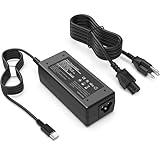
Use the computer maker’s charging requirements. A 130W charger advertised for a Dell model is not automatically an appropriate charger for an ASUS machine or another USB-C device. Identify the required protocol, supported input and the manufacturer’s compatibility guidance rather than matching a wattage number by itself.
Battery claims also need context. Video playback, web browsing, gaming and rendering are different workloads. Compare a test description with your working day and include access to power outlets in the decision. Do not budget an entire day around an unspecified maximum runtime.
Software support and ownership
Find the manufacturer’s driver and support page before purchase. AMD’s driver guidance recommends OEM-provided drivers for system-specific laptop features and optimizations. Keep the exact computer model available when looking for updates.
Read the service information for memory, storage and battery replacement. A large initial memory allocation may matter more when it cannot be expanded later. For a used system, ask about battery condition, included accessories and the seller’s return terms before treating it as equivalent to a new retail package.
A practical shortlist worksheet
- Computer maker and complete configuration code.
- Processor name and integrated or discrete graphics.
- Installed memory, upgrade options and storage capacity.
- Display, keyboard arrangement, ports and charger.
- Application compatibility and relevant measured results.
- Total price for the required package and regional support.
If the seller cannot provide these details, keep the listing out of your shortlist. Search phrases are useful for discovery; purchase decisions need a specific product. A relevant accessory can be considered later, once the computer itself has been identified.
Frequently asked questions
Is “Aim Max+” definitely a misspelling of Ryzen AI Max+?
No. It is a plausible interpretation, not a confirmed identification. Check the original source or model number before assuming that a Ryzen-based machine is what was intended.
Does every AI Max+ system include a display?
No. Processor branding can appear in different form factors. Verify that the listing is for a complete portable computer and identify the included accessories.
Should I buy a sticker or charger from these search results?
Only if you independently need that accessory and have verified its suitability. Those products do not answer the question of which computer to buy.