A laptop with an RTX 4090 inside is a strange object. It’s not really a portable version of a 4090 desktop card, and understanding that gap is the whole key to deciding whether you want one.
What “4090 Laptop” actually means
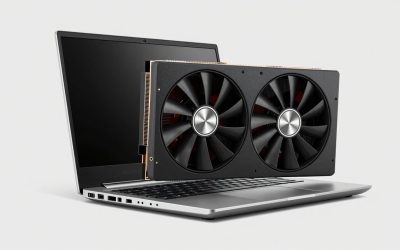
Nvidia reused the 4090 name for mobile parts, but the laptop GPU is a different chip with a fraction of the CUDA cores and a power budget that tops out around 150-175W, compared to 450W+ for the desktop card. In practice, a laptop 4090 performs closer to a desktop RTX 4080, sometimes a bit below it depending on how aggressively the manufacturer has power-limited that specific chassis. Two laptops with the same “RTX 4090” sticker can differ by 15-20% in real frame rates because of cooling and wattage differences alone.
This isn’t a scam, it’s just naming convention Nvidia has used for years, but it catches first-time buyers off guard. If you’re coming from a desktop GPU mindset, recalibrate your expectations before you look at prices.
Who actually needs this
These laptops make sense for three groups: people who do 4K or high-refresh 1440p gaming and don’t own a desktop, people doing GPU-heavy creative work (3D rendering, video color grading, Stable Diffusion/local AI work) who need portability, and people who want one machine for both gaming and professional 3D/CAD workloads. If you’re not in one of these groups, a 4090 laptop is overkill and you’ll pay for performance you won’t use.
If your gaming is mostly 1080p or you play esports titles like Valorant or CS2, you don’t need this tier at all. A machine with an RTX 4070 or 4060 mobile GPU will hit high frame rates at lower cost, run cooler, and get noticeably better battery life. Save the money or put it toward a better display instead.
The real trade-offs
Battery life is the first casualty. Under gaming load, expect 1-2 hours unplugged, sometimes less. These laptops are designed to run on their 230-330W power bricks, and that brick is heavy enough to notice in a bag. Second, thermals and noise: pushing a 150W+ GPU through a 16-18 inch chassis means fans that are genuinely loud under load, often 45-50 dB from the keyboard. If you plan to use one in a quiet office or on a plane, that’s worth testing before you buy, not after.
Third, weight and size. Laptops in this class almost always use 16 or 18-inch screens and weigh 5.5-8 lbs before you add the charger. “Gaming laptop with a 4090” and “thin and light” are not compatible phrases right now. If portability matters more than peak performance, you’re better served browsing thin and light gaming laptops with a mid-tier GPU instead.
Finally, repairability and upgrades. Most of these are soldered-GPU designs. RAM and storage are sometimes upgradeable, the GPU never is. Buy the configuration you want to live with for 3-4 years, not the one you plan to grow into.
How laptop 4090 configs compare
Pricing and specs vary by brand, but here’s roughly how the tiers shake out so you know what you’re paying for at each price point.
| Tier | Typical price range | What you get | Best for |
|---|---|---|---|
| Entry 4090 config | $2,800-3,200 | 1440p/144Hz panel, 32GB RAM, power limit near 150W | 4K-capable gaming on a budget within this tier |
| Mid 4090 config | $3,200-3,800 | 240Hz+ 1440p or mini-LED 4K, 32-64GB RAM, better cooling | Mixed gaming and creative work |
| Flagship 4090 config | $3,800-4,800+ | Full 175W GPU power, 64GB+ RAM, premium chassis, best display | Professional 3D/AI work plus high-end gaming |
Notice the display matters as much as the GPU tier here. A 4090 feeding a weak 1080p panel is wasted money; make sure the screen resolution and refresh rate actually match what the GPU can push.
When a 4080 or desktop is the smarter buy
If your budget is under $3,000, a laptop with an RTX 4080 mobile GPU gets you 85-90% of the gaming performance for meaningfully less money and often better battery life and acoustics, since the manufacturer isn’t fighting to cool as much heat. For creative professionals doing render-heavy work, it’s also worth pricing out a desktop with a real desktop 4090 plus a modest laptop for mobility; two machines can cost less than one maxed-out laptop and the desktop will outperform it significantly. Shoppers set on this performance tier but open to either GPU should compare current RTX 4090 laptop listings against RTX 4080 laptop options side by side before deciding, since prices shift often enough that the gap between tiers isn’t fixed.
Also budget for the charger and a cooling pad if you’ll use it on a desk for long sessions; it won’t fix thermal throttling but it takes some edge off fan noise over long work days.
FAQ
Is a laptop 4090 as fast as a desktop 4090?
No. It’s closer to a desktop RTX 4080 in most workloads, due to lower power limits and a smaller chip. Treat the name as a tier marker, not a performance guarantee.
Can I upgrade the GPU later?
No. The GPU is soldered to the motherboard in essentially every laptop in this class. Buy the performance level you need now.
Is it worth it just for gaming?
Only if you’re gaming at 4K or high-refresh 1440p and want a single portable machine. For 1080p gaming, a cheaper GPU tier will feel just as fast in most games and cost significantly less.
How loud are these laptops under load?
Expect noticeable fan noise, often in the 45-50 dB range at the keyboard during gaming or rendering. If you need quiet operation for office use, plan on headphones or a separate workspace during heavy tasks.