

Ryzen 9900X3D Gaming PC Build 2026: Parts, Compatibility and Cooling Guide
The Ryzen 9 9900X3D is AMD’s 12-core chip with 3D V-Cache, and it occupies an awkward spot in the lineup. It costs more than the 8-core Ryzen 7 9800X3D that most gaming builders buy, yet it gives you extra cores for streaming, video encoding, compiling, and background work. A Ryzen 9900X3D gaming PC build makes sense only if you use those extra cores. If you play games and nothing else, the cheaper 8-core part usually wins on value. This guide explains who should choose this CPU in 2026, which parts to pair with it, and where the money goes furthest.
This is not a benchmark article. Frame rates depend on the GPU, resolution, memory speed, and driver version, and those change every few months. Where a number affects compatibility, power, or cooling, it comes from AMD’s published specification or a reputable launch review. Everything else is written as a decision rule you can test against your own targets.

AMD Ryzen 9 9900X3D 12-Core Processor
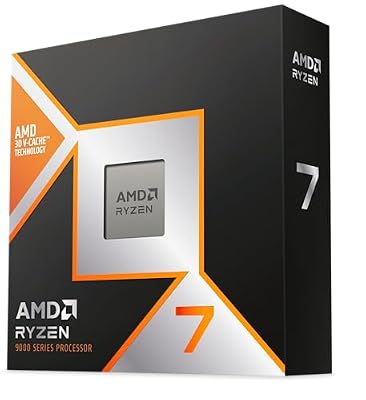
AMD RYZEN 7 9800X3D 8-Core, 16-Thread Desktop Processor
Who the Ryzen 9900X3D Build Is For
The 9900X3D fits one specific user well: someone who games on a high-refresh display and also runs CPU-heavy work on the same machine. Think of a streamer who records gameplay while encoding the file, a developer who compiles large projects overnight, or a creator who edits video on weekends and plays after work. In those cases, the second chiplet of cores absorbs the non-gaming load while the V-Cache chiplet keeps game threads fast.
Gamers who also multitask
If your gaming session includes a voice chat app, a browser full of guides, a capture card, and a music player, the extra cores keep those tasks off the threads that the game needs. This is the most common reason to pick the 12-core part over the 8-core one. The benefit is real, but it shows up as steadier frame times under load rather than a large jump in average frame rate.
Who should buy an 8-core instead
If you only play games, a Ryzen 7 9800X3D is the simpler purchase. It has one V-Cache chiplet and no second die competing for attention, and it usually costs less. Spend the difference on a better GPU or a higher-quality monitor. A 9900X3D build is also a poor fit if you plan to upgrade the GPU only and keep the CPU for five years, because most games are still GPU-bound at 1440p and 4K. Match the CPU to your real workload, not to a headline core count.
Core Specs That Shape This Build
The 9900X3D is built on Zen 5 and uses the AM5 socket. It has 12 cores and 24 threads, a 4.4 GHz base clock, and a boost clock of up to 5.5 GHz. AMD lists a 120 W TDP and 140 MB of total L3 cache in its partner documentation. The 3D V-Cache sits on one of the two core chiplets, which is why this chip behaves differently from a standard 12-core processor in games.
The practical consequence is scheduling. Games run best when their threads stay on the V-Cache chiplet, and AMD’s driver and chipset software try to steer them there. If you run background tools that aggressively pin threads, or you disable the chipset driver, you can lose some of that benefit. Install the latest AMD chipset package and leave the default scheduling in place unless you have a specific reason to change it.
| Build decision | Recommended choice | Why it matters | Check before buying |
|---|---|---|---|
| CPU | Ryzen 9 9900X3D | 12 cores, 24 threads, V-Cache on one chiplet | Launch MSRP was $600 per Tom’s Hardware; check current price |
| Motherboard | AM5 board with B650, X670, B850 or X870 chipset | Socket and BIOS support for Zen 5 | BIOS version must support the 9000 series |
| Memory | DDR5 kit with EXPO profile, 32 GB minimum | Memory speed affects frame times on V-Cache CPUs | Motherboard memory compatibility list |
| Cooler | 240 mm or 360 mm AIO, or a large dual-tower air cooler | 120 W TDP is manageable, but boost behavior needs headroom | Socket AM5 mounting kit included |
| Power supply | Quality 750 W to 850 W unit sized for your GPU | Leaves margin for GPU transients | 80 Plus rating and warranty length |
Part-by-Part Build Plan
Motherboard
Pick an AM5 board with a chipset that matches your budget and expansion needs. A B650 or B850 board covers most gaming builds and saves money. An X670 or X870 board makes sense if you want more PCIe lanes, extra M.2 slots, or stronger VRM cooling for sustained all-core loads. Confirm the board’s BIOS version supports the 9000 series before you buy, because older boards sometimes need an update before they will boot a new CPU.
Memory
Use DDR5 with at least 32 GB in a two-stick configuration. Choose a kit with an AMD EXPO profile, and check the motherboard’s memory qualified vendor list for the exact model. Memory speed matters more on V-Cache processors than on most CPUs, because the cache reduces trips to main memory but does not remove them. Start with the speed the board lists as stable for your kit, and do not chase extreme overclocks for a small gain.
Cooling
The 9900X3D draws far less power than the 16-core X3D chip, so you do not need a premium 420 mm loop to run it well. A quality 240 mm AIO or a large dual-tower air cooler handles it in most cases. Mount the cooler with the AM5 bracket and check case clearance for the radiator or tower height. Thermal performance also depends on case airflow, so a cooler that is quiet in an open test bench can run warmer in a sealed mesh case.
Graphics card and power supply
The GPU is where most of your frame rate comes from in modern games. Choose it based on your resolution and target settings, then size the power supply around the card’s rated board power plus the rest of the system. A quality 750 W to 850 W unit is a safe default for a mid-to-high-end card. Avoid budget units with unclear rails, because GPU power spikes are the most common cause of unexplained shutdowns in new builds.
Where the Hero Build Fits
The hero product in this guide is the build anchor, the part you should research first. Use the product card below as a starting point, then compare its included cooler, motherboard support, and warranty against the alternatives. A complete kit is convenient, but a self-built system lets you choose each component on its merits.
AMD Ryzen 9 9900X3D 12-Core Processor


As an Amazon Associate we earn from qualifying purchases. Product prices and availability are accurate as of the date/time indicated.
Alternatives Worth Comparing
If the 9900X3D is out of reach or more than you need, two nearby options are worth a look. The first is the 9800X3D, which our Ryzen 7 9800X3D review covers in depth. It is the gaming-first choice and pairs with the same AM5 platform. The second is the 9950X3D, which gives you more cores and V-Cache on both chiplets; our Ryzen 9 9950X3D review explains where that extra spend pays off and where it does not.
If you are building on a tighter budget, our motherboard guide for the 9800X3D applies almost directly to this build, because the socket and chipset requirements are the same. For the cooler, see our CPU cooler roundup, and for the power side of the build, the PSU guide helps even if you do not own a 5090 card, since its sizing logic carries over.
Build budget matters too. If you are still setting the total, our guide to gaming PC builds at every budget shows how the CPU fits into the overall spend, and the 2000 dollar build guide shows one way to balance a 12-core CPU against a midrange GPU.
The second product card below covers an alternative from the same shortlist, so you can compare the two listings side by side before you decide.
Buying Checklist and Common Mistakes
Before you order, check five things. First, confirm the motherboard BIOS supports the 9000 series. Second, verify that your memory kit appears on the board’s compatibility list or that the vendor has validated it on the same chipset. Third, measure your case for the cooler and GPU length. Fourth, confirm the power supply has enough headroom for the card you plan to install. Fifth, decide whether you need the extra cores at all, because that single choice changes the whole budget.
The most common mistake is pairing a premium CPU with a budget motherboard and memory kit, then wondering why the system underperforms. The second mistake is buying a high-end cooler and skipping case airflow, which leads to throttling in long sessions. The third is overspending on the CPU when the GPU is the real bottleneck for your monitor. Work out the GPU first, then add the CPU that supports it.
Assembly is also simpler than it looks. Install the CPU and cooler on the board outside the case, apply thermal paste only if your cooler does not come pre-applied, and test the system on the bench before you close the chassis. Update BIOS, install the chipset driver, then run a memory stability test before installing games. Catching a problem early saves days of troubleshooting later.
FAQ: Ryzen 9900X3D Gaming PC Build
Is the Ryzen 9900X3D worth it over the 9800X3D for gaming?
Usually not, if games are the only thing you run. The 9800X3D has a simpler design and costs less, and it is the more direct gaming choice. The 9900X3D earns its price when you stream, encode, or compile while you play. If that describes your week, the extra cores reduce the conflict between tasks.
Do I need a 360 mm AIO for this CPU?
No. A quality 240 mm AIO or a large dual-tower air cooler handles a 120 W TDP chip well in most cases. Choose a larger cooler if your case has poor airflow or you plan to run long, heavy workloads in a warm room.
Does the 9900X3D need a special motherboard?
It needs an AM5 board with a BIOS that supports the 9000 series. Any current B650, X670, B850 or X870 board can work, but the right choice depends on how many M.2 drives, USB ports, and PCIe slots you need. Check the BIOS version listed on the manufacturer’s support page before purchase.
Can I upgrade the CPU later on AM5?
Yes, within the AM5 platform. Confirm the exact BIOS requirement for any future chip, and verify that your board’s VRM and cooling can handle a higher-power part. Upgrading the GPU first is usually the better path for gaming, because it addresses the most common bottleneck.
Related reading: our complete gaming PC buying guide and the full buying checklist cover the parts order and the pitfalls that apply to every build.










