

Ryzen 9800X3D Gaming PC Build 2026: Parts, Trade-offs and What to Check
Building a gaming PC around the Ryzen 7 9800X3D is one of the most straightforward decisions a PC builder can make in 2026. The processor is built for gaming first, it sits on the AM5 platform, and it pairs well with a wide range of graphics cards. The hard part is not picking the CPU. The hard part is making sure everything around it, from the motherboard and memory to cooling and power, does not hold it back or add cost you do not need.
This guide walks through how to plan a build around the Ryzen 7 9800X3D, which trade-offs matter most, and what to verify on the product listings before you buy. The four alternative listings in the comparison table come from the same search, so treat each one as a separate configuration to confirm rather than an identical part.
Why the Ryzen 7 9800X3D Anchors a 2026 Gaming Build
The Ryzen 7 9800X3D is an eight-core processor with AMD’s 3D V-Cache stacked on top of the compute die. The extra cache is the reason it is recommended so often for gaming. Many games read the same data repeatedly, such as physics state, draw call lists, and AI pathing. When that data stays close to the cores, frame times tend to be steadier, and the 1% lows that players feel as stutter often improve more than the average frame rate does.
That distinction matters when you plan a build. A CPU with a high average score in multi-threaded rendering or video encoding does not automatically give you a smoother game. If your PC is mainly for games, the cache design gives you more benefit per dollar than extra cores you will never load.
What the 3D V-Cache does for games
The benefit is strongest in CPU-heavy titles: large open worlds, strategy games with hundreds of units on screen, simulation games, and competitive shooters running at high refresh rates. In these cases the processor, not the graphics card, often decides how many frames you see. In GPU-bound titles at 4K with heavy ray tracing, the gain shrinks because the graphics card is doing most of the work. This is why the CPU choice should follow the games you actually play.
Where the CPU is not the bottleneck
If you mostly play older titles, or you run a 4K display with demanding settings, a cheaper processor may leave you with nearly identical frame rates. The money saved on the CPU is often better spent on a stronger graphics card, a larger and faster SSD, or a better monitor. Before committing, compare the games on your list against the processor review and benchmark coverage for those specific titles rather than relying on one headline number.
Choosing the Platform Around the CPU
The Ryzen 7 9800X3D uses the AM5 socket, which means DDR5 memory and a modern AM5 motherboard. Choosing the platform is where most budget mistakes happen, because motherboard and memory choices can quietly add or remove hundreds of dollars without changing performance much in gaming.
Motherboard and memory
For most builders, a mid-range AM5 board with solid power delivery, good VRM cooling, and enough M.2 slots is the right target. Premium boards add features such as extra networking, more display outputs, or higher-end audio. These rarely change game frame rates. Check the board for at least one fast M.2 slot with a heatsink, enough USB ports for your peripherals, and a BIOS update history that shows active support.
Memory is the second place where it is easy to overspend or underspend. DDR5 kits with a speed that suits the platform and matching capacity for your games usually give the best result. Sixteen gigabytes is the floor for modern titles, and thirty-two gigabytes is the safer choice for multitasking, streaming, or heavy modding. Our 32GB DDR5 RAM guide covers kit choices in more detail, and the motherboard guide for the 9800X3D lists boards that suit this processor.
Cooling and power supply
The processor runs well with a good air cooler or an all-in-one liquid cooler, but it still needs proper airflow. A cooler that is too small for the case will cause noise and throttling under long sessions. The power supply should come from a reputable brand, carry a clear warranty, and offer headroom above the expected system load. Avoid unbranded units, because a failing power supply can damage other components. The power supply guide explains the selection criteria in plain terms.
Graphics Card Pairing and Resolution Targets
The best graphics card for this build depends on your monitor. A 1080p high refresh display can benefit from a strong processor paired with a mid-range card, because the CPU has more room to push frames. At 1440p, the balance is usually even, and at 4K the graphics card decides most of the result. Matching the card to the display avoids spending heavily on a GPU your monitor cannot use fully.
Matching the GPU to your resolution
Start with the frame rate you want. If your target is a steady high frame rate at 1440p with high settings, you need a card in the upper mid-range or higher. If your target is 4K with ray tracing enabled, you should expect to pay for a high-end card and accept that some titles will need upscaling. Check the case clearance and the power requirements of the specific card model, because partner designs vary in length and board power. The 1440p GPU guide is a good reference for the mid-range tier.
Do not buy a graphics card and a processor without checking whether the pair is balanced for your games. A common mistake is pairing a top processor with a card that is too weak for the chosen resolution, or the reverse. Both leave performance on the table.
Build Comparison Table
The table below lists the hero listing and the four alternatives from the same search. Confirm whether each ASIN is a complete build or a single component, and check the specifications on the listing before you compare. Prices and ratings are not hardcoded in this guide; they come from live product data when the page is rendered.
| Slot | ASIN | Best fit | Check before buying |
|---|---|---|---|
| Hero pick | B0DKFMSMYK | Balanced Ryzen 9800X3D build for 1440p gaming | Confirm CPU model, motherboard chipset, RAM and PSU |
| Alternative 1 | B0DWGWN8GY | Similar platform, different component mix | Confirm whether it is a full build or a part |
| Alternative 2 | B0H5KBXR26 | Option with a different graphics card tier | Confirm GPU model and case clearance |
| Alternative 3 | B0HCW62DRF | Option for a lower-cost platform | Confirm memory capacity and storage size |
| Alternative 4 | B0DWWHP4V8 | Option for a higher-capacity build | Confirm power supply wattage and warranty |
When comparing rows, look at the same three things: the processor and graphics card models, the amount of memory and storage, and the warranty terms. A lower price is not a better deal if the power supply is unbranded or the case has poor airflow.
Common Mistakes When Building Around a 9800X3D
The most frequent error is spending too much on the motherboard and too little on the power supply and cooling. The second is buying fast memory without checking the platform’s sweet spot, which can add cost without measurable gain. The third is ignoring case size. A large graphics card will not fit a compact case with a tall cooler, and returning parts after assembly is expensive.
Another mistake is assuming the processor alone sets your frame rate. Storage speed affects load times and texture streaming in some games, and a slow drive can cause hitches even when the CPU is strong. A fast NVMe drive with enough capacity for your library is a better use of money than a marginal motherboard upgrade. Our SSD guide covers drive picks for game libraries.
Frequently Asked Questions
Is the Ryzen 7 9800X3D worth it for a gaming build in 2026?
For most gamers who play CPU-heavy titles or want steady frame times at high refresh rates, yes. If your games are mostly GPU-bound at 4K, the advantage narrows, and a cheaper processor may be the better value. Compare the games you play against recent benchmark coverage before deciding.
Do I need DDR5 memory for this build?
Yes. The AM5 platform uses DDR5 memory, so you cannot use older DDR4 kits. Choose a kit that fits the motherboard’s supported speeds and buy enough capacity for your games and multitasking.
Which cooler should I pair with the 9800X3D?
A quality air cooler or a properly sized all-in-one liquid cooler works well. Check that the cooler fits your case and that the mounting kit matches the AM5 socket. Choose based on case airflow and noise preference rather than chasing the largest cooler you can fit.
Should I buy a prebuilt instead of building this myself?
A prebuilt can be a good choice if you want a single warranty and do not want to assemble parts. Check the power supply brand, memory and storage quality, and the upgrade path before you buy. Building yourself usually gives more control over component quality and value.
For related planning, see our guide to gaming PC builds at every budget and the Ryzen 7 9800X3D review. If you are weighing this CPU against an Intel option, the 9800X3D versus Core Ultra 7 270K comparison covers the trade-offs.
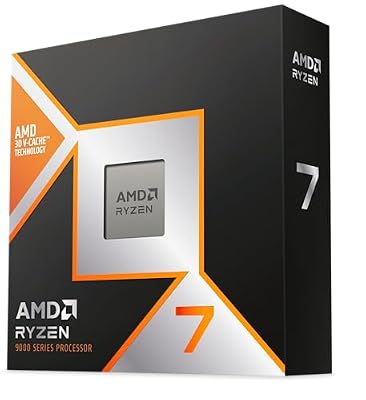

AMD Ryzen 9 9900X3D 12-Core Processor

AMD RYZEN 7 9800X3D 8-Core, 16-Thread Desktop Processor


As an Amazon Associate we earn from qualifying purchases. Product prices and availability are accurate as of the date/time indicated.
AMD Ryzen 9 9900X3D 12-Core Processor


As an Amazon Associate we earn from qualifying purchases. Product prices and availability are accurate as of the date/time indicated.









