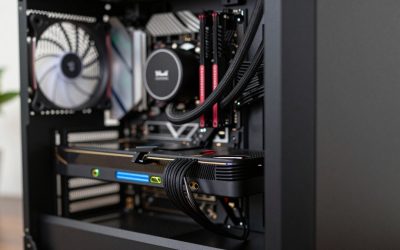
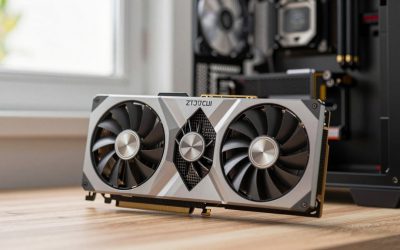
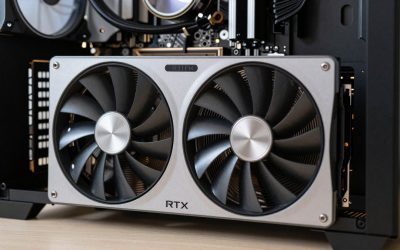
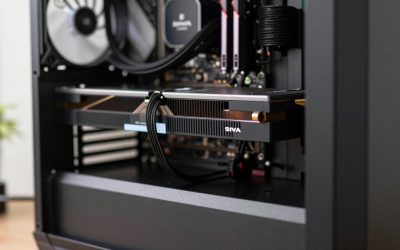
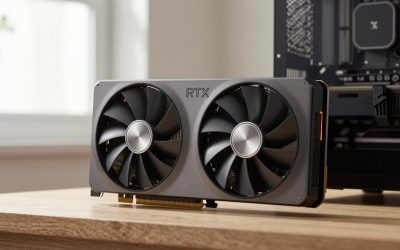
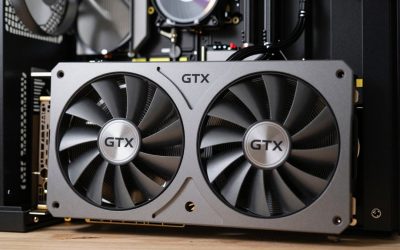
- Top Pick: GIGABYTE PowerColor Red Devil AMD Radeon™ RX 6900 XT Gaming Graphics Card with 16GB GDDR6 Memory, Powered by AMD RDNA™ 2, Raytracing, PCI Express 4.0, HDMI 2.1, AMD Infinity Cache
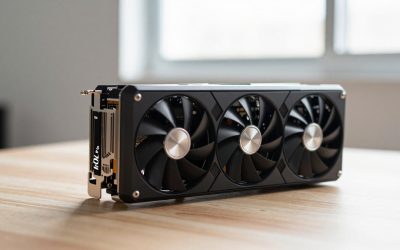
- Best Value: GIGABYTE Radeon RX 6900 XT Gaming OC 16G Graphics Card, WINDFORCE 3X Cooling System, 16GB 256-bit GDDR6, GV-R69XTGAMING OC-16GD Video Card
- Premium Choice: ASUS PRIME Radeon RX 9070 XT 16GB GDDR6 OC Edition Gaming Graphics Card | PCIe 5.0, HDMI/DP 2.1, 2.5-slot, Axial-tech Fans, Dual-ball Fan Bearings, dual BIOS, ASUS GPU Guard
Upgrading from an RX 6900 XT to an RX 9070 XT pays off for 1440p high-refresh and 4K players, and especially for anyone who wants usable ray tracing and FSR 4, because the newer card is roughly 40-50% faster in raster and far stronger with ray tracing on; if you mostly play esports titles at 1080p or older raster games that already run well, the RX 6900 XT is still good enough to keep. The memory size stays the same at 16 GB, so this upgrade is about speed and features, not VRAM.
The RX 6900 XT was AMD’s RDNA 2 flagship, released on 28 October 2020 at $999. The RX 9070 XT arrived on 6 March 2025 at $599 as the top RDNA 4 card. Two generations of architectural change separate them, and the 9070 XT achieves more performance with fewer stream processors, a similar power budget and a much lower launch price.
As an Amazon Associate we earn from qualifying purchases at no extra cost to you.



What Changes on Paper
| Specification | RX 6900 XT | RX 9070 XT |
|---|---|---|
| Architecture | RDNA 2.0 | RDNA 4.0 |
| Release date | 28 October 2020 | 6 March 2025 |
| Launch MSRP | $999 | $599 |
| Stream processors | 5120 | 4096 |
| Boost clock | 2250 MHz | 2970 MHz |
| Process | 7 nm | 4 nm |
| TDP | 300 W | 304 W |
| Memory | 16 GB GDDR6 | 16 GB GDDR6 |
| Memory bus | 256-bit | 256-bit |
| Bandwidth | 512.0 GB/s | 644.6 GB/s |
| L2 / Infinity Cache (L3) | 4 MB / 128 MB | 8 MB / 64 MB |
| Interface | PCIe 4.0 x16 | PCIe 5.0 x16 |
| Power connectors | 2x 8-pin | 2x 8-pin |
| Length / width (reference) | 267 mm, 3-slot | 267 mm, 2-slot |
| Display outputs | 1x HDMI 2.1, 2x DP 1.4a, 1x USB-C | 1x HDMI 2.1b, 3x DP 2.1a |
The 6900 XT actually has more stream processors and twice the Infinity Cache. The 9070 XT makes up for that with a 32% higher boost clock, 26% more memory bandwidth, a much newer shader design, dedicated AI accelerators and heavily upgraded ray tracing units. Spec counts alone badly understate the generational gap here.
How Much Faster Is the RX 9070 XT?
AMD’s own launch claim was that the RX 9070 XT is about 51% faster on average than the RX 6900 XT. Independent data is broadly consistent: aggregated benchmark sites using large game suites put the lead at roughly 40-45%, and TechRadar’s review found the 9070 XT within a few percent of the RTX 4080 overall, a card that reviews such as TechPowerUp’s placed well ahead of the 6900 XT. The gap scales with resolution:
- 1080p: often 20-30%, and close to zero in CPU-bound esports games such as Counter-Strike 2.
- 1440p: roughly 30-45%, depending on the game.
- 4K: roughly 40-55%, with some 2026 releases showing even larger gaps.
To put that in practical terms, a demanding game running in the 50-60 fps range at 1440p ultra on the 6900 XT can be expected to land in the 70-85 fps range on the 9070 XT, with results varying by title, settings, CPU and driver version.
Ray tracing: the biggest change
RDNA 2 was AMD’s first ray tracing architecture, and the 6900 XT struggles in RT-heavy games. RDNA 4 made large improvements to ray tracing throughput, and with RT enabled the 9070 XT’s lead commonly grows to 60-100% or more in heavy titles, with path-traced games showing the largest jumps. Games that were unplayable with ray tracing on the 6900 XT become viable at 1440p on the 9070 XT, particularly with upscaling.
FSR 4 and AI features
The 9070 XT supports FSR 4, AMD’s machine-learning upscaler, which delivers clearly better image stability and detail than FSR 3.1, especially in Balanced and Performance modes. AMD’s newer ML-based features for RDNA 4 also target this card. The 6900 XT is limited to FSR 3.1 upscaling and frame generation plus driver-level Fluid Motion Frames. In practice, FSR 4 lets the 9070 XT run a lower internal resolution with acceptable quality, so the effective gap in upscaled games is larger than the native numbers suggest.
Is the Upgrade Worth It for Your Resolution?
| Your setup | Upgrade verdict |
|---|---|
| 1080p esports (CS2, Valorant, Fortnite competitive) | Skip: CPU-bound, minimal gain |
| 1080p single-player AAA, raster only | Marginal: the 6900 XT is still strong |
| 1440p 144-165 Hz monitor | Worthwhile, especially in newer games |
| 4K, native or upscaled | Strong case: roughly 40-55% faster plus FSR 4 |
| Ray tracing or path tracing | Strongest case: very large gains |
The Real Cost of Upgrading
The net cost is what matters for an upgrade. The 6900 XT still has resale value, usually somewhere around $250-$350 used depending on condition and model. If you sell it and buy a 9070 XT near its $599 MSRP, the net spend lands in the region of $250-$350 for roughly 40-50% more performance and a major ray tracing and upscaling jump.
A simple cost-per-gain check: with a net spend of around $300 for a 45% improvement, you pay roughly $6.70 per percentage point of performance gained. Compare that with buying a used RX 7900 XTX instead, which offers similar or slightly better raster performance and 24 GB of VRAM but much weaker ray tracing and no official FSR 4 support.
Power Supply, Connectors and Case Fit
The good news for 6900 XT owners: the power picture barely changes. The 6900 XT is rated at 300 W and the 9070 XT at 304 W, and both reference designs use two 8-pin PCIe connectors. Sizing as GPU TDP plus CPU plus about 150 W of headroom:
- RX 9070 XT + 120 W CPU: 304 + 120 + 150 = 574 W, so a quality 650-750 W unit is suitable.
If your PSU ran the 6900 XT reliably, it will very likely handle a reference-spec 9070 XT. Be aware that many partner 9070 XT models ship with factory overclocks and higher power limits, often 330-340 W, and some use three 8-pin connectors or a 12V-2×6 connector. Check the specific model’s connector layout before buying.
Both cards list a 267 mm baseline length, but AMD did not sell its own reference 9070 XT at retail, so every card you can buy is a partner model. Many are 300-330 mm long and close to three slots thick. Measure your case before ordering.
The 9070 XT’s DisplayPort 2.1a outputs also matter if you plan to buy a high-refresh 4K monitor, since they support higher bandwidth modes than the 6900 XT’s DisplayPort 1.4a ports. The 9070 XT drops the USB-C port that the 6900 XT reference card had.
When to Keep the RX 6900 XT
There are good reasons not to upgrade yet. The 6900 XT still delivers high frame rates at 1440p in raster games, has the same 16 GB of VRAM, and remains comfortable for anyone not interested in ray tracing. If your monitor is 1080p at 144 Hz or below, or your CPU is a generation or two old and already limits frame rates, the money is often better spent on a CPU or monitor upgrade first.
A useful self-check before buying: watch GPU utilization in your most-played games. If the 6900 XT regularly sits below about 90% utilization, your CPU is the limit, and a faster graphics card will add little. If it stays near 99% and frame rates fall short of your monitor’s refresh rate, the 9070 XT will deliver most of its expected gain. The same check applies to ray tracing: if you currently leave RT off because the 6900 XT cannot handle it, that is where the upgrade will feel most dramatic.
Frequently Asked Questions
How much faster is the RX 9070 XT than the RX 6900 XT?
Most data places the RX 9070 XT roughly 40-50% ahead in raster at 1440p and 4K, with AMD claiming about 51%. The gap is smaller at 1080p and in CPU-limited games. With ray tracing enabled, the lead often grows much larger.
Will my RX 6900 XT power supply run an RX 9070 XT?
In most cases, yes, since both cards are rated around 300 W and use two 8-pin connectors at reference spec. Factory-overclocked 9070 XT models can draw more and may need a third 8-pin connector. A quality 750 W unit covers nearly all configurations.
Does the RX 9070 XT have more VRAM than the RX 6900 XT?
No, both cards have 16 GB of GDDR6 on a 256-bit bus. The 9070 XT has faster memory, giving it about 645 GB/s of bandwidth versus 512 GB/s. VRAM capacity is not a reason to upgrade.
Can the RX 6900 XT use FSR 4?
FSR 4 was launched as an RDNA 4 feature for the RX 9000 series. The RX 6900 XT supports FSR 3.1 upscaling and frame generation and AMD Fluid Motion Frames. Check AMD’s latest driver notes for any updates on older-card support.
Is the RX 6900 XT still good in 2026?
Yes, it remains a capable 1440p raster card with 16 GB of VRAM. Its weaknesses are ray tracing performance and the lack of FSR 4. For players who avoid ray tracing, it can comfortably last another few years.
Ready to decide? Our #1 pick for 2026 is the Architecture.
Live price & availability on Amazon.