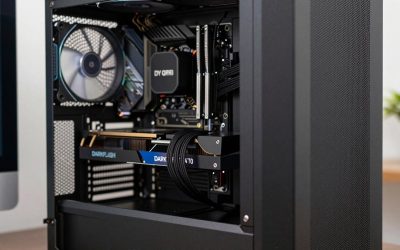
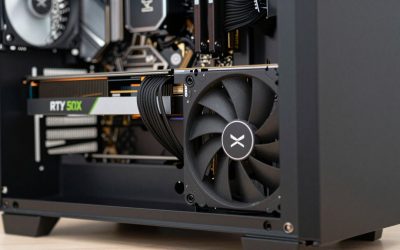
Every few years, the mid-range GPU conversation gets genuinely difficult. Not because the cards are bad, but because the pricing tiers blur, the feature sets spread unevenly across the stack, and the performance gaps don’t scale linearly with the dollar differences. The RTX 5060 Ti 16GB versus RTX 5070 question in 2026 is exactly that kind of matchup. One card costs $120 less and gives you 4GB more VRAM. The other gives you roughly a quarter more rasterization performance, a wider memory bus, and headroom for settings you can’t fully exploit yet. Neither is wrong. The right answer depends entirely on what you play, what resolution you target, and how long you plan to keep the card.
The complication is real. The RTX 5060 Ti 16GB exists because NVIDIA recognized that 8GB cards were failing in certain titles at 1080p with high settings, and they doubled the framebuffer without significantly widening the bus. The RTX 5070 sits in a different performance bracket entirely, built on the GB205 die with more SMs, more bandwidth, and a higher power envelope. But in practice, many games at 1440p still leave the 5060 Ti within striking distance, especially with DLSS 4 frame generation enabled. So the decision is less about “which is faster” and more about “which faster matters for your use case.”
As an Amazon Associate we earn from qualifying purchases at no extra cost to you.


Quick Verdict
The RTX 5070 is the objectively more powerful card, delivering roughly 20-30% more average frame rates depending on resolution and title. But the RTX 5060 Ti 16GB closes much of that gap at 1080p with DLSS 4 enabled, and its larger VRAM buffer makes it the more future-proof option for texture-heavy games that haven’t been optimized yet. If your budget allows $549 without pain, buy the 5070. If you’re tight, the 5060 Ti 16GB at $429 delivers an excellent experience at 1080p high-refresh and a very solid one at 1440p, and it won’t hit VRAM walls for years.
Specs Side by Side
| Spec | RTX 5060 Ti 16GB | RTX 5070 |
|---|---|---|
| Architecture | Blackwell (GB206) | Blackwell (GB205) |
| CUDA Cores | 4608 | 6144 |
| Tensor Cores (5th gen) | 144 | 192 |
| RT Cores (4th gen) | 36 | 48 |
| Boost Clock | ~2572 MHz | ~2512 MHz |
| Memory | 16 GB GDDR7 | 12 GB GDDR7 |
| Memory Bus | 128-bit | 192-bit |
| Memory Bandwidth | ~448 GB/s | ~672 GB/s |
| TDP | 180W | 250W |
| Founders Edition MSRP | $429 | $549 |
| PCIe Interface | PCIe 5.0 x8 | PCIe 5.0 x16 |
| DLSS Version | 4.0 (Multi Frame Gen) | 4.0 (Multi Frame Gen) |
Gaming Performance
1080p
At 1080p, the gap between these two cards is the narrowest it will ever be in most titles. Launch-period coverage from TechPowerUp and Hardware Unboxed suggested the RTX 5070 leads the RTX 5060 Ti 16GB by roughly 15-22% on average in rasterization benchmarks. With DLSS 4 and Multi Frame Generation enabled, both cards can push well past 120fps in most titles, and the practical difference between 140fps and 165fps at 1080p is small for anyone not playing a 360Hz competitive shooter. If you’re targeting 1440p, the 5060 Ti is often sufficient at high settings with upscaling.
1440p
The 1440p picture shifts noticeably. Tom’s Hardware and Gamers Nexus both reported gaps widening to approximately 22-30% in more demanding titles as memory bandwidth becomes a limiting factor. The RTX 5070’s 192-bit bus and 50% higher bandwidth begin to matter. In heavy ray-traced titles like those with full path-tracing modes, the 5070’s additional RT cores pull further ahead. That said, the RTX 5060 Ti 16GB can still deliver playable frame rates at 1440p with DLSS Quality mode enabled, and the extra VRAM means it won’t stutter in titles with unoptimized texture streaming where an 8GB card would.
4K
Neither card was designed as a primary 4K GPU, but the RTX 5070 handles it meaningfully better. TechSpot’s analysis showed the 5070 averaging roughly 50-65fps at 4K native in modern AAA titles versus 35-50fps for the 5060 Ti 16GB—a gap of 30-40%. The 5060 Ti’s narrower bus becomes a hard wall at that resolution. With DLSS Performance mode and frame generation, both cards can reach the 60-100fps range, but the 5070 offers a more comfortable baseline without upscaling artifacts. If 4K is your monitor’s native resolution, the 5070 is the better starting point.
Power, Heat and Noise
The RTX 5060 Ti 16GB’s 180W TDP is a genuine advantage for anyone building in a compact chassis or upgrading an older system with a modest PSU. A quality 550W unit is sufficient. The RTX 5070 at 250W needs a 650W minimum with headroom. In terms of thermals, both cards run cool under load with their reference coolers—typically in the 60-70°C range—but AIB designs vary widely. The 5060 Ti is the quieter card at idle and under light loads simply because its cooler doesn’t need to spin as aggressively. If fan noise in a living-room HTPC build concerns you, the 5060 Ti’s power envelope makes it easier to find a near-silent AIB model.
Features
This is where the two cards converge. Both support DLSS 4 with Multi Frame Generation, which can produce up to three generated frames per rendered frame. Both have the latest NVENC hardware encoder with AV1 support, making them equally capable for streaming and content creation encoding workloads. Both support the full Blackwell media engine improvements, including enhanced 4:2:2 hardware decode. The RTX 5070’s larger die gives it more raw compute for CUDA-accelerated creative workloads (DaVinci Resolve, Blender, Premiere Pro), but the architectural feature set is identical. Neither card gets anything the other lacks in terms of software capability.
Price and Value
At launch MSRP, the $120 difference between these cards represents a 28% premium for roughly 20-30% more performance depending on resolution. On a cost-per-frame basis at 1440p, the two are remarkably close—within 5-10% of each other by most published analyses. The 5060 Ti’s advantage is that its MSRP has been more stable in the secondary market, while AIB RTX 5070 cards have traded at or slightly below $549 in the first months. If you can find a 5060 Ti 16GB at $399 or below from a partner sale, the value equation tilts decisively in its favor for a 1080p/1440p target. The used-market angle is minimal for now given how recently these launched.
Who Should Buy Which
Competitive 1080p Players
The RTX 5060 Ti 16GB. You’re buying frames for a 240-360Hz monitor, and the 15-20% difference between these cards at 1080p in CPU-bottlenecked esports titles is negligible. The lower power draw means less thermal throttling over long sessions. Put the savings toward a faster CPU or more RAM.
1440p High-Refresh Enthusiasts
The RTX 5070. This is its sweet spot. At 1440p, the bandwidth advantage and additional SMs give you 22-30% more frames, which is the difference between a locked 100fps experience and dropping to 80fps on Ultra settings in a poorly optimized title. The extra headroom means you can enable more demanding settings without DLSS masking the compromise.
4K Gamers
The RTX 5070, and honestly, even the 5070 is a starting point rather than a destination at 4K. If 4K native is your goal, save for a 5080. If 4K with DLSS Quality or Balanced is acceptable, the 5070 delivers a viable experience while the 5060 Ti struggles with bandwidth limitations at that pixel count.
Creators and Streamers
The RTX 5060 Ti 16GB is the pragmatic choice. Both cards share the same encoder, and 16GB of VRAM is genuinely useful in GPU-accelerated workloads where large texture sets, multiple monitor outputs, and simultaneous encoding consume framebuffer. The 5070 wins in raw compute-heavy tasks like 3D rendering or AI inference, but for video editing and streaming, the VRAM capacity of the 5060 Ti is the more valuable spec.
Upgraders from Two Generations Back
If you’re coming from an RTX 3060 Ti, RTX 3070, or equivalent AMD card, the RTX 5070 represents the cleanest generational leap with roughly double the performance in ray-traced workloads versus those older cards. The 5060 Ti 16GB is still a major upgrade over a 3060 Ti, but if you’re already at a 3070-class card, the jump to a 5060 Ti feels incremental. Go 5070 or skip a tier.
FAQ
Is 16GB VRAM on the RTX 5060 Ti actually useful?
Yes, but not in the way marketing implies. Most current games don’t exceed 10-11GB at 1440p Ultra. The 16GB buffer provides headroom for poorly optimized titles, high-res texture mods, and multi-monitor creative workflows. It won’t make the 5060 Ti faster than the 5070 in rasterization—the 5070’s wider bus matters more for frame rates—but it prevents the VRAM-driven stutter that would otherwise appear in edge cases within the next two years.
Can the RTX 5060 Ti 16GB run games at 1440p without DLSS?
At high settings, yes, in most titles you’ll land in the 70-100fps range without DLSS. At Ultra with ray tracing enabled, frame rates drop to 50-70fps in heavier games. It’s a capable 1440p card, but you’ll find yourself wanting DLSS or lower settings more often than on a 5070, particularly in newer releases that lean heavily on path tracing.
Is the PCIe x8 interface on the 5060 Ti a problem?
In practice, no. Both cards use PCIe 5.0, which provides 32GB/s per lane-pair. Even at x8, the 5060 Ti has 256GB/s of interface bandwidth—far above what any current game saturates. It only matters in extreme scenarios involving system RAM spillover on heavily VRAM-constrained workloads, which the 16GB buffer already prevents. The 5070’s x16 connection is theoretical headroom, not a practical advantage today.
Should I wait for price drops or buy now?
NVIDIA’s Founders Edition pricing has been stable for both cards since launch, and AIB partner boards for the 5060 Ti have appeared at or near MSRP. The 5070 has seen modest AIB discounts. If neither card is in a price spike (which is unlikely given current supply), there’s no strong reason to wait. The used market won’t meaningfully shift until a new generation arrives, which is still over a year away.
Sources and Methodology
Performance ranges in this article are derived from launch-period reviews published by TechPowerUp, Tom’s Hardware, Gamers Nexus, Hardware Unboxed, and TechSpot. All figures represent approximate medians across their respective benchmark suites and should be treated as indicative rather than absolute. Individual game performance varies by settings, driver version, and test system configuration. This article does not report independently measured results.