A quick note on this one: the RTX 4050 I can speak to concretely is the **laptop** part (Nvidia never released a desktop RTX 4050). I’ll be upfront about that distinction throughout so you don’t end up shopping for something that doesn’t exist on desktop shelves.
What the RTX 4050 actually is
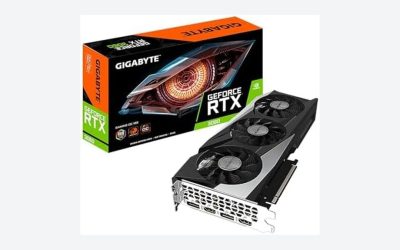
The RTX 4050 is Nvidia’s entry-level Ada Lovelace mobile GPU. It shows up soldered into budget and mid-range gaming laptops, usually paired with a Ryzen 5/7 or Core i5/i7 CPU. There is no desktop RTX 4050 card you can buy and drop into a tower. If you see one listed on a marketplace, it’s either mislabeled, a laptop GPU ripped out and modded onto a board (rare and not something to buy), or a scam listing. For a desktop build, the comparable Nvidia tier is the RTX 4060.
On paper the laptop 4050 has 2,560 CUDA cores and 6GB of GDDR6 memory on a 96-bit bus. That memory bus is the thing to pay attention to, it’s narrow, and 6GB is on the low side for 2024-2025 games at anything above 1080p with textures turned up.
Real-world performance
In practice, the RTX 4050 laptop GPU is a 1080p card, full stop. At native 1080p with high settings, it handles most current titles at 60fps or close to it. Turn on DLSS Frame Generation or Super Resolution and that number climbs comfortably, which matters because this GPU leans on DLSS more than the higher-tier Ada chips do just to stay comfortable.
Where it struggles: ray tracing with any ambition, VRAM-hungry titles at max texture settings, and anything at 1440p or above. The 6GB buffer will start capping texture quality in newer AAA games before the GPU core itself runs out of steam. That’s the actual bottleneck more often than raw shading power.
Thermals and power limits vary a lot by laptop chassis. A thin 14-inch laptop with an RTX 4050 will run meaningfully slower than a thicker 16-inch gaming laptop with the same GPU, because Nvidia lets manufacturers set different TGP (power) limits for the same chip. This is the single most important thing people miss when comparing laptops on paper.
How it stacks up
| GPU | Typical use case | VRAM | Good for |
|---|---|---|---|
| RTX 4050 (laptop) | Budget gaming laptops | 6GB | 1080p, mostly high settings, light ray tracing |
| RTX 4060 (laptop) | Mid-range gaming laptops | 8GB | 1080p high/max, some 1440p, better RT headroom |
| RTX 4060 (desktop) | Budget-mid desktop builds | 8GB | 1080p max, light 1440p |
| RTX 3050 (laptop, older gen) | Older budget laptops | 4-6GB | 1080p medium, no serious RT |
The jump from 4050 to 4060 on laptops is usually $150-250 more, and it buys you 2GB more VRAM plus a real step up in ray tracing performance. If your budget stretches that far, it’s worth it for longevity. If it doesn’t, the 4050 isn’t a bad GPU, it’s just a GPU with a shorter useful life at high settings as games get heavier.
Who should actually buy one
The RTX 4050 laptop is the right call if you want a laptop primarily for schoolwork or office use that can also play current games at 1080p without fuss, and you’re not chasing high refresh rates or ray tracing eye candy. It’s also fine for esports titles, those run comfortably at high framerates on this chip regardless of settings.
It’s the wrong call if you’re buying specifically for a high refresh rate panel (165Hz+), since the GPU often can’t feed those panels in demanding games, or if you plan to keep the laptop for 4-5 years and want it to handle future AAA titles at good settings. VRAM-limited GPUs age faster than the core performance numbers suggest.
If you’re shopping, look at full laptop listings rather than fixating on the GPU name alone, since cooling design changes the real-world result significantly. Browsing RTX 4050 gaming laptops will show you the price spread, and it’s worth comparing a few against RTX 4060 gaming laptops side by side before deciding, since the price gap is often smaller than people expect once you account for sales.
If you actually want a desktop
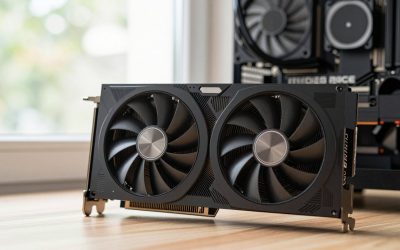
Since there’s no desktop RTX 4050, anyone building a tower on a tight budget should be looking at the RTX 4060 or, further down, last-gen cards still on shelves. Don’t let a laptop GPU name confuse your desktop shopping, the naming overlap between Nvidia’s mobile and desktop lineups is inconsistent generation to generation and it trips people up regularly. If you’re assembling a budget desktop, start from RTX 4060 graphics cards and work your pricing from there rather than searching for a 4050 desktop card that doesn’t exist.
Common mistakes with this GPU
The most common disappointment I hear about: someone buys a 4050 laptop expecting 1440p performance because “it’s RTX 4000 series, that’s new.” Generation number doesn’t tell you the tier. A 4050 is the bottom rung of that generation, and it performs like it.
The second common issue is buying a thin, light laptop expecting gaming-laptop thermals. Same GPU, same specs sheet, noticeably different real performance because of power limits and cooling. If gaming is a priority rather than an occasional feature, prioritize chassis size and cooling reviews over trusting the spec sheet alone.
FAQ
Is there a desktop version of the RTX 4050?
No. Nvidia only released the RTX 4050 as a laptop GPU. Any desktop card listed under that name is either mislabeled or not a genuine Nvidia product.
Can the RTX 4050 handle 1440p gaming?
Not reliably. It’s built for 1080p. You can push 1440p in lighter or older titles, but demanding modern games will need reduced settings or DLSS upscaling to stay smooth.
Is 6GB of VRAM enough in 2025?
It’s enough for 1080p in most current titles, but it’s the first thing that will limit this GPU as new games demand more. Expect to lower texture settings in some AAA releases before the GPU core itself becomes the bottleneck.
Should I pay more for an RTX 4060 laptop instead?
If your budget allows it, yes, mainly for the extra 2GB of VRAM and stronger ray tracing performance, which extends how long the laptop stays comfortable at good settings. If the price gap is tight, the 4050 is a reasonable compromise for 1080p gaming without high expectations.