Where to actually buy PC parts
Most people building a PC end up splitting purchases across two or three retailers rather than buying everything in one cart, and that’s usually the right call. No single store is consistently cheapest on every component category, and a few have specific weaknesses worth knowing before you commit a few hundred dollars to a GPU or CPU.
The short version: use big general retailers for CPUs, motherboards, and RAM where pricing is competitive and return policies are predictable. Use specialty PC retailers for cases, cooling, and power supplies where selection matters more. Be careful with marketplace listings for anything expensive, since third-party sellers mixed into search results are where most of the fake stock and gray-market GPU problems happen.
General retailers (Amazon, Best Buy, Costco)
Amazon’s strength is logistics, not curation. Returns are easy, shipping is fast, and for standardized parts like RAM kits, SSDs, and power supplies from known brands, there’s little downside. The risk is third-party sellers on the same listing as the “official” one — if a GPU listing has multiple sellers at wildly different prices, that’s a signal to check seller ratings before buying, not just the price. For CPUs specifically, buying from the brand’s official storefront on Amazon rather than a random seller avoids the occasional counterfeit or returned-and-resealed unit problem that pops up with high-demand chips.
Best Buy and Costco are solid for pre-builts and for people who want a physical return point if something’s dead on arrival. Costco’s return policy is unusually generous for electronics, which matters more for finicky parts like motherboards that can have DOA rates in the low single percentages.
Specialty PC retailers (Newegg, Micro Center, B&H)
Micro Center, if you have one within driving distance, is genuinely worth the trip. In-store CPU bundle deals (processor + motherboard, sometimes + RAM) routinely beat anything you’ll find online by $20-50, and you can physically inspect a case or cooler before buying instead of guessing from product photos. The catch is inventory varies store to store, so a part showing “in stock” online can be wrong by the time you arrive.
Newegg built its reputation on PC parts specifically, and its selection of niche items — specific fan sizes, odd-length cables, replacement thermal pads — is deeper than Amazon’s. The trade-off is customer service that’s historically been hit-or-miss on RMAs, and marketplace sellers mixed into listings the same way Amazon does. B&H is less obvious for PC parts but tends to have competitive pricing on GPUs and monitors with less markup gouging during shortage periods, since it’s not primarily a PC retailer and doesn’t lean into scalper-driven pricing as hard.
Where to be careful
Avoid buying GPUs or CPUs from eBay or Facebook Marketplace unless you can verify the seller in person or they have substantial transaction history. GPU scams spike predictably whenever a new generation launches and demand outstrips supply — bricks in boxes, mining cards sold as new, or boards with reflowed solder hiding a dying GPU core. If you must buy used, a GPU that’s been through mining has thermal paste that’s likely baked and fans with hundreds more running hours than a gaming card of the same age, so budget for a repaste and expect shorter remaining lifespan.
Pre-built systems from big-box retailers often use proprietary motherboards or non-standard PSU connectors that make future upgrades harder — worth checking before you buy one expecting to swap the GPU later.
Quick comparison
| Retailer | Best for | Watch out for |
|---|---|---|
| Amazon | RAM, SSDs, cables, fast returns | Third-party sellers on GPU/CPU listings |
| Micro Center | CPU/motherboard bundles, in-person inspection | Online stock often inaccurate |
| Newegg | Niche parts, deep selection | Inconsistent RMA experience |
| Costco/Best Buy | Easy returns on DOA parts | Limited PC-specific selection |
| B&H | GPUs during shortage periods | Not a dedicated PC retailer |
A practical split
For a typical build, buying the RAM and storage from Amazon is fine — these are commodity parts where the brand matters more than the retailer. The case and cooling setup are worth comparing across two stores since prices on CPU coolers can swing $10-15 between retailers for the identical SKU. For the power supply, don’t shop by price alone — an 80+ Gold unit from a reputable brand is worth paying more for than a no-name unit with a lower sticker price, since PSU failure is one of the few failure modes that can take other components down with it. Browsing power supplies by certification tier first, then price, avoids that trap.
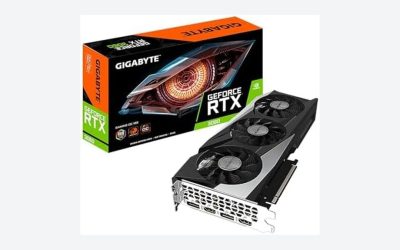
The GPU is the one part worth the extra effort of checking multiple retailers the same week, since pricing on current-generation cards can vary by 10-15% between stores depending on who’s running a rebate or bundle. There’s no retailer that’s reliably cheapest here — it’s whoever has stock and isn’t padding the price with a bundled game code you don’t want.