Where the money should actually go
Most people building a gaming PC overspend on the wrong part. The GPU drives frame rate more than anything else, so it should get the largest single cut of the budget, roughly 35-40% on a mid-range build. The CPU matters for 1% lows and minimum framerates in CPU-bound titles (strategy games, sim-heavy games, anything with lots of NPCs), but past a certain point it stops mattering for pure gaming. A $700 CPU paired with a $250 GPU will bottleneck on the GPU every time.
If you’re working with $1,200-1,500 total, a sane split looks like: $450-550 GPU, $200-250 CPU, $100 motherboard, $60-80 for 32GB of RAM, $70-90 for a 1TB NVMe SSD, $90-120 PSU, $70-90 case, $40-60 cooler. That leaves a little slack for shipping costs or a price jump on one part.
As an Amazon Associate we earn from qualifying purchases at no extra cost to you.


GPU: buy for the resolution you actually have
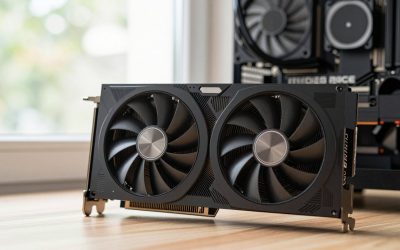
The single biggest mistake is buying a GPU for a resolution you don’t own a monitor for. If you’re gaming at 1080p, a high-end GPU is wasted money because your CPU and refresh rate become the limiting factor before the GPU does. 1440p is where the mid-range cards earn their price, and 4K is where you need to spend real money or accept DLSS/FSR upscaling doing a lot of the work.
VRAM matters more now than it did three years ago. 8GB cards are starting to stutter in newer titles at 1440p with textures maxed, especially with ray tracing on. 12GB is the realistic floor if you want the card to last through its generation; 16GB is where you stop worrying about it. Don’t buy an 8GB card today expecting it to age well.
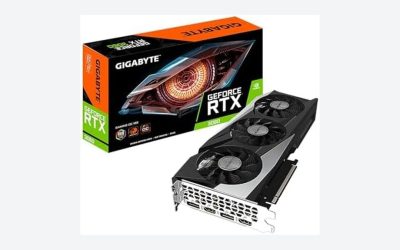
Shop by tier and VRAM rather than brand loyalty. A gaming graphics card find alternatives search sorted by price will show you the actual current spread, which shifts often enough that naming specific models in an article is a good way to recommend something discontinued or overpriced by the time you read it.
CPU: six strong cores beats eight mediocre ones
For gaming specifically, you want high single-core and per-core performance more than raw core count. Six to eight modern cores is the sweet spot; going to 12 or 16 cores helps streaming and video editing, not frame rate. The failure mode here is buying a last-gen flagship on clearance thinking it’s a deal — check whether the motherboard platform is still getting new chips, because an orphaned socket means no upgrade path later.
Budget option that’s genuinely fine: a mid-range current-gen CPU, not the flagship. The gap between a mid-tier and top-tier chip in actual gaming benchmarks is often 5-10%, while the price gap can be 2-3x. Spend the difference on the GPU instead.
RAM and storage: diminishing returns kick in fast
32GB of RAM is the current baseline for a gaming build that won’t need touching for years — 16GB still works for most games today but leaves no headroom for background apps, Discord, a browser with 40 tabs, and the game itself. Going to 64GB does nothing for frame rate unless you’re also doing heavy multitasking or content creation.
For storage, a 1TB NVMe SSD as the boot/game drive is the floor, not the ceiling. Modern game installs routinely run 80-150GB each, so 1TB fills up after four or five big titles. If budget allows, go 2TB rather than adding a second drive later — fewer things to manage, one less potential point of failure.
Cooling: don’t over-buy, don’t under-buy
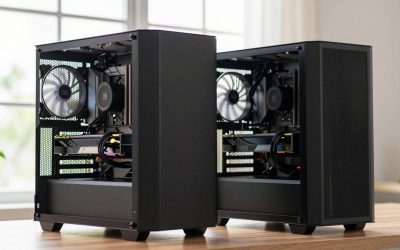
A mid-range CPU with a stock cooler or a basic tower air cooler is fine for most builds — you don’t need liquid cooling to keep a 65-105W chip happy. Where cooling actually matters is case airflow: a case with poor intake will run everything 10-15°C hotter than the same parts in a well-ventilated case, regardless of what cooler you bought. Two or three case fans doing intake, one or two doing exhaust, is the baseline layout.
AIO liquid coolers earn their price on higher-TDP chips (125W+) or in cases with limited air cooler clearance. On a budget or mid-range build, a decent CPU air cooler is quieter long-term and has nothing to leak or fail after a few years, which air coolers simply don’t do.
PSU: the one part not to cheap out on
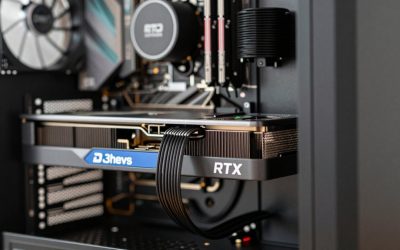
A failing power supply can take other components down with it. Buy from a reputable brand, buy 80+ Bronze or better efficiency, and size it with headroom — if your system draws 450W under load, a 650W unit runs cooler and quieter than a 500W unit redlined. Modular cabling costs a bit more but makes airflow and cable management meaningfully easier in smaller cases.
Where cheaper is genuinely fine
The case, the fans, and the cooler are where you can save money without hurting performance — a $60 case with good airflow beats a $150 case with glass panels and poor ventilation. RGB lighting, tempered glass, and fancy cable combs are cosmetic. Where you shouldn’t cut corners: PSU quality, VRAM on the GPU, and RAM capacity. Those three affect either longevity or how the system behaves under real load, not just how it looks on a shelf.
| Component | Budget build priority | Where premium pays off |
|---|---|---|
| GPU | High | Only above 1440p/high refresh |
| CPU | Medium | Streaming/multitasking, not pure gaming |
| RAM | Medium (32GB baseline) | Content creation workloads |
| Storage | Medium | Faster NVMe tiers for load times only |
| PSU | High (never skip) | Efficiency and headroom |
| Cooling | Low-Medium | High-TDP CPUs or silent operation |
| Case/aesthetics | Low | Rarely, mostly cosmetic |