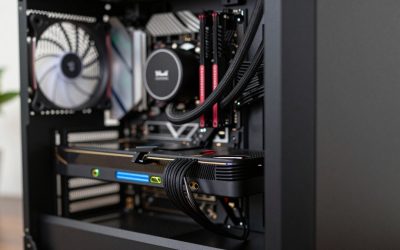
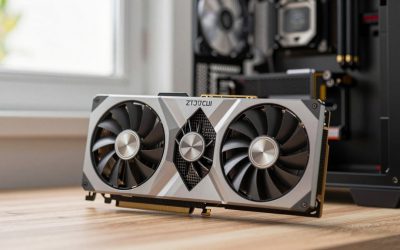
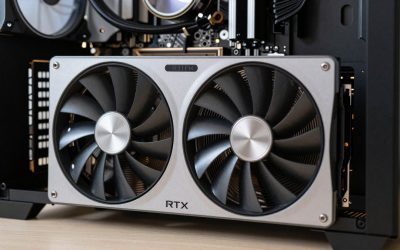
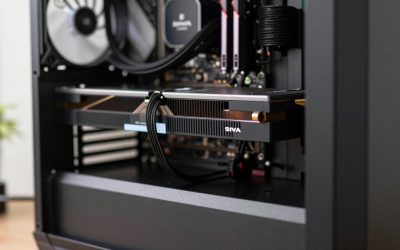
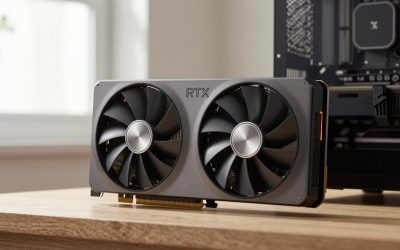
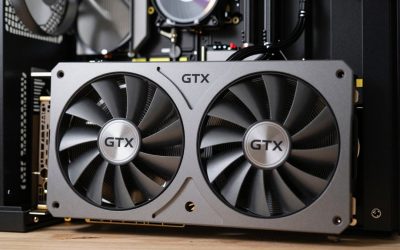
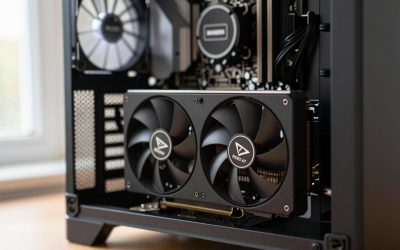
- Top Pick: MSI GAMING GeForce RTX 2070 8GB GDRR6 256-bit HDMI/DP/USB Ray Tracing Turing Architecture HDCP Graphics Card (RTX 2070 VENTUS 8G), 1620 Mhz
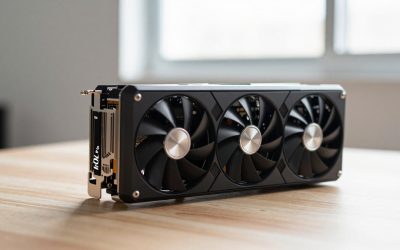
- Best Value: PowerColor Red Devil AMD Radeon RX 6750 XT Graphics Card with 12GB GDDR6 Memory
- Premium Choice: MSI Gaming Radeon RX 6750 XT 192-bit 12GB GDDR6 Boost Clock 2600MHz Dual Torx 3.0 Fans DP/HDMI FreeSync DirectX 12 VR Ready OC Graphics Card (RX 6750 XT MECH 2X 12G V1)
The RX 6750 XT is the better gaming card, roughly 40-55 percent faster than the RTX 2070 at 1440p with 12 GB of VRAM instead of 8 GB, so it is the pick for 1440p and for anyone who wants a card that lasts; the RTX 2070 only makes sense if it costs much less, your PSU cannot handle a 250 W card, or you rely on DLSS and NVIDIA software.
The RTX 2070 launched in October 2018 at $499 as NVIDIA’s first-generation RTX upper-midrange card. The RX 6750 XT launched in March 2022 at $549 as a refreshed RX 6700 XT with faster memory and higher clocks. Both are now previous-generation or older, behind RTX 50 and Radeon RX 9000 cards, and both appear mostly on the used market. The comparison is lopsided on raw speed, but upscaling, power and price still give each card a place.
As an Amazon Associate we earn from qualifying purchases at no extra cost to you.

Spec Comparison Table
| Specification | GeForce RTX 2070 | Radeon RX 6750 XT |
|---|---|---|
| Architecture | Turing | RDNA 2.0 |
| Release date | 17 October 2018 | 3 March 2022 |
| Launch price (MSRP) | $499 | $549 |
| Shader units | 2,304 CUDA cores | 2,560 stream processors |
| Boost clock | 1,620 MHz | 2,600 MHz |
| Process | 12 nm | 7 nm |
| Board power (TDP) | 175 W | 250 W |
| Memory | 8 GB GDDR6 | 12 GB GDDR6 |
| Memory bus / bandwidth | 256-bit / 448.0 GB/s | 192-bit / 432.0 GB/s |
| Cache | 4 MB L2 | 3 MB L2 + 96 MB Infinity Cache |
| Interface | PCIe 3.0 x16 | PCIe 4.0 x16 |
| Power connectors | 1x 8-pin | 1x 6-pin + 1x 8-pin |
| Length (reference) | 229 mm | 267 mm |
| Width | 2-slot | 2-slot |
| Outputs | DVI, HDMI 2.0, 2x DP 1.4a, USB-C | 1x HDMI 2.1, 3x DP 1.4a |
Shader counts are close, but the RX 6750 XT runs about 60 percent higher boost clocks and pairs its 192-bit bus with a 96 MB Infinity Cache, which raises effective bandwidth well above the raw 432 GB/s figure at 1080p and 1440p.
Raster Performance: A Full Tier Apart
Tom’s Hardware’s RX 6750 XT review measured it within about 2 percent of the RTX 3070 at 1440p, and TechSpot’s review (Hardware Unboxed) had the 3070 between level and roughly 13 percent ahead depending on the configuration. The RTX 3070 itself was marketed and reviewed as roughly RTX 2080 Ti-class, a card that Tom’s Hardware and other outlets measured well ahead of the RTX 2070. TechSpot’s RX 5700 XT revisit, meanwhile, placed the 5700 XT about 10 percent ahead of the RTX 2070, and the 6750 XT is clearly faster than the 5700 XT. Combining these reference points puts the RX 6750 XT roughly 40-55 percent ahead of the RTX 2070 at 1440p, with a smaller gap at 1080p in CPU-limited games.
Approximate frame rates, varying with settings, CPU, game patch and driver:
- 1080p high, modern AAA: RX 6750 XT around 90-140 fps; RTX 2070 around 60-95 fps.
- 1440p high: RX 6750 XT around 65-100 fps; RTX 2070 around 45-70 fps.
- 4K: neither is a native 4K card; the 6750 XT handles lighter titles or upscaled 4K more comfortably.
Ray Tracing and Upscaling Narrow the Gap
Ray tracing is closer than raster. NVIDIA’s first-generation RT cores and AMD’s first-generation ray accelerators are both modest, and RDNA 2 loses more of its performance when RT is enabled. The RX 6750 XT still tends to finish ahead in ray-traced games thanks to its large raster lead, but the margin shrinks considerably in heavier RT titles.
Upscaling is where the RTX 2070 claws back ground:
- RTX 2070: DLSS Super Resolution, including the DLSS 4 transformer model available on all RTX cards. No DLSS Frame Generation (RTX 40 and newer only), but it can use FSR 3 frame generation in supported games.
- RX 6750 XT: FSR 2 and FSR 3, including frame generation, plus driver-level AMD Fluid Motion Frames. No official FSR 4 support, which targets RX 9000 cards.
DLSS generally produces cleaner images than FSR 2 and 3, especially at lower internal resolutions. In a game running DLSS Quality on the 2070 versus FSR Quality on the 6750 XT, the image quality advantage goes to NVIDIA while the frame rate advantage stays with AMD. AMD also moved RX 5000 and RX 6000 cards to a maintenance-mode driver branch in late 2025, later clarifying that new-game support and fixes continue there.
Streaming, Software and Platform
The RTX 2070’s Turing NVENC encoder is well regarded for H.264 and HEVC streaming, and it pairs with NVIDIA Broadcast and CUDA-accelerated creative tools. The RX 6750 XT also encodes H.264 and HEVC, and AMD’s encoder quality has improved over the generations, though neither card supports AV1 encoding. On older systems, the RTX 2070’s PCIe 3.0 x16 interface is a natural match, while the RX 6750 XT’s PCIe 4.0 x16 link still has ample bandwidth on a PCIe 3.0 board, so neither card loses meaningful performance on older motherboards. The RX 6750 XT can also use Smart Access Memory (Resizable BAR) on supported platforms for a small extra gain.
VRAM Headroom
With 12 GB versus 8 GB, the RX 6750 XT has the clear advantage for the next few years. Practical targets:
- 1080p high: 8 GB works in most games; 12 GB has room to spare.
- 1440p high textures: 8 GB is increasingly tight in newer releases; 12 GB is comfortable.
- 1440p with ray tracing: 12 GB adequate in most games; 8 GB often needs reduced textures.
Power, PSU and Size
The RX 6750 XT draws 250 W against 175 W for the RTX 2070, and needs a 6-pin plus an 8-pin connector instead of a single 8-pin. It is also longer at the reference length of 267 mm versus 229 mm, and many partner 6750 XT cards are larger triple-fan designs.
PSU worked example (GPU + CPU + about 150 W headroom) with a 105 W CPU:
- RTX 2070: 175 + 105 + 150 = 430 W, so a quality 500-550 W unit.
- RX 6750 XT: 250 + 105 + 150 = 505 W, so a quality 600-650 W unit.
Anyone moving from an RTX 2070 to a 6750 XT should confirm the PSU has two PCIe leads and measure case clearance for the specific model.
Cost per Performance
At launch the RX 6750 XT cost $549, about 10 percent more than the RTX 2070’s $499, for roughly 40-55 percent more performance. That works out to about $549 / 1.45 ≈ $379 per RTX 2070-equivalent of performance at launch, against $499 for the 2070.
Used in 2026, the RTX 2070 typically sells around $120-$170, while the RX 6750 XT usually lands in the $220-$300 range. The 6750 XT costs more in absolute terms but still delivers similar or better performance per dollar, plus the VRAM advantage. Check used cards for fan wear, mining history and stable behavior under a long gaming session.
Decision Guide by Resolution and Budget
| Situation | Pick | Reason |
|---|---|---|
| 1440p gaming, high settings | RX 6750 XT | Much higher frame rates and 12 GB VRAM |
| 1080p high refresh, modern CPU | RX 6750 XT | Higher frame rate ceiling |
| 1080p on a tight budget, older games | RTX 2070 | Cheaper and still capable |
| 500 W PSU with one PCIe lead | RTX 2070 | Lower draw, single 8-pin |
| Prefers DLSS image quality or CUDA apps | RTX 2070 | DLSS and NVIDIA software ecosystem |
| Wants FSR 4 or strong ray tracing | Neither | Consider RX 9060 XT, RX 9070 or RTX 5060 Ti |
Frequently Asked Questions
How much faster is the RX 6750 XT than the RTX 2070?
Based on how published reviews place both cards relative to the RTX 3070 and RX 5700 XT, the RX 6750 XT is roughly 40-55 percent faster at 1440p. The gap is smaller at 1080p when the CPU limits frame rates. In heavy ray tracing games, the lead also narrows.
Does DLSS make the RTX 2070 competitive with the RX 6750 XT?
DLSS gives the RTX 2070 better upscaled image quality than FSR 2 or 3 on the RX 6750 XT. It does not close the raw performance gap, since the 6750 XT can also upscale with FSR. DLSS mainly lets the 2070 run higher settings at acceptable image quality.
Is the RTX 2070’s 8 GB VRAM still enough?
At 1080p, 8 GB is enough for most games at high settings. At 1440p with high textures, newer releases increasingly push past 8 GB. The RX 6750 XT’s 12 GB gives noticeably more headroom.
What power supply do I need for the RX 6750 XT?
The RX 6750 XT is rated at 250 W and needs a 6-pin and an 8-pin connector. With a 105 W CPU and 150 W headroom, the total is about 505 W. A quality 600-650 W unit is a safe choice.
Can the RTX 2070 use frame generation?
The RTX 2070 cannot use DLSS Frame Generation, which requires RTX 40 or newer cards. It can use FSR 3 frame generation in games that support it. Frame generation works best when the base frame rate is already around 60 fps.
Ready to decide? Our #1 pick for 2026 is the Architecture.
Live price & availability on Amazon.