

- Top Pick: NVIDIA GeForce RTX 3060 Ti Founders Edition 8GB GDDR6 PCI Express 4.0 Graphics Card (Renewed)
- Best Value: Dell Gaming OEM Nvidia GeForce RTX 3060 Ti 8GB GDDR6 256-bit 14Gbps PCIe 4.0 x16 Graphics Video Card 0MTVG8 08GXMM (Renewed)
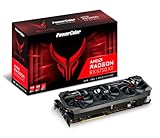
- Premium Choice: PowerColor Red Devil AMD Radeon RX 6750 XT Graphics Card with 12GB GDDR6 Memory
The RX 6750 XT is the better pick for raster-focused 1080p and 1440p gaming thanks to its higher frame rates and 12 GB of VRAM, while the RTX 3060 Ti makes more sense for ray tracing, DLSS users and smaller power supplies, especially when it is the cheaper card. In standard games the Radeon is ahead by a modest margin; with ray tracing turned on, the order flips.
- What the Spec Sheets Say
- Raster Performance: A Modest Radeon Lead
- Ray Tracing Flips the Result
- Upscaling and Frame Generation Support
- Memory Headroom Over the Next Few Years
- Value Math: Cost per Frame
- Power Draw, PSU Sizing and Physical Size
- Decision Table by Resolution and Budget
- Used-Market Advice
- Bottom Line
- Frequently Asked Questions
Both are older cards in 2026. GeForce RTX 50, Radeon RX 9000 and Intel Arc B570/B580 are the current generation, and RTX 30 and RX 6000 are two generations back. This comparison is mainly for used buyers and for anyone weighing a second-hand card against a new budget option.
As an Amazon Associate we earn from qualifying purchases at no extra cost to you.


What the Spec Sheets Say
| Spec | GeForce RTX 3060 Ti | Radeon RX 6750 XT |
|---|---|---|
| Architecture / process | Ampere, 8 nm | RDNA 2.0, 7 nm |
| Release date | 1 December 2020 | 3 March 2022 |
| Launch MSRP | $399 | $549 |
| Shaders | 4,864 CUDA cores | 2,560 stream processors |
| Boost clock | 1,665 MHz | 2,600 MHz |
| VRAM | 8 GB GDDR6, 256-bit | 12 GB GDDR6, 192-bit |
| Bandwidth | 448.0 GB/s | 432.0 GB/s |
| Cache | 4 MB L2 | 3 MB L2 + 96 MB L3 Infinity Cache |
| TDP | 200 W | 250 W |
| Interface | PCIe 4.0 x16 | PCIe 4.0 x16 |
| Power connector (reference) | 1x 12-pin on Founders Edition | 1x 6-pin + 1x 8-pin |
| Reference length / width | 242 mm, 2-slot | 267 mm, 2-slot |
| Outputs | 1x HDMI, 3x DisplayPort | 1x HDMI 2.1, 3x DisplayPort 1.4a |
The RTX 3060 Ti launched $150 cheaper and draws 50 W less. The RX 6750 XT counters with 4 GB more memory and much higher clocks. Note that the 12-pin listing applies to the Founders Edition; most retail partner RTX 3060 Ti cards use a single 8-pin connector, and a few use 8-pin plus 6-pin.
Raster Performance: A Modest Radeon Lead
Published reviews agree the RX 6750 XT is faster in traditional rendering, but disagree on how much:
- According to TechPowerUp’s review of the MSI RX 6750 XT Gaming X Trio, the Radeon was about 11% faster than the RTX 3060 Ti at 1440p.
- Tom’s Hardware measured the RX 6750 XT roughly 9% ahead of the RTX 3060 Ti at 1440p.
- Hardware Unboxed’s figures, published by TechSpot, showed a smaller gap: about 7% at 1080p and about 3% at 1440p, with the RTX 3060 Ti slightly ahead at 4K.
A fair reading is that the RX 6750 XT is about 3-11% faster at 1080p and 1440p, and that the two converge at 4K, where AMD’s 192-bit bus and cache size become limiting. In practice both cards usually deliver somewhere in the 60-90+ FPS range in demanding current games at 1440p high, and comfortably over 100 FPS in esports titles; actual numbers vary with settings, CPU, game patch and driver.
Ray Tracing Flips the Result
Turn ray tracing on and the RTX 3060 Ti moves ahead. In Tom’s Hardware’s 1440p ray tracing tests, the RTX 3060 Ti was around 24% faster than the RX 6750 XT before any upscaling. Ampere’s dedicated RT cores simply handle ray tracing more efficiently than RDNA 2’s approach.
That said, neither card is a strong ray tracing performer in 2026’s heavier titles. Path-traced modes and heavy RT presets are generally out of reach at playable frame rates without aggressive upscaling. Light ray-traced effects, such as reflections or shadows only, are where the RTX 3060 Ti’s lead is usable.
Upscaling and Frame Generation Support
RTX 3060 Ti
DLSS Super Resolution works, including the DLSS 4 transformer model that sharpens image quality in Performance and Balanced modes. DLSS Frame Generation is not available on RTX 30 cards. In games that support FSR 3, the RTX 3060 Ti can still use AMD’s frame generation.
RX 6750 XT
FSR 3.1 upscaling and frame generation are supported in compatible games, plus AMD Fluid Motion Frames at the driver level for many DirectX 11 and 12 titles. FSR 4 is officially limited to RX 9000 hardware, so the RX 6750 XT relies on the older, analytical FSR upscaler, which shows more shimmering than DLSS at lower internal resolutions.
The short version: DLSS gives the RTX 3060 Ti better-looking upscaled images, which partly closes the raster gap when you rely on upscaling. If you rarely use upscaling, the RX 6750 XT’s native lead counts for more.
Memory Headroom Over the Next Few Years
The 3060 Ti’s 8 GB is its biggest long-term risk. Several recent games exceed 8 GB at 1440p with high or ultra textures, which shows up as stutter or textures that fail to load properly. The RX 6750 XT’s 12 GB avoids most of those situations.
- 1080p: 8 GB is generally fine with high textures, occasionally needing one step down in the newest titles.
- 1440p: 12 GB is the comfortable target; 8 GB works but with more frequent texture compromises.
- Ray tracing on top: RT adds memory load, which hurts the 8 GB card more.
Value Math: Cost per Frame
Using launch MSRP and setting the RTX 3060 Ti’s 1440p raster performance at 100, with the RX 6750 XT at about 107 (the midpoint of the 3-11% range):
- RTX 3060 Ti: $399 / 100 = about $3.99 per performance point.
- RX 6750 XT: $549 / 107 = about $5.13 per performance point.
At launch prices the RTX 3060 Ti was roughly 22% better value in raster and far better in ray tracing. On the used market in 2026 the gap is usually smaller: the RTX 3060 Ti commonly trades around $170-$230 and the RX 6750 XT around $200-$260, depending on model, condition and region. Rerun the same division with the actual listings in front of you; if the RX 6750 XT costs less than about 10% more, it becomes the stronger raster value.
Power Draw, PSU Sizing and Physical Size
Rule of thumb: GPU TDP + CPU power + roughly 150 W headroom.
- RTX 3060 Ti + 105 W CPU: 200 + 105 + 150 = 455 W. A quality 550 W PSU covers it.
- RX 6750 XT + 105 W CPU: 250 + 105 + 150 = 505 W. A quality 600-650 W PSU is the safer choice.
The 50 W difference also means a bit more heat inside the case and slightly louder coolers on the Radeon under sustained load. For physical fit, the reference RTX 3060 Ti design is 242 mm and the reference RX 6750 XT is 267 mm, both two slots. Partner cards vary a lot: compact dual-fan RTX 3060 Ti models exist for small cases, while many RX 6750 XT partner designs are triple-fan and over 280 mm.
Decision Table by Resolution and Budget
| If you… | Pick |
|---|---|
| Play esports titles at 1080p high refresh | Either; buy the cheaper one |
| Play new AAA games at 1440p without RT | RX 6750 XT |
| Want ray tracing on in single-player games | RTX 3060 Ti |
| Rely on upscaling to hit 60+ FPS | RTX 3060 Ti (DLSS image quality) |
| Have a 450-550 W PSU or a small-form-factor case | RTX 3060 Ti |
| Plan to keep the card three or more years | RX 6750 XT (12 GB) |
| Need NVENC streaming or CUDA software | RTX 3060 Ti |
Used-Market Advice
Check the exact partner model before buying, since length, connectors and cooler quality vary more than the chip itself. Some RTX 3060 Ti cards were sold in an LHR (Lite Hash Rate) version and later versions use GDDR6X; gaming performance is about the same for all. Compare the price against a new Arc B580 or a current entry-level RTX 50 or RX 9000 card, which offer a warranty and newer upscaling features. When a used card is only slightly cheaper than a new one, the new card is usually the safer purchase.
Bottom Line
The RX 6750 XT is the raster winner and the card more likely to stay comfortable at 1440p thanks to its 12 GB buffer. The RTX 3060 Ti is cheaper to run, easier to fit into small builds, better at ray tracing and supported by DLSS. If both are listed at similar prices and you do not care about ray tracing, the RX 6750 XT is the safer long-term pick; if the RTX 3060 Ti is clearly cheaper, its value case is hard to beat.
Frequently Asked Questions
How much faster is the RX 6750 XT than the RTX 3060 Ti?
Published reviews put the RX 6750 XT roughly 3-11% ahead in rasterized games at 1080p and 1440p. The figure depends on the game list and whether the tested card was factory-overclocked. At 4K the two are about even.
Which is better for ray tracing?
The RTX 3060 Ti is better for ray tracing. Tom’s Hardware’s 1440p RT results showed it around 24% ahead of the RX 6750 XT. DLSS also helps it reach playable frame rates with RT enabled.
Does the RTX 3060 Ti need a 12-pin connector?
Only the NVIDIA Founders Edition uses the 12-pin connector, and it ships with an adapter. Most retail partner RTX 3060 Ti cards use a single 8-pin plug, with some models using 8-pin plus 6-pin. Check the specific model before buying used.
Is 8 GB enough for 1440p in 2026?
It is enough for many games, but a growing number of new releases need reduced texture settings to avoid stutter at 1440p with 8 GB. Cards with 12 GB or more handle these games with fewer compromises. For a long-term 1440p card, more VRAM is the safer bet.
Should I buy either card over a new budget GPU?
Only if the used price is clearly lower. Current budget cards such as the Arc B580 or entry-level RTX 50 and RX 9000 models offer similar or better performance in many cases, newer upscaling and a warranty. A used RTX 3060 Ti or RX 6750 XT makes sense when it saves a meaningful amount of money.
Ready to decide? Our #1 pick for 2026 is the Architecture / process.
Live price & availability on Amazon.












