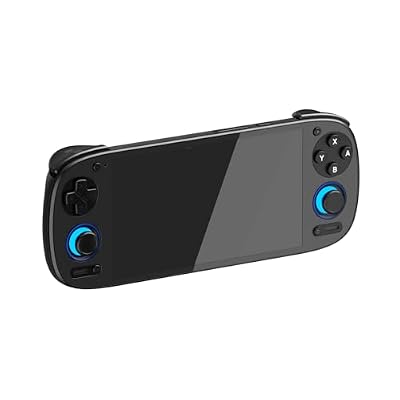
- Top Pick: GameSir G7 SE Wired Controller
- Runner-up: SteelSeries Arctis Nova 7 Gen 2
- Also consider: Logitech G502 HERO
Remnant II is the co-op soulslike shooter that bends the genre toward guns: procedurally rearranged worlds, god-like bosses and a campaign built for three players. Linux players get no native build, so the whole question is how the Windows version behaves through Proton — and the record is unusually two-sided, with a strong desktop verdict and a formal warning on the handheld side.
This status article reads that record from the primary sources: Steam’s platform flags, ProtonDB’s current summary, the anti-cheat tracker’s entry list, and Valve’s Steam Deck compatibility report. The short version: desktop Linux is a genuinely good place to play this game, while the Steam Deck badge says the opposite.
As an Amazon Associate, we earn from qualifying purchases.
Quick answer
Remnant II has no native Linux build: Steam’s record is Windows-only, so Linux players run the same PC build through Proton. ProtonDB rates it Gold on its headline tier, with best-reported and trending tiers at Platinum across 231 reports. There is no anti-cheat listing to clear, but Valve rates the Steam Deck Unsupported on graphics performance, so this is a desktop-first game.
Status at a glance
| Question | Answer |
|---|---|
| Native Linux build | No — Steam flags the game Windows-only |
| ProtonDB headline tier | Gold, strong confidence |
| ProtonDB best-reported and trending tiers | Platinum |
| ProtonDB reports behind the rating | 231 |
| Anti-cheat listing | None — no entry on Are We Anti-Cheat Yet |
| Steam Deck rating | Unsupported (graphics performance) |
| SteamOS rating | Compatible |
| Co-op | Online co-op, up to three players |
The no-native-build record
Steam’s own data settles the platform question. The store record for Remnant II — developed by Gunfire Games, published by Arc Games and THQ Nordic, released 25 July 2023 — lists platforms as Windows only: the Mac and Linux flags are both off. There is no Linux requirements tab, because there is no Linux build for one to describe.
The published Windows requirements double as the Proton translation target. The minimum names Windows 10, an Intel Core i5-7600 or AMD Ryzen 5 2600, 16 GB of RAM, a GeForce GTX 1650 or Radeon RX 590 class card, and 80 GB of storage; the recommended tier steps up to a Core i5-10600K or Ryzen 5 3600 with a GeForce RTX 2060 or Radeon RX 5700. Nothing there is exotic — a conventional Unreal Engine build with no unusual platform dependencies.
The Proton record, read closely
ProtonDB’s current summary for the game shows a split that rewards a careful read. The headline tier is Gold with strong confidence, drawn from 231 reports. The best-reported tier and the trending tier both sit at Platinum. In plain terms, the all-time aggregate is held at Gold by the game’s full history, while the reports ProtonDB weights most heavily — the strongest individual results and the recent trend — describe a game running at the top grade.
That shape fits the launch story. Remnant II arrived demanding for its engine generation, and early reports reflected the first builds; the Platinum trend says the current build on current Proton is a different proposition. Reports repeatedly describe out-of-the-box play, and multiplayer is consistently rated as working — which matters more here than in a single-player title, since broken networking would show in exactly this data. One discipline note: the headline Gold is the number to quote. Treat the Platinum trend as evidence of direction, not as the rating itself.
Anti-cheat: the empty chair
The most useful anti-cheat fact about Remnant II is an absence. Are We Anti-Cheat Yet, the tracker that catalogues games by the anti-cheat systems they ship, carries no entry for Remnant II at all — the game’s name does not appear in its current list. There is no Easy Anti-Cheat listing, no BattlEye listing, and no Denied or Broken status to work around, because there is no tracked anti-cheat attached to the title.
That matches how the game was built: it shipped without a kernel-level anti-cheat, and nothing in the current record shows one being added since. For a Linux player this is the cleanest possible position — the usual co-op failure mode, where the game runs but the anti-cheat refuses the session, has no mechanism to occur here. Proton only has to translate the game itself.
Co-op as documented
Steam’s category record for the game lists single-player, multi-player, co-op and online co-op, and the store description frames the campaign as solo play or co-op with two other friends — three travellers in a session. The Proton copy is the same PC build as the Windows copy, so a Linux player joins the same session pool as Windows players on Steam rather than a segregated one. Full controller support is listed, including DualShock and DualSense support, and Steam Cloud covers saves.
Two honest limits belong here. First, this article makes no cross-play claim beyond the Steam pool: the record read for this piece documents the Steam version’s own online co-op. Second, Proton speaks to the Steam build — a copy living in a Windows Store app library uses packaging Proton cannot install or run. The Steam copy is the Linux route, and the one the 231 reports describe.
Steam Deck: the Unsupported verdict, dissected
Valve’s current compatibility report rates the Steam Deck Unsupported, naming exactly one failing item: graphics performance. Not controls, not text legibility, not startup — Valve’s position is that the default configuration does not perform well enough on the Deck’s hardware to carry a badge.
The history explains how a game can hold this badge while clearly running. Remnant II launched with a Verified rating in July 2023, and Valve downgraded it to Unsupported roughly a month later after the launch build’s handheld performance drew sustained criticism; the badge has stayed there since. The same report’s SteamOS line resolves one step higher, at Compatible, with game startup recorded as functional — the game starts and runs on SteamOS-class systems, but the Deck’s specific performance target is not met.
Read together with ProtonDB, the picture is consistent. Desktop reports describe a demanding Unreal Engine 5 title that a desktop GPU handles comfortably through Proton; the Deck asks a much smaller integrated GPU to do the same work, and Valve’s testers judge the result below the line. Desktop players should take the Gold headline seriously; Deck owners should take the Unsupported badge just as seriously.
Gear for a three-player run
GameSir G7 SE Wired Controller

Remnant II lists full controller support, and a wired pad removes pairing and battery from a long co-op session. The G7 SE brings Hall Effect sticks and triggers, two mappable back buttons for dodge and heal, and an Xbox licence alongside USB behaviour on PC.
Specs:
– Wired USB-C connection, 3 m detachable cable
– Hall Effect sticks and Hall Effect triggers
– Two mappable back buttons, magnetic swappable faceplate
– 3.5 mm audio jack
– Officially licensed for Xbox, 221 g
SteelSeries Arctis Nova 7 Gen 2

A three-player run lives on voice: boss callouts, revive coordination and loot decisions all happen out loud. This headset carries game audio over its 2.4 GHz dongle while Bluetooth holds a phone at the same time, with a retractable microphone for a busy room.
Specs:
– 40 mm neodymium magnetic drivers
– Simultaneous 2.4 GHz wireless and Bluetooth
– Maker-rated battery life up to 54 hours, USB-C fast charge
– ClearCast Gen 2 retractable microphone with noise rejection
– Model 61730, over-ear design
Logitech G502 HERO

Players who aim with a mouse get a wired classic with enough buttons to move weapon swaps, mods and consumables off the keyboard, plus an adjustable weight system for long boss attempts.
Specs:
– HERO sensor, up to 25,600 DPI
– 11 programmable buttons
– Adjustable weight system with five 3.6 g weights
– LIGHTSYNC RGB lighting
– Wired USB connection
WD_BLACK SN850X 2TB

The install alone claims 80 GB, and procedurally assembled worlds stream constantly from disk as a party spreads out. A fast Gen4 drive gives Remnant II and a growing Proton library room on any desktop with a spare M.2 slot.
Specs:
– 2 TB capacity, M.2 2280 form factor
– PCIe Gen4 x4 NVMe interface
– Maker-rated sequential reads up to 7,300 MB/s
– Model WDS200T2X0E
Samsung T9 Portable SSD 2TB

For players who split time between two machines, a fast external drive keeps the Steam library in one place. The T9’s headline speed needs a USB 3.2 Gen 2×2 host; on a lesser port it runs at that port’s ceiling, still ample for a game library.
Specs:
– 2 TB capacity
– USB 3.2 Gen 2×2 interface over USB-C
– Maker-rated sequential reads up to 2,000 MB/s on a Gen 2×2 host
– Drop-resistant metal enclosure per maker figures
– Bus-powered, no separate adapter
How to choose
Start with the machine, not the game. On a Linux desktop with a discrete GPU at or above the recommended Windows tier — a GeForce RTX 2060 or Radeon RX 5700 class card — the Gold headline with a Platinum trend is the profile of a safe purchase. If your only machine is a Steam Deck, choose differently: Valve’s Unsupported badge is a performance verdict from the platform holder, and no ProtonDB trend overrules it.
Next, choose the copy: the Steam version is the one with the documented Proton record, the co-op pool this article describes, and Steam Cloud saves. Then equip for the session — the game is built for three, so a headset and a controller-or-mouse setup you already trust are worth more than any single upgrade. Keep expectations calibrated to the headline tier: Gold means a very good experience is the norm, with the Platinum trend suggesting recent builds have closed most of the remaining gap.
Who should skip
Skip this one if the Steam Deck is your only machine and you need a supported experience — the badge is Unsupported for a stated performance reason that has not changed. Skip it if your Linux PC sits below the published minimum graphics tier; Proton translates software, it does not add GPU headroom to an Unreal Engine 5 title that was demanding on Windows. Skip it if you refuse compatibility layers on principle, since no native build exists and none has been announced. And skip it if your copy is locked in a Windows Store app library — the Steam copy is the documented Linux route.
FAQ
Does Remnant II have a native Linux version?
No. Steam’s platform record for the game is Windows-only, with no Mac or Linux build listed and no Linux requirements published. Linux players run the Windows build through Proton.
What is Remnant II’s ProtonDB rating?
The headline tier is Gold with strong confidence across 231 reports. The best-reported and trending tiers are both Platinum, which describes the strongest and most recent reports rather than the all-time aggregate.
Will anti-cheat block Remnant II co-op on Linux?
There is no anti-cheat listing to block it. Are We Anti-Cheat Yet carries no entry for the game, and ProtonDB’s reports consistently rate its online co-op as working through Proton, in the same Steam session pool as Windows players.
Can I play Remnant II on Steam Deck?
Valve rates it Unsupported, with graphics performance as the single failing item, after downgrading the launch-era Verified badge. The game starts — the SteamOS line reads Compatible — but the Deck badge is a clear statement that performance is below Valve’s line.
Final verdict
Remnant II on Linux is a desktop story with a handheld warning attached. The platform record is clean: no native build, but also no anti-cheat entry, no launcher gate and a ProtonDB profile — Gold headline, Platinum trend, strong confidence — describing a co-op shooter working the way its Windows players expect, in the same sessions. The one red mark is Valve’s own: Steam Deck Unsupported, on performance, unchanged since the post-launch downgrade. Play it on a Linux desktop with a card in the recommended class and it earns its place in a three-player rotation; ask the Deck to carry it and you are playing against the badge.