- Top Pick: N-GEN GAMING Big & Tall Gaming Chair, Footrest, Lumbar Support, Dark Black
- Best Value: N-GEN GAMING Gaming Chair with Footrest, Lumbar, High-Back, All Black
- Premium Choice: GTPLAYER Big and Tall Gaming Chair 400lbs Heavy Duty Office Chair with Foot Rest & Ergonomic Pocket Spring Lumbar Support, High Back 3D Saddle Shaped Cushion for Back Pain Relief, Matte-Black
Bigger and taller gamers deserve a chair built to support them, not a flimsy seat that sags after a month. In 2026, the best gaming chair for big guys pairs a wide seat, high weight capacity, and durable steel framing with genuine all-day comfort. This guide compares five heavy-duty gaming chairs designed to support larger frames through the longest sessions.
As an Amazon Associate I earn from qualifying purchases.
Related guide: Best budget gaming chairs
As an Amazon Associate we earn from qualifying purchases at no extra cost to you.




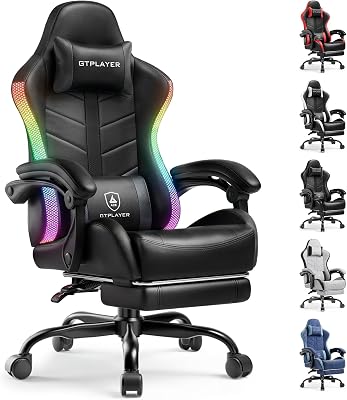
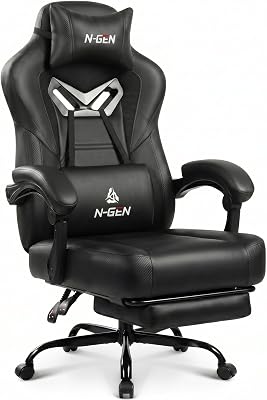

🛒 Best Price Today on Amazon
Prime members get fast, free shipping on everything above, plus member-only deals. New members get a 30-day free trial — cancel anytime.
As an Amazon Associate we earn from qualifying purchases at no extra cost to you.

What Makes the Best Gaming Chair for Big Guys in 2026
The best gaming chair for big guys is defined by weight capacity, seat width, and frame strength. Standard gaming chairs often cap out around 275 pounds with narrow seats, so larger gamers need models rated for 300 to 400-plus pounds with wide, deep cushions and a tall backrest. Reinforced steel frames, sturdy class-4 gas lifts, and dense cold-cure foam ensure the chair lasts. In 2026, several brands build specifically for big-and-tall users. If you are planning your whole setup, our guide to the best gaming desks helps match a desk to your new chair.
Best Gaming Chair for Big Guys Picks Compared
| Product | Best For | Standout Feature | Rating |
|---|---|---|---|
| Secretlab Titan Evo XL | Premium big-and-tall | Supports up to 395 lbs | |
| DXRacer Master Max | Extra-wide durability | Adjustable lumbar and 400 lb rating | |
| Vertagear SL5800 | Ergonomic support | ContourMax lumbar system | |
| Boulies Elite Max | Value big-and-tall | Wide cold-cure foam seat | |
| Steelcase Gesture (gaming setup) | Premium ergonomic office-grade | Adaptive arm and back support |
Secretlab Titan Evo XL: The Best Gaming Chair for Big Guys Overall
The Titan Evo XL is purpose-built for larger and taller gamers, supporting up to 395 pounds with a wide seat and tall backrest that accommodate broader frames comfortably. Its standout integrated adjustable lumbar support molds to your lower back, and the dense cold-cure foam resists the sagging that plagues cheaper chairs. The magnetic head pillow, 4D armrests, and premium upholstery options make it feel genuinely high-end. The steel frame and robust gas lift inspire confidence. For big-and-tall gamers who want the best all-around chair, the Titan Evo XL is the top pick and pairs beautifully with a spacious L-shaped gaming desk.
DXRacer Master Max: Extra-Wide Workhorse
The DXRacer Master Max is built like a tank, rated for up to 400 pounds with an extra-wide seat that gives larger gamers room to shift and settle. Its adjustable lumbar and neck support let you dial in comfort precisely, and the modular design means parts can be replaced rather than tossing the whole chair. The multifunction armrests and deep recline handle everything from intense gaming to naps. The heavy-duty base and thick padding are made to endure years of daily use. For durability-focused big gamers, the Master Max is a dependable heavyweight that suits a sturdy gaming monitor arm setup.
Vertagear SL5800: Ergonomic Support Specialist
The Vertagear SL5800 focuses on ergonomic support for larger frames, headlined by its ContourMax lumbar system that provides adaptive lower-back support without a separate pillow. The wide seat and tall backrest accommodate bigger gamers, and the high weight rating ensures long-term stability. Vertagear’s attention to build quality shows in the sturdy metal base and smooth-rolling casters. The breathable upholstery options help with heat during long sessions. For big guys who prioritize back health and posture, the SL5800 delivers thoughtful ergonomics in a robust package that pairs well with a comfortable gaming headset for immersion.
Boulies Elite Max: Best Value Big-and-Tall
The Boulies Elite Max proves you do not have to overspend for a quality big-and-tall chair. It offers a wide cold-cure foam seat that stays supportive over time, a high weight capacity, and a tall backrest suited to larger frames — all at a friendlier price than premium rivals. The 4D armrests and adjustable recline add versatility, and the build quality punches above its cost. The included lumbar and head pillows fine-tune comfort. For big gamers seeking excellent value without sacrificing durability, the Elite Max is a smart choice that fits neatly with a budget gaming desk setup.
Steelcase Gesture: The Premium Ergonomic Option
For big gamers who want office-grade ergonomics, adapting the Steelcase Gesture into a gaming setup delivers unmatched all-day support. Its adaptive backrest and uniquely flexible armrests move with your body, supporting a wide range of postures and larger frames with ease. The generous seat and high build quality are engineered for eight-plus-hour daily use, and Steelcase’s long warranty reflects that durability. It lacks the racing aesthetic of dedicated gaming chairs, but the ergonomic payoff is significant. For those prioritizing posture and longevity above styling, the Gesture is a premium pick beside a clean mechanical keyboard and desk.
How to Choose the Best Gaming Chair for Big Guys
Start with weight capacity and always choose a chair rated comfortably above your weight for long-term durability and safety. Check seat width and depth to ensure your frame fits without pinching, and confirm the backrest height suits your torso. Prioritize a reinforced steel frame and a class-4 gas lift, since these determine how the chair holds up under heavier loads. Dense cold-cure foam resists sagging better than cheaper padding. Finally, weigh lumbar support and armrest adjustability against budget, and complete your ergonomic station with the best gaming desk for your height.
How Weight Capacity Ratings Actually Work
A gaming chair’s weight capacity is not a simple pass or fail number. Manufacturers typically test the frame, the seat pan, and the gas lift cylinder as separate components, then publish the lowest common limit as the official rating. That means a chair advertised for a high weight limit may have a frame that could theoretically hold more, while the gas cylinder or the seat pan reinforcement is the actual ceiling. Office and task seating testing commonly references voluntary industry benchmarks such as ANSI/BIFMA, which apply static and cyclical load tests rather than a single weigh-in on a showroom floor. For a big and tall buyer, the practical takeaway is to treat the published number as a hard limit rather than a target, and to look for a meaningful safety margin above actual body weight instead of a rating that sits right at it.
Height matters as much as weight in this calculation, because a taller frame changes how load is distributed across the seat pan and backrest. Two people at the same weight but different heights put stress on different parts of the chair: a shorter, heavier frame concentrates more pressure on the seat base, while a taller frame adds leverage on the backrest recline mechanism. This is one reason some big and tall chairs publish separate height and weight ranges instead of a single combined number. If a listing only states a weight limit with no height range, it is worth assuming the chair was engineered primarily for mass rather than stature, and checking seat depth and backrest height separately before buying rather than relying on the weight figure alone.
Seat Width, Depth, and Height: Matching the Chair to Your Frame
Seat width is usually measured at the widest point of the cushion, not at the outer edge of the armrests, so two chairs listing the same overall width can feel very different once the armrest hardware is factored in. For hip widths near or above the upper end of a chair’s rated seat width, a few extra inches of clearance on each side avoids the pinched feeling that shows up after long sessions rather than in the first few minutes of sitting. Seat depth is just as important as width: a seat that is too deep forces the lower back away from the lumbar support built into the backrest, while a seat that is too shallow leaves the thighs unsupported and shifts weight forward onto the knees. Big and tall models typically extend both measurements, but rarely in the same proportion, so checking depth and width as two separate numbers is more useful than reading a single “wide seat” marketing label.
Backrest height and headrest reach follow the same logic. A taller frame needs a backrest that extends high enough to support the shoulder blades without forcing the headrest to sit below the base of the skull. Many standard gaming chairs top out around the mid-back for taller users, which is one reason dedicated big and tall models usually add several inches to overall backrest length. Armrest height adjustment range matters too, since broader shoulders change the resting angle of the forearms; an armrest that only adjusts through a short vertical range may never reach a comfortable position for a longer torso, leading to shoulder strain that shows up gradually rather than immediately.
Frame Material and Why Steel Gauge Matters
The frame underneath the upholstery, not the fabric or the recline angle, is what determines whether a chair holds up under sustained heavy use. Big and tall gaming chairs generally use a steel inner frame, but the gauge, or thickness, of that steel varies between brands and is rarely listed on a typical product page. A thicker gauge resists flexing and metal fatigue at the weld points over years of daily use, while a thinner gauge can develop a noticeable wobble at the backrest pivot after heavy use. Because gauge is hard to verify from a listing alone, a comparatively high shipped weight for the chair itself is a reasonable proxy: a heavier chair in the box usually reflects more metal in the frame, not simply thicker padding or a bigger shipping carton.
The base and casters matter just as much as the frame above them. A standard five-star base rated for lighter users can flex or crack under sustained heavy loads, which is why most big and tall models ship with a reinforced aluminum or heavy-gauge steel base instead of the nylon bases common on lighter chairs. Caster size also affects long-term durability: larger-diameter casters distribute rolling weight over more surface area and tend to wear more slowly on hard flooring than the small casters bundled with budget chairs, where the wheel housings are often the first part to crack under repeated heavy use.
Common Mistakes When Buying a Gaming Chair for Big Guys
Big and tall buyers run into a specific set of mistakes that lighter users rarely notice, mostly because the margin for error shrinks as body weight and frame size increase. The mistakes below are the ones that most often lead to an early return or a short-lived chair.
- Ignoring seat depth in favor of seat width. A wide chair with a shallow seat still leaves the thighs unsupported and keeps the lower back away from the lumbar curve, even if the hips have plenty of side clearance.
- Assuming a bigger shipping box means a bigger chair. Packaging size reflects padding density and shipping foam as much as actual seat dimensions, so checking the listed width, depth, and height numbers is more reliable than judging scale from product photos.
- Overlooking armrest adjustment range. Fixed-height or narrow-adjustment armrests rarely accommodate broader shoulders, which forces the arms into an unnatural angle during long sessions and leads to shoulder or wrist discomfort over time.
- Skipping the warranty’s weight-related exclusions. Some warranties shorten the coverage period or exclude certain claims above a stated body weight even when the chair itself is rated higher, so reading the fine print avoids a denied claim later on.
- Choosing based on recline angle alone. A wide recline range is a useful feature for breaks, but it does not substitute for a supportive lumbar system or a correctly matched seat depth, both of which matter more for sustained comfort during actual sitting.
Assembly, Break-In, and Long-Term Durability
Big and tall gaming chairs ship with more hardware than standard models, and the extra bolts exist specifically to handle higher stress points at the backrest pivot and the seat-to-base junction. Under-tightened bolts are a common early source of creaking or wobble, and the usual fix is a re-check at the one-week and four-week marks rather than treating assembly as a one-time job. Because the frame carries more load, a torque pass after the first week of regular use, simply going back over every bolt with the included tool, catches the natural settling that happens as padding compresses and metal joints seat fully into place.
Foam padding also has a break-in period that is easy to mistake for a defect. Dense foam used in big and tall seat cushions is often firmer straight out of the box than it will be after a few weeks of regular sitting, as the cell structure compresses slightly under consistent weight. This is a normal part of the material settling in and is different from foam developing a permanent dip or losing its shape entirely, which is a sign of lower-density foam breaking down rather than simply settling.
The gas lift cylinder deserves separate attention because it is rated independently from the rest of the frame. A Class 4 cylinder, common on heavy-duty office and gaming seating, is built to handle more compression cycles under higher loads than the Class 3 cylinders used in lighter chairs, and pairing a high body weight with a lower-class cylinder is one of the more common causes of a chair that slowly sinks lower over months of use even though nothing else appears damaged.
Maintenance That Extends the Life of a Big and Tall Chair
Upholstery choice affects both comfort and longevity under heavy daily use. PU leatherette is easy to wipe down and resists spills well, but it is more prone to cracking at stress points like the seat edge and armrest pads once it dries out, especially in rooms with direct sunlight or nearby heating vents. Fabric and mesh options breathe better over long sessions and tend to resist cracking altogether, but they absorb more dust and require more frequent vacuuming to avoid the material packing down unevenly in high-contact areas.
Tilt tension and lock mechanisms are also worth checking periodically rather than only at assembly. Heavier users put more cyclical stress on the tilt spring, and a mechanism that feels correctly tensioned at first can loosen gradually over months of use; most chairs include an adjustment knob underneath the seat that restores proper tension without needing a replacement part. Lubricating the recline pivot points every few months with a small amount of silicone-based lubricant, rather than a petroleum-based oil that can degrade certain plastics, keeps the mechanism from developing a dry squeak as it ages.
Finally, keeping the chair out of direct sunlight and away from heat sources extends upholstery life more than any cleaning routine. Ultraviolet exposure is one of the fastest ways to dry out and crack PU leatherette, and a chair placed near a window or a space heater will show visible wear years before an identical chair kept in indirect light, regardless of how carefully it is otherwise maintained.
Myths vs Facts About Big and Tall Gaming Chairs
A few persistent myths lead big and tall buyers toward the wrong chair even when they are shopping carefully. Separating marketing language from mechanical reality helps narrow the field faster.
Myth: a bigger-looking chair is automatically more comfortable for a bigger body. Fact: overall size does not guarantee the seat depth, lumbar curve, or armrest range are actually matched to a specific frame; a visually large chair can still fit poorly if its internal measurements are not proportioned for a taller or heavier user.
Myth: more recline angle always means better support. Fact: recline range is a comfort feature for breaks, not a substitute for correct lumbar positioning; a chair with a narrower recline range but better-matched lumbar support will usually feel more supportive during actual work or gaming than one with a wider recline range and poor lower-back contact.
Myth: lighting or styling details indicate a sturdier build. Fact: cosmetic trim is unrelated to frame gauge, cylinder class, or base material, which are the components that actually determine durability under heavy, repeated use.
Myth: the highest advertised weight rating is always the safest choice. Fact: a rating well above a user’s actual weight is a reasonable safety margin, but an extremely high rating on an otherwise narrow or shallow seat does not fix a poor fit; the rating only describes the load limit, not the shape of the chair.
Myth: every big and tall chair needs a long break-in before it feels right. Fact: minor foam settling, as described above, is normal, but persistent discomfort after several weeks of regular use usually means a sizing mismatch rather than a chair that still needs to “break in,” and continuing to use a poorly fitted chair can make existing back or hip discomfort worse over time.
Which Chair Type Fits Your Build
Matching a chair to a specific body type is more reliable than shopping by marketing claims alone. The table below groups common big and tall body types with the measurement priorities that matter most for each, based on the factors covered above.
| If You Are… | Prioritize First |
|---|---|
| Over 300 pounds with a long torso | Backrest height, lumbar adjustment range, and a reinforced gas cylinder class over seat width alone |
| Broad-shouldered but closer to average weight | Seat and armrest width, along with a wide armrest height adjustment range |
| Tall with a narrower frame | Seat depth and overall backrest length rather than seat width |
| Sitting for multiple hours at a stretch | Lumbar adjustability and multiple recline lock positions over maximum recline angle |
| Shopping on a tighter budget within the big and tall category | A verified reinforced base and an adequate, not maximal, weight rating over premium cosmetic features |
None of these priorities replace checking a manufacturer’s own seat width, depth, and height range against actual body measurements rather than clothing size, since sizing language varies between brands. A chair that excels in one category, such as weight rating, but falls short in seat depth or backrest height for a particular frame will still feel poorly matched despite a high capacity number. Treating the published measurements as the primary filter, and marketing terms such as “ergonomic” or “premium” as secondary, is a more reliable way to narrow several similarly specced options down to the one that actually fits a specific body.
Matching Desk and Monitor Setup to a Taller Frame
A big and tall chair solves seating, but it only delivers real comfort if the desk and monitor height are adjusted to match the taller seated position it creates. Raising the seat height on a big and tall chair to fit a longer leg length often pushes the eyes above a monitor’s default height range, which forces the neck into a downward angle for hours at a time even though the chair itself is correctly sized. A monitor arm with enough vertical travel, or a stack of risers under a fixed-height monitor, closes that gap without requiring a different chair.
Desk height follows the same logic. A fixed-height desk built around an average seated height can leave a taller user’s forearms resting above or below the natural elbow angle once the chair is raised to the correct leg position. A sit-stand desk with enough adjustment range, or a desk raised on sturdy risers, keeps the forearm-to-keyboard angle close to neutral regardless of how tall the chair’s seat height needs to be set. Footrests are rarely the right fix for a big and tall setup specifically because the problem is usually a desk or monitor sitting too low relative to a taller seated eye and elbow line, not legs that are too short for the floor.
Reading Manufacturer Spec Sheets: What Often Gets Left Out
Manufacturer spec sheets for gaming chairs tend to highlight weight capacity and recline angle prominently while leaving out details that matter just as much for a big and tall buyer. Seat-to-floor height range, which determines whether a taller user’s knees sit at a comfortable angle once the chair is raised, is frequently missing from headline bullet points even though it is often listed in a smaller measurements table further down the page. Checking for this range specifically, rather than assuming a chair fits because its other dimensions are generous, avoids a chair that technically supports the body weight but cannot be raised high enough for a longer leg length.
Cylinder class and frame gauge, covered earlier, are almost never listed on a standard product page, which means the shipped weight of the chair and the length of the included warranty are the two most reliable indirect signals a buyer can use without contacting the manufacturer directly. A chair with a notably longer warranty period on the frame specifically, rather than a short blanket warranty covering the whole product, usually reflects more confidence in the frame’s long-term durability under the rated load. Comparing warranty language across similarly priced options, rather than treating all “limited warranty” claims as equivalent, surfaces differences in build confidence that the spec sheet itself does not state directly.
Checking Fit and Stability Before the Return Window Closes
Most retailers allow a limited window to test a large item like a gaming chair before a return becomes difficult or costly due to the item’s size and weight. Using that window deliberately, rather than only noticing a problem after it closes, means sitting in the chair for extended periods across several days rather than judging comfort from the first few minutes, since lumbar and seat depth issues often only become noticeable after sustained sitting rather than immediately.
A simple stability check during that window is worth doing before heavier daily use begins: leaning firmly to each side and toward the back while seated should not produce any creak, shift, or perceptible flex at the base or backrest pivot. Any such movement found early, while a return is still straightforward, is far easier to address through an exchange than after months of use when a developing frame issue is more likely to be attributed to normal wear rather than a manufacturing defect present from the start. Keeping the original packaging until the return window closes is a simple precaution that keeps an exchange option open if an issue only becomes apparent after a week or two of regular use.
Armrest Design and Shoulder Width for Bigger Frames
Seat width gets most of the attention in big-and-tall chair shopping, but armrest spacing matters just as much for broader shoulders. Fixed, narrow armrests on a wide seat can still force the elbows inward, pushing the shoulders into a hunched position during long sessions regardless of how much hip room the seat provides.
Chairs with 4D armrests — adjustable for height, depth, width, and pivot angle — let a wider frame set the arms at a natural resting width instead of being locked to whatever spacing the manufacturer assumed. When comparing spec sheets, armrest adjustability is worth weighing alongside seat width, since a chair with less width but fully adjustable arms can still fit a broad-shouldered user more comfortably than a wider seat with fixed arms.
Casters, Flooring, and Weight Distribution
Standard gaming chair casters are usually rated with an average adult in mind, and that rating assumes smooth rolling on hard flooring. A heavier user puts more load through each caster’s bearing and axle, and rolling resistance increases further on carpet, so the same caster set that feels fine on hardwood can feel sluggish or wear faster on thick carpet under a heavier frame.
Big-and-tall chairs built for higher weight capacities typically pair a reinforced base with larger-diameter, dual-wheel casters to spread that load across more contact points. Swapping to carpet-rated or locking casters is a low-cost fix if the stock wheels feel underbuilt, and it’s worth checking before assuming the whole chair is undersized.
Warranty Terms That Matter More for Heavy-Duty Use
Warranty length is easy to compare, but the terms that actually protect a heavier user are the weight-capacity caveats buried in the fine print. Some manufacturers prorate or void coverage once a buyer’s weight is near the chair’s rated maximum, even if that weight is technically under the limit printed on the box.
It’s worth checking whether the gas lift cylinder, casters, and frame welds carry the same warranty length as the upholstery, since these are the components most likely to fail first under sustained heavier loads. A shorter warranty on the structural parts is a more reliable signal of real-world durability expectations than the headline number advertised on the listing.
Recline Range and Lumbar Support for a Larger Torso
Recline angle is usually advertised as a single number, but how that recline feels depends on where the backrest pivots relative to the lumbar curve. On a taller torso, a backrest that pivots too low can push the lumbar bolster past the lower back as the chair reclines, leaving the support sitting against the mid-back instead where it does little good.
Chairs with an adjustable lumbar bolster — one that slides up or down independently of the recline mechanism — let a larger frame reposition the support to match torso length rather than relying on the backrest’s fixed curve. This is worth checking directly on a spec sheet or product description, since “90-155° recline” alone says nothing about whether the lumbar support stays aligned with the lower back as the chair tilts back.
How Climate and Humidity Affect Foam and Upholstery Longevity
A heavier frame compresses foam faster than a lighter one, and that process speeds up in warm, humid rooms. PU leather is especially sensitive to this: the material is a coated fabric, and heat combined with moisture accelerates the breakdown of that coating, which shows up first as a slight tackiness and later as cracking or peeling. Mesh backs sidestep that specific problem because there is no coated surface to degrade, though the frame and tensioning straps underneath still carry the same load. Owners in warmer, more humid climates commonly report faster wear on PU leather seats than owners in drier regions, even on the same model used for similar hours. Keeping a chair out of direct sun and away from a heating vent reduces the temperature swings that make the coating brittle over time.
Shipping Weight and Delivery: What Heavy-Duty Chairs Involve
Big and tall gaming chairs use thicker steel tubing, larger foam blocks, and reinforced bases, and all of that adds shipping weight well beyond a standard gaming chair’s box. A heavier box is more likely to arrive by freight-style curbside delivery rather than a simple porch drop-off, and buyers in apartments or upper floors should plan for carrying a box that moves more easily with two people than one. It is worth checking the listed package weight and dimensions before ordering, not just the chair’s own weight capacity rating, so delivery logistics do not become a surprise on the day the box arrives.
Signs You Have Outgrown a Standard-Size Chair
A standard gaming chair rated near its limit tends to show specific warning signs before it fails outright: the gas lift starts sinking under load within a session, the side panels of the backrest flex or creak under the shoulders, or the seat pan visibly bows in the middle. Armrests set too narrow for broader shoulders also force a hunched posture that defeats the point of ergonomic support in the first place. None of these symptoms mean the chair is unsafe on day one, but they are reliable early indicators that a bigger frame, a wider seat pan, and a higher-rated gas lift would serve a larger body more comfortably than squeezing more life out of a standard-size chair.
Frequently Asked Questions
What weight capacity should a gaming chair for big guys have?
Look for a chair rated for at least 300 pounds, and ideally 350 to 400 pounds, to ensure durability and safety for larger frames. Choosing a chair rated comfortably above your actual weight extends its lifespan and prevents premature sagging or frame failure. Higher-capacity chairs also use stronger gas lifts and reinforced steel bases.
Are wide gaming chairs more comfortable for bigger users?
Yes. A wider, deeper seat gives larger gamers room to shift position and prevents the pinching that narrow racing-style chairs cause. Big-and-tall models like the Secretlab Titan Evo XL and DXRacer Master Max are specifically designed with broader seats and taller backrests to comfortably accommodate bigger frames during long gaming sessions.
How long do heavy-duty gaming chairs last?
A well-built heavy-duty gaming chair with a steel frame, class-4 gas lift, and cold-cure foam can last five years or more with daily use. Cheaper chairs with foam that compresses quickly may sag within a year. Investing in a durable big-and-tall model with quality materials pays off in long-term comfort and reliability.
Do I need extra lumbar support in a big-and-tall gaming chair?
Lumbar support is important for anyone gaming long hours, and larger users benefit especially from adjustable or built-in systems that maintain proper spine alignment. Chairs like the Vertagear SL5800 include adaptive lumbar support, while others provide pillows. Good lower-back support reduces fatigue and helps prevent discomfort during extended sessions at your desk.