

- Top Pick: Retroid Pocket 5: The Balanced Default
- Runner-up: Anbernic RG406H (White)
- Also consider: AYN Thor Pro (12GB RAM, 256GB)
A twin-stick shooter splits your brain in half. One thumb steers the character, the other aims and fires, and the two jobs never sync up into a single rhythm the way they do in a run-and-gun game. That split is why this genre is the harshest test of a retro handheld’s analog sticks. A handheld can have a superb D-pad and still be a miserable way to play Smash TV, Robotron 2084, or Geometry Wars, because none of those games care about the D-pad at all. They care about stick throw, stick position, deadzone behavior, and whether the right stick sits where your thumb expects it during a panic dodge.
As an Amazon Associate, we earn from qualifying purchases.
Quick Answer
The Retroid Pocket 5 is the safest all-round pick, with proper hall effect sticks, a bright AMOLED screen, and enough power for every twin-stick library from arcade boards to the PSP. The Anbernic RG406H suits players who want a compact 4:3 machine with full-size sticks, while the AYN Thor Pro is the premium dual-screen option and the TrimUI Smart Pro covers the budget end.
Two Sticks, Two Jobs: What This Genre Actually Demands
In a twin-stick shooter the left stick is a movement control and the right stick is a weapon control, and they fail in different ways. The left stick needs a clean gate and predictable diagonals, because movement in Robotron or Smash TV is constant micro-correction: you are never holding one direction for long, you are feathering eight directions in rapid sequence. A stick with a sloppy center or a wide factory deadzone makes that feathering feel like guesswork.
The right stick has the opposite problem. It spends most of its life pushed to the rim and held there, rotating smoothly through 360 degrees as you sweep fire around your character. Stick tension matters here. A stick that is too loose drifts off the angle you set; one that is too stiff tires your thumb during long arena sessions. This is also why stick position is a real buying factor rather than a comfort footnote. On symmetrical layouts both sticks sit low, which suits long sessions. On offset layouts the left stick sits high, closer to where a modern gamepad puts it. Neither is wrong, but switching between them mid-library is genuinely disorienting, so pick the layout that matches the controllers you already use most.
Deadzone deserves a word of its own. Emulator frontends and most Android-based handhelds let you adjust the analog deadzone in software, which rescues a mediocre stick for this genre. A slightly larger deadzone hides center wobble during movement, while aiming sticks usually want the smallest deadzone the hardware allows so small aim corrections register. Handhelds with hall effect sticks hold their center calibration over time, which means the deadzone you set on day one still behaves the same months later.
Retroid Pocket 5: The Balanced Default
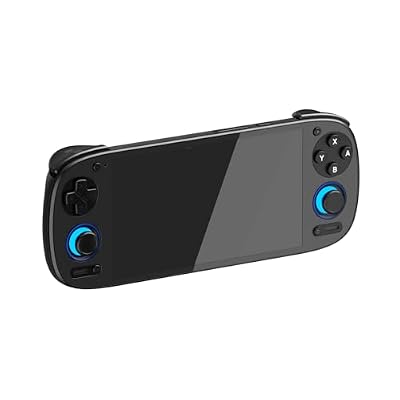
The Pocket 5 earns the top spot because it gets every twin-stick variable right at once. Its hall effect sticks are full-size with smooth rim travel, the symmetrical layout matches the DualShock-era consoles this library comes from, and the Snapdragon 865 has headroom for the entire twin-stick catalogue, from arcade Robotron through PSP titles like Killzone Liberation played with its twin-stick mode. The 5.5-inch AMOLED panel keeps arena shooters readable: enemy sprites stay distinct against dark backgrounds, which matters in games where a single missed pixel of movement ends a run.
Specs
- Display: 5.5-inch AMOLED, 1920 by 1080
- Chipset: Snapdragon 865
- Memory: 8GB RAM, 128GB storage plus microSD
- Sticks: Dual hall effect analog sticks, symmetrical layout
- Battery: 5,000mAh
- System: Android 13
Anbernic RG406H: Compact 4:3 with Real Sticks
Most 4:3 handhelds treat analog sticks as an afterthought, shrinking them to fit the retro shell. The RG406H does the opposite. Its sticks are full-size hall effect units in a stacked, offset layout, and they sit on a wide horizontal body with proper grips, so long twin-stick sessions do not cramp your hands. The 4:3 screen is the right shape for the arcade and PS1 libraries where this genre was born, and the Unisoc T820 handles those systems comfortably, including the Dreamcast twin-stick titles that punish weaker chips.
Specs
- Display: 4-inch IPS, 960 by 720, 4:3
- Chipset: Unisoc T820
- Memory: 8GB RAM, 128GB storage plus microSD
- Sticks: Dual hall effect analog sticks, offset layout
- Battery: 5,000mAh
- System: Android 13
AYN Thor Pro: The Dual-Screen Premium Pick
The Thor Pro looks like an odd recommendation for arena shooters until you remember how much of the modern twin-stick library lives on the Nintendo DS and 3DS. Geometry Wars Galaxies and dozens of DS shooters use the second screen for maps, radar, and score pressure, and the Thor’s dual AMOLED panels show both screens at once instead of squeezing them onto one display. The Snapdragon 8 Gen 2 also makes it the strongest handheld here, and its hall sticks and hall triggers are the best-feeling controls in this roundup. It is the pick for players whose twin-stick library spans every era at once.
Specs
- Display: 6-inch AMOLED main screen, 3.92-inch AMOLED second screen
- Chipset: Snapdragon 8 Gen 2
- Memory: 12GB RAM, 256GB storage
- Sticks: Dual hall effect analog sticks, symmetrical layout
- Battery: 6,000mAh
- System: Android 13
Anbernic RG556: Big AMOLED, Easygoing Sticks
The RG556 takes a different route to the same genre: a large 5.48-inch AMOLED screen in a wide, sculpted shell that fills the hands. Its hall effect sticks have a lighter tension than the Pocket 5’s, which some players prefer for the constant rim-riding that arena shooters demand, and the big display makes busy bullet patterns easier to read at a glance. The T820 chipset covers arcade, PS1, Dreamcast, and PSP twin-stick games well, though the very top of the PS2 library is beyond it. For players who mostly play seated and want the screen to do the heavy lifting, it is a satisfying middle option.
Specs
- Display: 5.48-inch AMOLED, 1920 by 1080
- Chipset: Unisoc T820
- Memory: 8GB RAM, 128GB storage plus microSD
- Sticks: Dual hall effect analog sticks, offset layout
- Battery: 5,500mAh
- System: Android 13
TrimUI Smart Pro: The Budget Way In
The Smart Pro’s sticks are the smallest in this roundup, and pretending otherwise would be dishonest. They are short-throw units that suit the 8-bit and 16-bit twin-stick library, homebrew arena shooters, and lighter arcade boards rather than fast modern-style arena play. Within that honest ceiling, though, the package is hard to argue with: a bright 4.96-inch screen, a slim body that disappears into a bag, and battery life that outlasts everything else here. It is the right first handheld for a player whose twin-stick interest starts with Robotron and Smash TV rather than the PSP catalogue.
Specs
- Display: 4.96-inch IPS, 1280 by 720
- Chipset: Allwinner A133P
- Memory: 1GB RAM, 8GB storage plus microSD
- Sticks: Dual analog sticks, symmetrical layout
- Battery: 5,000mAh
- System: Linux-based
How to Choose
Start with your library, not the spec sheet. If your twin-stick time is mostly arcade, PS1, and Dreamcast, the RG406H’s 4:3 screen and the Smart Pro’s price tier both make sense, and the extra power of the Thor Pro buys you little. If the PSP and DS catalogues matter, the Pocket 5 and Thor Pro pull ahead quickly, because those libraries assume stronger chips and, in the DS case, a second screen.
Next, decide your stick layout and commit to it. Symmetrical sticks (Pocket 5, Thor Pro, Smart Pro) suit players coming from PlayStation controllers. Offset sticks (RG406H, RG556) suit players coming from Xbox-style pads. Mixing layouts across two handhelds is the fastest way to make both feel wrong during a run.
Finally, weigh screen size against session length. Twin-stick shooters are played in short, intense bursts, so pocketability matters less than grip comfort. The wide shells of the RG556 and RG406H reward seated play, while the Smart Pro is the only one here that genuinely suits a commute.
Who Should Skip These Handhelds
Skip this entire category if your retro library is D-pad-first. Platformers, fighting games, and run-and-gun titles barely touch analog sticks, and a cheaper D-pad-focused handheld will serve you better. Skip the TrimUI Smart Pro if your list includes PSP or Dreamcast twin-stick games, since its chipset and small sticks both hit their ceiling there. Skip the Thor Pro if you will never use the second screen; you would be paying a premium for hardware your library ignores. And skip every handheld here if you want modern twin-stick releases with online features, because these machines are built around classic libraries and offline play.
Frequently Asked Questions
Can I play twin-stick shooters well with a D-pad instead?
For the oldest arcade titles you can map movement to the D-pad, but you lose the separate aim direction that defines the genre. Games designed around two sticks, including Smash TV’s home conversions and everything after, assume independent aim. A D-pad-only setup turns those games into a compromise rather than a port.
Does hall effect actually matter for this genre?
Yes, more than in most genres. Twin-stick play holds sticks at the rim and sweeps them constantly, which wears potentiometer tracks exactly where accuracy matters most. Hall effect sticks sense position magnetically, so the center point and deadzone behavior stay stable over years of that sweeping motion.
Which screen shape suits twin-stick shooters best?
Most of the classic library is 4:3, so a 4:3 panel like the RG406H’s shows those games at full size with no wasted space. Widescreen panels earn their keep with PSP titles and modern-style arena shooters. Neither shape is a wrong answer; match the panel to the era you play most.
Are these handhelds powerful enough for Dreamcast and PSP twin-stick games?
The Pocket 5, Thor Pro, RG406H, and RG556 all handle the Dreamcast and PSP twin-stick libraries well. The TrimUI Smart Pro is the exception: it is best kept to arcade, 8-bit, and 16-bit libraries, where its smaller sticks and lighter chipset are not a limitation.
Final Verdict
Twin-stick shooters expose weak sticks faster than any other retro genre, so buy for the sticks first and the chipset second. The Retroid Pocket 5 is the default recommendation because its sticks, screen, and power are all strong at once. The RG406H is the connoisseur’s 4:3 choice, the Thor Pro owns the dual-screen library, the RG556 is the comfortable big-screen option, and the TrimUI Smart Pro is the honest budget entry point. Pick the one whose stick layout matches the gamepads already in your hands, and the genre will feel right from the first run.







