

- Top Pick: Lenovo Legion Go 2
- Runner-up: Lenovo Legion Go S
- Also consider: Retroid Pocket 5
Golf is the emulation genre where the spec sheet matters least and the timing chain matters most. A role-playing game forgives a sluggish frame; a three-click swing meter does not. The emulated golf shelf is deep — Hot Shots Golf and Pangya on PSP, Tiger Woods and Hot Shots Golf Fore on PlayStation 2, Mario Golf on Nintendo 64 and Game Boy Advance — and almost none of it needs a flagship chip. What it needs is an emulator and a screen that show you the meter the moment you pressed the button.
As an Amazon Associate, we earn from qualifying purchases.
So this ranking leads with latency and legibility rather than raw power. The picks below are judged on documented tools that keep a swing honest — run-ahead where the core supports it, high-refresh and variable-refresh panels, stick quality for analog-swing games — plus what shapes a full round: screen size for reading greens, suspend and resume, and battery capacity. Every game mentioned assumes a dump of a cartridge or disc you own; nothing here points to download sources.
This article contains affiliate links, and we may earn a commission when you buy through them at no extra cost to you.
Quick Answer
For emulated golf, the meter is the game: pick a handheld whose emulator supports run-ahead and whose screen stays readable outdoors. The Legion Go 2 leads on screen and power, the Legion Go S is the balanced pick, and the Retroid Pocket 5 covers PSP and GBA golf in a pocket size.
Two Religions: The Three-Click Meter and the Analog Swing
Classic golf games time your shot in one of two ways, and each punishes a different weakness in your setup. The older religion is the three-click meter used by Hot Shots Golf, Mario Golf and Pangya: press once to start the bar, once for power, and once more for accuracy as a marker sweeps back toward a target zone. The third click is a pure reaction test. Every step between your thumb and the displayed frame — emulator processing, the panel’s refresh behaviour, the controller link — shifts where the marker appears to stop, so a setup that feels fine in a platformer can quietly ruin a round.
RetroArch documents the main countermeasure: run-ahead, a feature that runs the emulation ahead internally and rolls back, shaving input-to-display delay for the lighter cores that support it — and the meter games live exactly in those tiers. High-refresh panels help from the other end: a 120Hz or 144Hz screen presents frames sooner than a 60Hz one, and variable refresh keeps the sweep smooth instead of juddering. None of this needs invented numbers; the chain is simply shorter on the hardware below.
The second religion arrived on PlayStation 2, where the Tiger Woods PGA Tour games moved the swing to the analog stick: pull back, push through, and the stick’s path shapes the shot. Here the meter cannot save you — stick resolution, deadzones and a clean return to centre decide whether a draw stays a draw. The later Hot Shots Golf games kept the click meter, which is why the PS2 tier appears in both camps and this ranking weighs stick quality alongside the screen.
The Picks, Ranked by Timing Chain and Screen
Lenovo Legion Go 2

The biggest, brightest canvas in this ranking, and the safest home for the whole shelf. Its 8.8-inch OLED runs 1920×1200 at up to 144Hz, giving the three-click meter the shortest display leg here and making greens easy to read: subtle breaks that vanish on small LCDs stay visible here. The Ryzen Z2 with 32GB of memory treats the PlayStation 2 tier — Tiger Woods’ analog swings, Hot Shots Golf Fore’s meter — as light work, and the 74Wh battery is sized for full rounds, not nine-hole sips. Detachable controllers allow tabletop play; 2TB of storage swallows a full multi-system library. The honest cost is weight: roughly 920g with controllers is couch-and-desk territory, not a coat pocket.
Specs:
– Chip: AMD Ryzen Z2, 8 cores / 16 threads
– Display: 8.8-inch OLED, 1920×1200, up to 144Hz
– Memory and storage: 32GB LPDDR5X, 2TB SSD
– Battery: 74Wh
– Weight: about 920g with controllers attached
– System: Windows 11
Lenovo Legion Go S

The balanced Windows pick, and the one most golfers should buy. Its 8-inch 1920×1200 panel runs from 48 to 120Hz with variable refresh, so meter sweeps stay fluid while the display sips power. The Ryzen Z2 Go chip is a step down from the Go 2, but golf is not where that step shows: PSP and cartridge tiers run with room for run-ahead, and PlayStation 2 meter games are well within reach. At about 740g it is easier to hold through eighteen holes than its bigger sibling, and the 55.5Wh battery still covers long sessions. One caution: other configurations share the Go S name, so confirm the Z2 Go chip and Windows 11 on the product page before ordering.
Specs:
– Chip: AMD Ryzen Z2 Go, 4 cores / 8 threads
– Display: 8-inch IPS, 1920×1200, 48-120Hz variable refresh
– Memory and storage: 16GB LPDDR5X, 512GB SSD
– Battery: 55.5Wh
– Weight: about 740g
– System: Windows 11 (Z2 Go configuration)
Retroid Pocket 5
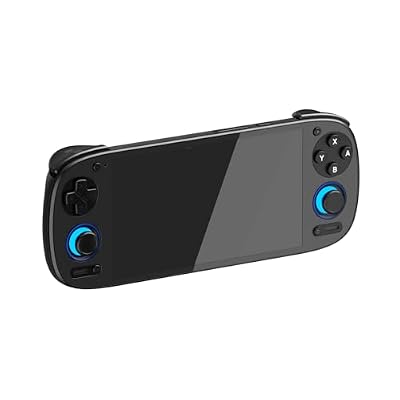
The pocket pick, for the tiers where golf emulation is featherweight. The Snapdragon 865 under Android 13 runs the PSP library — Hot Shots Golf: Open Tee and its sequel, Pangya Fantasy Golf — plus Mario Golf on Nintendo 64 and Game Boy Advance, in a body of about 280g that disappears into a jacket pocket. The 5.5-inch AMOLED at 1080p is smaller than the Windows screens, yet its contrast keeps meters crisp and greens readable, and Android’s instant suspend and resume suits golf’s stop-start rhythm: close mid-fairway, reopen later, finish the hole. What it will not do is the PlayStation 2 tier — Tiger Woods stays home. If your shelf is PSP and cartridge golf, that trade buys the most portable honest timing chain here, with run-ahead in its RetroArch cores.
Specs:
– Chip: Qualcomm Snapdragon 865
– Display: 5.5-inch AMOLED touchscreen, 1920×1080
– Memory and storage: 8GB RAM, 128GB, microSD slot
– Battery: 5000mAh
– Weight: about 280g
– System: Android 13
See the Retroid Pocket 5 on Amazon
ASUS ROG Xbox Ally

The lightest full Windows handheld here at about 670g, and the easiest way to carry the PlayStation 2 tier without the Go 2’s bulk. The Ryzen Z2 A chip with 16GB of memory handles PCSX2’s golf shelf — click-meter Hot Shots and analog-swing Tiger Woods alike — while the 7-inch 1080p IPS panel refreshes at 120Hz with FreeSync Premium, keeping meter sweeps clean. The smaller screen is the compromise: reading a subtle break on a seven-inch panel asks more of your eyes than the Lenovo screens do, and 512GB fills faster if your library wanders beyond golf. The 60Wh battery sits between the two Lenovo picks, and the Xbox full screen experience keeps Windows out of the way.
Specs:
– Chip: AMD Ryzen Z2 A, 4 cores / 8 threads
– Display: 7-inch IPS, 1920×1080, 120Hz, FreeSync Premium
– Memory and storage: 16GB LPDDR5X, 512GB SSD
– Battery: 60Wh
– Weight: about 670g
– System: Windows 11
See the ROG Xbox Ally on Amazon
8BitDo Pro 2
The odd pick out: not a handheld, but the controller that fixes the second religion. If your golf setup lives on a desktop, a mini PC or a docked handheld driving a television, the Pro 2 gives the analog-swing games a symmetrical-stick pad with a clean centre return, and its wired USB-C mode removes the wireless link from the timing chain entirely for three-click sessions. The maker’s published design covers Switch, Windows, Android and macOS modes, so the same pad follows your library between machines, and the button layout keeps the meter clicks on face buttons where they belong. It pairs with any pick above when docked, or with a PC directly. Battery capacity is not stated by the maker, so treat wired mode as the default for serious rounds.
Specs:
– Connection: Bluetooth and USB-C wired
– Compatibility: Switch, Windows, Android, macOS modes (per maker)
– Layout: symmetrical analog sticks, full face-button set
– Battery capacity: not stated
– Extras: profile switching, button mapping software
See the 8BitDo Pro 2 on Amazon
How to Choose
Start with your shelf, not the spec sheet. If your golf is PSP and cartridge games — Hot Shots Golf: Open Tee, Pangya, Mario Golf — the Retroid Pocket 5 covers it in the smallest body here, with run-ahead in its cores. If PlayStation 2 is on the list, you need Windows: the Legion Go S for value and holdability, the Legion Go 2 for the biggest screen and the most headroom, the ROG Xbox Ally for the lightest carry.
Then judge the timing chain: prefer 120Hz or above for meter games, variable refresh if you can get it, and run-ahead on the lighter cores. For analog-swing games, weigh the sticks; played docked, the Pro 2’s wired mode is the cleanest chain of all.
Finally, plan for the round, not the hole. Eighteen holes with practice swings is a long session; battery capacity in watt-hours and a suspend you trust matter more than another tier of chip. PlayStation 2 disc images are the only heavyweights in this library, so check storage too.
Who Should Skip
Skip this category if your golf gaming is modern: current simulation and arcade golf titles are native PC and console games that no emulator improves. Skip the Windows handhelds if your shelf stops at PSP and cartridge games — the Pocket 5 does that job smaller and lighter. Skip the Legion Go 2 if you mostly play standing, commuting or anywhere one-handed; its weight is real. And skip emulation entirely if you are not prepared to dump your own discs and cartridges; there is no legitimate shortcut around that step.
FAQ
Which emulators run the classic golf games?
PPSSPP covers the PSP shelf (Hot Shots Golf: Open Tee 1 and 2, Pangya Fantasy Golf), PCSX2 covers PlayStation 2 (Hot Shots Golf 3 and Fore, the Tiger Woods PGA Tour games), and RetroArch cores cover Nintendo 64 and Game Boy Advance (Mario Golf and Mario Golf: Advance Tour). All run from dumps of games you own.
Does run-ahead matter for a golf meter?
Yes — it is one of the few genres where the feature earns its keep. Run-ahead is documented in RetroArch for the lighter cores, shortening the path between click and displayed marker. It belongs to the cartridge and PSP-class tiers; the PlayStation 2 tier leans on high-refresh panels and emulator settings instead.
Can one charge last a full round?
The batteries here range from 55.5Wh to 74Wh in the Windows picks, and golf tiers are light loads compared with modern games. The more useful feature is suspend and resume: every pick can pause a round and return to the exact fairway, which matters more across a day.
Do I need a BIOS file to play?
For PlayStation 2 games, PCSX2 requires the BIOS from a console you own — dump it from your own hardware. The PSP and cartridge routes are lighter: PPSSPP runs without a console BIOS dump, and the Nintendo 64 and Game Boy Advance cores for these games do not require one either.
Final Verdict
Golf rewards the honest setup over the powerful one. The Legion Go 2 is the best handheld for golf games overall — the largest, fastest-refreshing screen, the most headroom, and a battery built for full rounds. The Legion Go S is the pick most players should buy, and the Retroid Pocket 5 owns the PSP and cartridge shelf in true pocket form. Add the ROG Xbox Ally for Windows at the lightest weight, and the 8BitDo Pro 2 if your rounds happen on a television. Choose by your shelf, keep the chain short, and the meter stops where you told it to.







