

- Top Pick: Retroid Pocket 5
- Runner-up: Lenovo Legion Go S
- Also consider: ASUS ROG Xbox Ally
Fishing games are the calmest shelf in the emulation library, and they judge hardware by rules no other genre uses. A bite in Sega Bass Fishing, Reel Fishing or a PSP angling title is a vibration before it is a picture: the fish announces itself through the motors in your hands, then the fight happens on analog sticks and triggers that meter out line tension. Long casts are followed by long, quiet waits, so battery behaviour and instant wake matter more than raw chip power, and this is the one genre genuinely played outdoors, on docks and boatsides, in real daylight.
As an Amazon Associate, we earn from qualifying purchases.
That flips the usual ranking. The best handhelds for fishing games are not the fastest machines in the cluster; they are the ones with honest rumble, gentle analog control, screens that stay readable outside, and the patience to idle through a slow afternoon without dying. Every game mentioned here runs from your own dumped discs and cartridges, through legal emulators, on the five picks below.
This article contains affiliate links, and we may earn a commission when you buy through them at no extra cost to you.
Quick Answer
Start with the Retroid Pocket 5: Android emulators expose device vibration cleanly, it wakes instantly, and its featherweight library sips the 5,000mAh battery through long, quiet sessions. Windows anglers should take the Legion Go S for the full emulator menu and a 55.5Wh battery, while the Legion Go 2 is the big-screen dockside luxury. Set the emulated controller to a rumble-capable type first, or the bite never reaches your hands.
The Bite Is a Buzz First
Rumble is not decoration in this genre; it is the primary sense. The original hardware knew it: the Dreamcast had a dedicated fishing controller, the N64 sold a Rumble Pak, and the DualShock’s motors were the whole feedback loop in Reel Fishing. Emulators gate that loop behind settings, so check yours before blaming the hardware. DuckStation only drives vibration when the emulated controller type is set to DualShock; leave the port on the digital pad type and there are no motors for the game to call. RetroArch puts the switch under Settings, Input, Haptic Feedback/Vibration, where the toggle is literally named Enable Device Vibration (For Supported Cores) — that parenthetical is the honest part, because the core itself must send rumble events before any handheld can buzz.
N64 emulators take the accessory route: Mupen64Plus-based cores document the emulated controller pak as a selectable option, and choosing the Rumble Pak setting is what switches feedback on in games that support it. Dolphin exposes rumble as a motor output inside its emulated controller configuration. The pattern is the same everywhere: rumble in emulation is opt-in at two layers, the emulator’s and the game’s, and a fishing session with both layers set feels completely different from one with either layer off.
Analog Finesse and Dockside Light
The second axis is touch. Casting and reeling were designed around sweeping stick motions and trigger pressure, and Sega’s rod controller made the point physically; on a handheld, that job falls to stick throw and trigger travel, so pads with smooth, full-range analog controls serve the genre better than clicky, short-throw ones. The third axis is daylight. Makers rate the ROG Xbox Ally panel at 500 nits, and OLED panels like the Pocket 5’s and the Legion Go 2’s hold their contrast outdoors in a way older LCDs never did. None of that makes any of these screens waterproof, so dockside play is a dry-hands activity on every pick here.
The Picks, Ranked by Rumble and Calm
Retroid Pocket 5
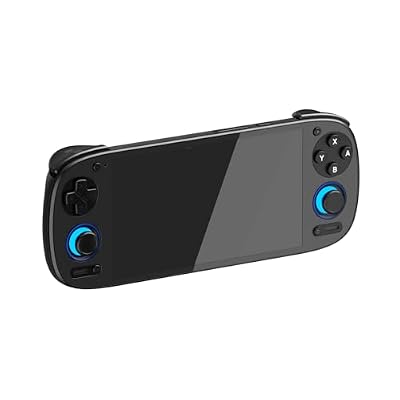
The Pocket 5 is the natural home of this library. Android builds of DuckStation, PPSSPP and RetroArch all reach the device vibration motor through documented settings, so the bite arrives without a driver fight, and the Snapdragon 865 is far beyond what PS1, N64, Dreamcast and PSP fishing shelves ask of it. At about 280 grams it is the one pick you can hold through a two-hour session without thinking about your wrists, Android’s sleep wakes instantly when a cast needs making, and the 5.5-inch AMOLED stays legible in shade and bright enough in open light. The whole fishing library, from Game Boy Advance cartridges to PSP discs, is featherweight, so 128GB of storage is effectively unlimited here.
Specs:
– Chip: Qualcomm Snapdragon 865
– Memory and storage: 8GB RAM, 128GB storage, microSD expansion
– Display: 5.5-inch 1920×1080 AMOLED touchscreen
– Battery: 5,000mAh (watt-hours not stated)
– Weight: about 280g
– System: Android 13
Lenovo Legion Go S

The Go S is the Windows route, and Windows is where every fishing-capable emulator lives at full strength: DuckStation for Reel Fishing, Flycast for the Sega pair, Mupen64Plus cores for the N64 shelf. The Ryzen Z2 Go chip in this configuration is modest by 2026 standards and completely sufficient here, which buys quiet fans and a 55.5Wh battery sized for idle-heavy play. Its 8-inch 1920×1200 screen runs 48-120Hz with variable refresh, and the whole machine weighs about 740 grams, light enough for a lap session on a boat. Note that this ASIN is the Z2 Go Windows 11 configuration; a separate SteamOS model shares the Go S name.
Specs:
– Chip: AMD Ryzen Z2 Go (Zen 3, 4 cores, 8 threads, up to 4.3GHz)
– Memory: 16GB LPDDR5x-6400, soldered
– Storage: 512GB, M.2 2242 slot
– Display: 8-inch 1920×1200, 48-120Hz variable refresh
– Battery: 55.5Wh
– Weight: about 740g
– Brightness rating: not stated
ASUS ROG Xbox Ally

The base Xbox Ally earns its place on one detail the genre cares about: Hall Effect analog triggers, which read pressure smoothly and do not drift, exactly what metering line tension asks for. Its 60Wh battery is the largest in this size class, the 7-inch 1080p 120Hz panel carries ASUS’s 500-nit rating for dockside light, and at about 670 grams it is the lightest Windows handheld here. The Ryzen Z2 A chip is the weakest in this roundup and still clears the entire emulated fishing shelf with room to spare, because none of these games were built to stress hardware even in their own era.
Specs:
– Chip: AMD Ryzen Z2 A (Zen 2, 4 cores, 8 threads, RDNA 2 graphics)
– Memory: 16GB LPDDR5X-6400
– Storage: 512GB, M.2 2280 slot
– Display: 7-inch 1920×1080 IPS, 120Hz, FreeSync Premium, 500 nits (ASUS rating)
– Battery: 60Wh
– Weight: about 670g
– Triggers: Hall Effect analog triggers
Lenovo Legion Go 2

The Go 2 is the dockside luxury: an 8.8-inch OLED at 1920×1200 and 144Hz, a 74Wh battery, and detachable TrueStrike controllers with Hall-effect sticks and triggers, so the rod work happens on excellent analog hardware and the screen stays big and calm between bites. The Ryzen Z2 chip is wildly more power than fishing games can use; you are buying the panel, the battery and the controllers, and for a genre built on waiting and watching water, that trade is defensible. At about 920 grams with controllers attached it is a two-handed, settled-in machine rather than a pocket companion, and it is priced by its specs as the flagship it is — in capability terms, simply the most of everything here.
Specs:
– Chip: AMD Ryzen Z2 (Zen 5, 8 cores, 16 threads, up to 5.1GHz)
– Memory: 32GB LPDDR5X, soldered
– Storage: 2TB, M.2 2280 slot
– Display: 8.8-inch 1920×1200 OLED, 144Hz
– Battery: 74Wh
– Weight: about 920g with controllers
– Controllers: detachable TrueStrike, Hall-effect sticks and triggers
8BitDo Pro 2
The Pro 2 is the rumble-in-hand upgrade for anyone who already owns a screen: dock a Windows handheld or a laptop, and this pad’s dual motors deliver the bite while its symmetrical sticks and full-size triggers handle rod and reel work. It pairs over Bluetooth or USB-C, carries two remappable back buttons and profile switching for per-emulator layouts, and its documented multi-platform modes cover Switch, Windows, Android and macOS. As the only pick here with no screen or battery of its own to manage — its rechargeable pack’s capacity is not stated — it turns any setup into a fishing setup, which is why it closes the list.
Specs:
– Connection: Bluetooth and wired USB-C
– Layout: dual analog sticks, analog triggers, dual rumble motors
– Extras: two back buttons, profile switching, 8BitDo Ultimate Software support
– Compatibility: Switch, Windows, Android, macOS (maker-stated modes)
– Battery: rechargeable pack, capacity not stated
– Weight: not stated
How to Choose
- Follow the rumble path first. Pick the platform whose emulators expose vibration in the way you will actually configure: Android device vibration on the Pocket 5, full per-emulator controller settings on the Windows machines.
- Match the machine to the shelf. PS1, N64, GBA and PSP fishing games run everywhere here; the Dreamcast pair points you at Flycast, which all five picks support through their platforms.
- Weight the waits. Sessions are mostly idle, so battery capacity and instant wake beat benchmark scores; the Pocket 5 and the 60Wh Xbox Ally are built for this rhythm.
- Plan for daylight honestly. A maker-rated bright panel or an OLED helps on a dock, but no pick here is waterproof, so shade and dry hands are part of the setup.
- Set the emulated controller before the first cast. DualShock type in DuckStation, the vibration toggle in RetroArch, the Rumble Pak option in N64 cores — five minutes of setup decides whether the genre works at all.
Who Should Skip
Skip this whole category if vibration-free play feels broken to you and your library is mostly early digital-pad-era titles with no rumble to recover. Skip the Windows handhelds if your fishing is genuinely dockside and splash-prone; no pick here carries a water-resistance rating. Skip the Legion Go 2 if the library is your whole hobby, because its chip, memory and storage are bought for far heavier emulation than this. And skip the Pro 2 if you have nothing to pair it with — it is a controller, not a console.
FAQ
Do I need the original fishing rod controllers?
No. Sega’s Dreamcast fishing controller and similar accessories were the original input, but Flycast and other emulators map rod and reel actions onto standard sticks and triggers, and every pick here covers those inputs. The rod is a collector’s pleasure, not a requirement.
Why is there no buzz when a fish bites?
Work through the two layers: the game must support rumble, and the emulator must be told to pass it on. In DuckStation that means the DualShock controller type; in RetroArch, the Enable Device Vibration toggle under Haptic Feedback/Vibration, with a core that sends rumble events; in N64 cores, the Rumble Pak pak option.
Which fishing games should I start with?
The Sega Bass Fishing and Marine Fishing pair on Dreamcast are the genre’s centre of gravity, Reel Fishing anchors the PS1 shelf, and the PSP hosts portable-native angling titles. All run from your own dumped copies on every pick in this roundup.
Can I really play these on a boat?
You can play them dockside or on a calm boat, and the Pocket 5’s size and instant wake suit it best. Keep every device dry and shaded where possible: none of the five picks states a water-resistance rating, and brightness ratings are about legibility, not weatherproofing.
Final Verdict
Fishing games reward the hardware other genres ignore: motors, triggers, patience and daylight. The Retroid Pocket 5 is the pick for most anglers, light and instant with the cleanest rumble path. The Legion Go S is the full-menu Windows choice, the Xbox Ally the trigger-and-battery specialist, and the Legion Go 2 the big-screen splurge for settled dockside sessions. Add the 8BitDo Pro 2 to whatever you already own, set the rumble layers before your first cast, and the calmest library in emulation feels exactly as gentle as it should.







