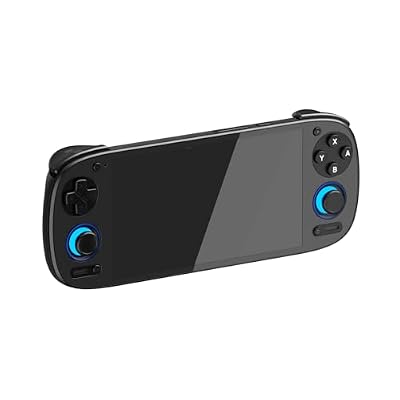
- Top Pick: Valve Steam Deck OLED 512GB
- Runner-up: 8BitDo Ultimate 2 Bluetooth Controller
- Also consider: GameSir G7 SE Wired Controller
Most Linux JRPG questions are really Proton questions: will the translation layer behave across dozens of hours of turn-based battles? Chained Echoes never asks it. Matthias Linda’s 16-bit-style RPG, a story of heroes crossing the continent of Valandis to end a war between three kingdoms, in a world where dragons are as common as piloted mechanical suits, shipped with a native Linux build, and Steam’s own record still says so today.
This article reads that record directly: the platform flags and published Linux system requirements on Steam, the installer list on GOG, Valve’s Steam Deck test results, and the platform state of the Ashes of Elrant expansion. It also keeps two honest wrinkles in view: Steam’s published feature list for the game does not name cloud saves, and Valve’s wider SteamOS listing sits one step below the Deck badge.
As an Amazon Associate, we earn from qualifying purchases.
Quick answer
Chained Echoes is one of the easy ones: Steam’s own record lists a native Linux build with published Linux system requirements, GOG’s download list includes a Linux installer, and Valve rates the game Steam Deck Verified with every check passing. The Ashes of Elrant expansion is native too. No Proton configuration is required for the standard route.
Status at a glance
| Question | Answer |
|---|---|
| Native Linux build | Yes; Steam’s platform flags list Linux, with published Linux requirements |
| GOG copy | Sold on GOG, and its download list includes a Linux installer |
| Steam Deck | Verified; all four of Valve’s checks pass |
| ProtonDB record | Platinum for the Windows build, 23 reports; a fallback footnote only |
| Expansion | Ashes of Elrant, released August 2025, carries the same native flags |
| Controller support | Full controller support in Steam’s record; single-player only |
A native build, in Steam’s own record
Steam’s appdetails record for Chained Echoes lists three platforms: Windows true, Mac true, and Linux true. That third flag is the whole story, and it is backed by a published Linux requirements tab rather than left as a bare checkbox. The minimum Linux specification names SteamOS as the operating system, a dual core processor, 6 GB of memory, graphics in the Radeon R9 200 class or equal, and 900 MB of storage. The recommended tab steps up to an i5 generation processor or equal and GeForce 780 class graphics, with the same memory and storage figures.
The rest of the record is equally plain. The developer is Umami Tiger, Matthias Linda’s studio, with Deck13 and WhisperGames as publishers, and the release date is 8 December 2022. Steam’s category list for the game covers single-player, Steam Achievements, full controller support, Steam Trading Cards and Family Sharing. One absence is worth stating exactly as it appears: cloud saves do not appear in that published feature list. The practical reading is that saves should be treated as local files, worth backing up before a distribution reinstall or a machine move, rather than assumed to follow the account.
The GOG route
GOG sells the game as well, and its product record matters because storefronts do not always carry the same builds. Here the download list for the GOG product includes three installers: Windows, Mac and Linux. The Linux entry is the native build delivered as a DRM-free offline installer, so a GOG purchase is a genuine Linux route and not a Windows copy in disguise.
The standing caveat applies to the launcher layer rather than the game. GOG Galaxy has no Linux client, so Galaxy-side features sit outside the Linux route; the offline installer is the route, and it needs no launcher at all. Between Steam and GOG, the difference is delivery and account preference, not the build itself: both storefronts sell the same native version of the game.
Steam Deck: Verified, check by check
Valve’s own compatibility report for the game resolves to the top category, Verified. All four published checks pass: the default controller configuration is fully functional, the controller glyphs shown match the Deck device, the interface text is legible, and the default configuration is performant. For a pixel-art JRPG, the legibility check is the one that carries weight, since dialogue and menu text are the game’s main information channel, and Valve’s test passes it without qualification.
One neighbouring figure deserves its honest sentence. Valve’s separate SteamOS category for the game sits one step lower, at Compatible, with game startup recorded as functional. That listing covers the wider SteamOS family beyond the Deck itself; it does not revise the Deck badge, which is the verdict for the handheld. Valve’s Steam Machine test, published in the same report, also resolves to its top category.
The expansion and the Proton footnote
The game’s one story expansion, Ashes of Elrant, was released on 7 August 2025, and its Steam record carries the same platform pattern as the base game: Windows true, Mac true, Linux true. The expansion therefore runs on the same native build rather than arriving as a Windows-only add-on, which is the outcome Linux players hope for and do not always get. The remaining items on the game’s store record are soundtrack listings, which are music products and not game builds.
Proton enters this article only as a footnote. The Windows build holds a Platinum tier on ProtonDB across its headline, best-reported and trending measures, with good confidence across 23 reports. That pool is small, and the article presents it at that size: it is evidence that the fallback works if a player ever needs it, on an unusual setup or an old installation, and it is not the route this game asks anyone to take.
Gear for a long campaign
Valve Steam Deck OLED 512GB

The handheld route, and the one Valve has tested end to end: the Verified badge above was earned on this hardware class. Valve sells the Deck primarily through its own store, so the Amazon listing is a third-party seller listing.
Specs:
- 7.4-inch HDR OLED, 1280 by 800, 90 Hz
- AMD Zen 2 based APU, 16 GB memory
- 512 GB NVMe storage, Wi-Fi 6E, microSD expansion
8BitDo Pro 2 Bluetooth Controller (Black Edition)
Steam’s record lists full controller support, so a pad is a primary way to play rather than a compromise. The Pro 2’s hardware mode switch covers both the X-input and D-input dialects a Linux stack may prefer, its Hall Effect sticks resist drift across a long campaign, and the two back paddles are free inputs for menu shortcuts.
Specs:
- Bluetooth 4.0 and USB-C wired connection
- Four-way mode switch covering Switch, Android, D-input and X-input
- Hall Effect joysticks
- Two Pro back paddle buttons, three onboard profiles of its own
- 1000 mAh rechargeable battery, maker-rated 20 hours, 228 g
8BitDo Ultimate 2 Bluetooth Controller

The docked and couch alternative: TMR electromagnetic sticks, switchable trigger modes and a charging dock that keeps the pad ready between sessions, with two remappable back paddles mapped cleanly through Steam Input.
Specs:
- Sticks: TMR electromagnetic thumbsticks
- Triggers: switchable trigger modes
- Battery: 1,000 mAh rechargeable
- Extras: two remappable back paddles, charging dock
GameSir G7 SE Wired Controller

The wired option removes battery management from the equation entirely, which suits a game measured in dozens of hours. Its Hall Effect sticks and triggers answer the drift concern that long campaigns expose, and the 1000Hz polling rate on PC keeps input latency a non-issue.
Specs:
- Wired USB connection, officially licensed for Xbox
- Hall Effect joysticks and Hall Effect triggers
- 1000Hz polling rate on PC
- Two mappable back buttons and a 3.5mm headphone jack
- Works with Xbox Series X|S, Xbox One and Windows PC
Samsung T9 Portable SSD 2TB

Honest framing first: Chained Echoes itself needs 900 MB, so this drive is not for the game. It is for the wider JRPG shelf the game belongs to, and for carrying save archives between a desktop and a docked Deck. The headline maker figure assumes a USB 3.2 Gen 2×2 host; on a lesser port the drive runs at that port’s lower ceiling.
Specs:
- USB 3.2 Gen 2×2 over USB-C
- Maker-rated reads up to 2,000 MB per second on a Gen 2×2 host
- 2TB capacity, drop resistance rated to 3 metres
How to choose
Start with the copy, because here it is a free choice rather than a compatibility decision. Steam delivers the native build with the Deck test programme behind it; GOG delivers the same build as an offline installer with no launcher involved. Pick by where your library already lives. Next, decide where you will play: the Deck carries a Verified badge with legible text, and a desktop meets a published requirements tab that modest hardware clears comfortably.
Then settle the save question raised by the record. Steam’s published feature list for the game does not name cloud saves, so whichever storefront you choose, treat the save folder as your own responsibility and back it up before system changes. Finally, match the controller to the session: a wired pad for the desk, a Bluetooth pad with a dock for the couch, and no storage purchase at all unless a wider library justifies it.
Who should skip
Skip this route if cloud saves are non-negotiable for you and you are unwilling to manage save files by hand; the published feature list does not promise them. Skip it if you want multiplayer of any kind, since the record is single-player only. Skip it if your interest in a Linux game is the tinkering itself, because a native build with a Verified badge leaves nothing to configure. And skip the GOG copy if Galaxy features matter to you, since the Galaxy client is not part of the Linux route on any game.
FAQ
Does Chained Echoes have a native Linux build?
Yes. Steam’s platform flags for the game list Linux as true, backed by a published Linux requirements tab naming SteamOS, a dual core processor and 6 GB of memory at minimum. No compatibility layer is involved in the standard route.
Is the GOG version the native build?
The GOG product’s download list includes a Linux installer alongside its Windows and Mac installers, so the GOG copy carries the native build as a DRM-free offline installer. GOG Galaxy features are a separate matter, since Galaxy has no Linux client.
Does the Ashes of Elrant expansion work on Linux?
Its Steam record carries the same platform flags as the base game, Linux included, so the expansion runs on the same native build. It was released on 7 August 2025, nearly three years after the base game.
How does the game rate on Steam Deck?
Verified, Valve’s top category, with all four published checks passing, including legible interface text and a performant default configuration. Valve’s wider SteamOS listing sits one step lower at Compatible, which covers SteamOS devices beyond the Deck and does not change the handheld’s badge.
Final verdict
Chained Echoes is the kind of Linux release that needs no advocacy: a native build on Steam with published requirements, the same build as a GOG offline installer, a Steam Deck Verified badge with every check passing, and an expansion that kept the native flags. The one discipline the record asks of the player is save management, since cloud saves are not in the published feature list. Everything else is simply the game, running where it was built to run.