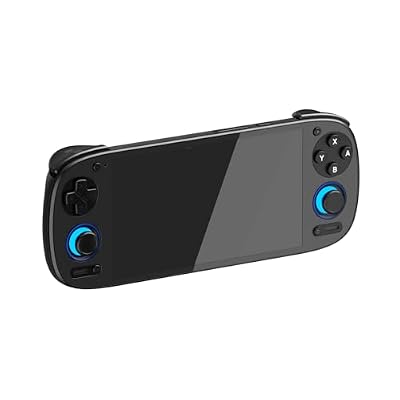
- Top Pick: 8BitDo Ultimate 2 Bluetooth Controller
- Runner-up: Valve Steam Deck OLED 512GB
- Also consider: SanDisk 1TB Extreme microSDXC Card
Some Linux ports are announced, delayed and quietly forgotten. A Short Hike did the opposite. Adam Robinson-Yu’s small exploration game about a bird climbing a mountain reached its full launch on 30 July 2019 with a native Linux build in the box, and that build is still the one Steam, GOG and itch.io sell today. There is no compatibility layer in this story at all.
That makes this article a record check rather than a troubleshooting guide. Below is what Steam’s own data says about the Linux build, how the three storefront routes differ, what Valve’s Steam Deck Verified badge rests on, and which copy to buy. The Windows build’s Proton record is covered too, as a footnote.
As an Amazon Associate, we earn from qualifying purchases.
Quick answer
Yes. A Short Hike ships a native Linux build, sold on Steam, GOG and itch.io, so no compatibility layer is involved on any of those routes. Steam’s published Linux requirements ask only for a dual-core processor, 2 GB of memory and basic integrated graphics, and Valve rates the game Steam Deck Verified with every check passing.
The status at a glance
| Question | Answer |
|---|---|
| Native Linux build | Yes, sold on Steam, GOG and itch.io |
| Compatibility layer needed | None |
| Steam Deck rating | Verified, all four checks pass |
| Published Linux minimum | Ubuntu 16.04 or later, 64-bit, dual-core at 2 GHz, 2 GB RAM |
| Players | Single-player (Steam’s category record) |
| Controller support | Full; Steam lists the game as gamepad recommended |
| Windows build on ProtonDB | Platinum, as a fallback record only |
The native build, from Steam’s own record
Steam’s appdetails record for the game lists three platforms: Windows, macOS and Linux, each switched on. The Linux entry is not an empty flag. It carries a full published requirements tab, which reads: Ubuntu 16.04 or later in 64-bit only, an Intel or AMD dual-core processor at 2 GHz or better, 2 GB of RAM, Intel Graphics 4400 or better, and 400 MB of storage. Those are netbook-class demands from 2016-era hardware, and they are the developer’s own published floor, not an estimate.
The rest of the record supports the same picture. Steam lists full controller support, DualShock and DualSense support, Steam Cloud, achievements and Family Sharing. The developer and publisher of record is adamgryu, the working name of Canadian designer Adam Robinson-Yu, who built the game in Unity. No Proton, launch option or community fix is involved: the Steam client simply installs the Linux depot.
One piece of history is worth recording because older forum posts still repeat it. The game’s first release, as a Humble Monthly exclusive in April 2019, shipped for Windows and Mac only, and Robinson-Yu confirmed at the time that a Linux version was coming. It arrived with the full launch that July, on Steam and itch.io together. Advice written in that window, suggesting Linux players wait or reach for Wine, describes a gap that closed in 2019.
Three routes to the same build
Steam is the default route. It delivers the native build through the standard client, keeps saves in Steam Cloud, and is the copy Valve’s Deck verification was performed against.
GOG sells the same game DRM-free. GOG’s own product page states that the game works on Windows, Linux and Mac OS X and is officially supported on all three, and its FAQ confirms a fully offline installer that needs no internet connection to play. The standing caveat applies to the storefront rather than the game: GOG Galaxy has no Linux client, so Galaxy-side features are not part of the Linux route. The offline installer is.
itch.io is the developer’s own storefront and was a launch platform alongside Steam in July 2019. It sells direct downloads for Windows, macOS and Linux with no DRM and no client in the middle. Updates arrive as fresh downloads rather than patches pushed by a launcher, which is the one practical difference from the Steam copy.
All three routes install the same native build. The choice between them is about launchers, cloud saves and update mechanics, not about which copy runs better.
Steam Deck Verified, check by check
Valve’s own compatibility report for the game resolves to the top category, Verified. All four of its checks pass: the default controller configuration is fully functional, the controller glyphs match the Deck, the interface text is legible, and the default configuration is performant. There are no deductions to explain away.
Two neighbouring lines in Valve’s data deserve an honest mention. The separate SteamOS category sits one step lower, at the level where game startup is confirmed functional; that line covers the wider SteamOS family, not the handheld. The game also suits the hardware on paper: Steam calls it gamepad recommended, and its requirements are far below what the Deck’s APU delivers.
The game you are installing
You play as Claire, a young bird spending a holiday at Hawk Peak Provincial Park, who climbs to the summit for one practical reason: it is the only place on the island with phone reception. The park is open from the first minute. Golden feathers extend how far Claire can climb and glide, and the slopes are filled with optional business: fishing spots, foot races, buried treasure, stickers to collect, a boat to rent and walkers to talk to. Nothing is gated behind a schedule, and the summit attempt can be made whenever the mood takes you.
Steam’s category record lists the game as single-player, and that is the accurate description of the shipped product. Robinson-Yu later released A Short Hike 99, a separate experimental multiplayer mod, as a free extra; its developer-run server was a limited-time experiment and has been taken down, so it should not factor into a buying decision. The base game is a solo climb.
The Proton footnote
Because the native build exists, the Windows version’s Proton record is trivia rather than guidance. For completeness: ProtonDB’s summary for the Windows build reads Platinum on its headline, best-reported and trending measures, with strong confidence across 57 reports. If the Windows form ever reaches a Linux machine, through a shared library or a storefront mistake, the record says it runs; the correct fix is still to install the Linux build every major storefront sells.
Gear that suits a small game played anywhere
A Short Hike asks almost nothing of hardware, so the useful gear is about where and how comfortably it gets played: a pad for the sofa, storage for a handheld library, a drive for moving that library around.
8BitDo Ultimate 2 Bluetooth Controller

The controller-first pick. Steam lists the game as gamepad recommended, and this pad covers the docked and desktop cases with TMR joysticks, Hall effect triggers and two back buttons for remapping the climb and glide inputs.
Specs:
- Connectivity: Bluetooth wireless and USB-C wired
- Joysticks: TMR electromagnetic, anti-drift design
- Triggers: Hall effect, with mode switching
- Extras: two remappable back buttons, motion control
- In the box: charging dock included
- ASIN: B0F194QFT2
Valve Steam Deck OLED 512GB

The handheld the Verified badge was written for. The game’s requirements are a rounding error next to the Deck’s APU, and the native build means the Deck runs it with no compatibility settings to touch.
Specs:
- Display: 7.4-inch HDR OLED, 1280 by 800, up to 90 Hz
- Processor: AMD Zen 2 and RDNA 2 custom APU
- Memory: 16 GB LPDDR5
- Storage: 512 GB NVMe, plus a microSD slot
- Wireless: Wi-Fi 6E and Bluetooth
- Channel note: Valve sells the Deck mainly through its own store, so Amazon listings are third-party sellers
- ASIN: B0CQ3RWQQZ
8BitDo Pro 2 Bluetooth Controller
The alternative pad, in a retro shell shape with symmetrical sticks. Its current Amazon listing is the Hall Effect joystick revision, and the four-way mode switch makes it an easy second pad for a Linux box that also talks to other devices.
Specs:
- Connectivity: Bluetooth wireless and USB-C wired
- Joysticks: Hall Effect, anti-drift design
- Extras: two pro-level back buttons, rumble and motion controls
- Battery: 1,000 mAh rechargeable, maker-rated up to 20 hours
- Mapping: 8BitDo Ultimate Software support, four-way mode switch
- ASIN:
SanDisk 1TB Extreme microSDXC Card

A 400 MB game does not need a terabyte of anything, but a Deck library does, and this is the card that holds it. The A2 rating is the relevant line for game loading; the maker’s headline speeds assume a reader faster than the Deck’s slot, which sets the practical ceiling.
Specs:
- Capacity: 1 TB, microSDXC, model SDSQXAV-1T00-GN6MA
- Speed class: UHS-I, U3, V30, Class 10, A2 app performance
- Maker-rated speeds: up to 190 MB per second read, 130 MB per second write
- Included: full-size SD adapter
- ASIN: B09X7MPX8L
Samsung T9 Portable SSD 2TB

For moving a Linux game library between a desktop and a laptop, or keeping an offline backup of DRM-free installers from GOG and itch, a fast USB-C drive is the simple answer. The headline figure needs a Gen 2×2 host port; on a lesser port the drive runs at that ceiling instead.
Specs:
- Capacity: 2 TB portable SSD
- Interface: USB 3.2 Gen 2×2, USB-C connector
- Maker-rated speeds: up to 2,000 MB per second read, 1,950 MB per second write
- Features: Dynamic Thermal Guard, maker-rated drop resistance
- ASIN: B0CHFS9K14
How to choose your copy
Choose Steam if you want cloud saves, automatic updates and the exact build Valve verified on the Deck. Choose GOG if you want a DRM-free offline installer and are content without Galaxy features on Linux. Choose itch.io if you prefer buying from the developer’s own storefront and do not mind downloading updates manually. On hardware, any Linux machine built in the last decade clears the published requirements; the real decision is whether you play at a desk with a pad or on a handheld.
Who should skip it
Skip it if you need multiplayer: the shipped game is single-player, and the developer’s experimental multiplayer mod no longer has its official server. Skip it if you want a long campaign or demanding systems; this is a short, deliberately gentle game built around one climb and optional side activities. And skip the GOG copy if Galaxy features matter to you, because the Galaxy client is not part of the Linux route on any game.
FAQ
Does A Short Hike run natively on Linux, or through Proton?
Natively. Steam’s own record lists Linux among the game’s platforms with a full Linux requirements tab, and GOG and itch.io sell the same native build. Proton is not involved unless the Windows version is installed by mistake.
Is A Short Hike Steam Deck Verified?
Yes. Valve’s compatibility report resolves to Verified, with all four checks passing: functional default controls, matching glyphs, legible interface text and a performant default configuration.
Which storefront should a Linux player buy from?
Any of the three. Steam adds cloud saves and automatic updates, GOG offers a DRM-free offline installer, and itch.io sells direct DRM-free downloads from the developer’s storefront. All three deliver the native Linux build.
What hardware does the Linux version need?
Very little, by the developer’s published minimum: Ubuntu 16.04 or later in 64-bit, a dual-core processor at 2 GHz, 2 GB of RAM, Intel Graphics 4400-class graphics and 400 MB of storage.
Final verdict
A Short Hike is one of the simplest Linux recommendations in this cluster: a native build on all three PC storefronts that matter, requirements that integrated graphics from a decade ago can meet, and a Steam Deck Verified badge with no deductions attached. Buy whichever copy fits your launcher habits, and climb.