- Top Pick: Logitech G502 HERO Wired Gaming Mouse
- Runner-up: SteelSeries Arctis Nova 7 Gen 2 Wireless Headset
- Also consider: 8BitDo Ultimate 2 Bluetooth Controller
Buckshot Roulette is Mike Klubnika’s tabletop horror game about playing Russian roulette against a nightclub dealer with a pump-action shotgun, and Linux players are in the unusual position of being first-class citizens: the game shipped with a native Linux build from its earliest release. There is no compatibility layer to configure and no Mac version at all, which makes the platform picture refreshingly simple on desktop.
The one wrinkle is the Steam Deck badge, which currently reads worse than the game deserves. This status piece works from Steam’s record: the platform flags and Linux requirements, the itch.io route where the game started, Valve’s Deck compatibility report read directly, the ProtonDB record for the Windows build, and the multiplayer state as the store categories document it today.
As an Amazon Associate, we earn from qualifying purchases.
Quick answer
Buckshot Roulette ships a native Linux build on both Steam and itch.io, so no Proton is needed on desktop. Steam’s own record lists Linux support with a Vulkan requirement and a tiny install size. The one oddity is the Steam Deck badge, which Valve currently marks Unsupported despite the native build. Online multiplayer is Steam-only, for two to four players.
Status at a glance
| Question | Answer |
|---|---|
| Native Linux build | Yes, on Steam and on itch.io |
| Proton required on desktop | No |
| macOS build | None, on either store |
| Steam Deck badge | Unsupported in Valve’s current report |
| Multiplayer | Online, Steam version only, two to four players |
| Engine | Godot |
| Linux install size | 300 MB per the store listing |
The native build, from Steam’s own record
Steam’s appdetails record for the game lists three platform flags: Windows true, Mac false, Linux true. That is the whole desktop story in one line. The same record carries a published Linux requirements tab, which is something only genuine native builds have: Ubuntu 12.04 LTS as the listed operating system, an Intel Core i3 processor, 2 GB of RAM, a relatively modern dedicated graphics card with Vulkan support, and 300 MB of storage. The Vulkan requirement is the one real gate. The game is built in the Godot engine, which Klubnika also used for his earlier horror titles, and Godot’s Linux export is a true native binary rather than a wrapped Windows build.
Because the native build is the default, the Windows version’s Proton record is a footnote rather than the story. For completeness, ProtonDB rates that Windows build Platinum across its headline, best-reported and trending measures, on 152 reports with strong confidence. A Linux player would only touch that route by deliberately forcing Proton on a game that does not need it, but the record confirms the fallback exists and is healthy.
The itch.io route, where the game started
Buckshot Roulette began life on itch.io, self-published by Klubnika on 28 December 2023, months before the Steam release. The itch page offered Windows and Linux downloads from day one and stated plainly that the game will not work on macOS, a position that has never changed. The itch build was not abandoned when Steam launched: version 1.2 reached itch on 18 April 2024, two weeks after the Steam debut, and the page remains the developer’s own storefront for the game.
The honest limits of the itch copy are documented on the page itself. It carries no online leaderboard and no multiplayer; those are Steam features. What the itch route offers instead is a standalone download with no client in the middle, bought directly from the developer. For the solo game against the Dealer, including the Double or Nothing mode, the itch copy is complete. For anything involving other players or Steam’s extras, it is not the right copy, and the next sections explain why.
The Steam Deck badge is the strange part
Valve’s own Deck compatibility report for this game, read directly, resolves to category Unsupported, and SteamDB’s copy of the same test record, dated May 2026, agrees. That badge deserves a close read, because the detail underneath it is odd. The report’s single resolved item is a token stating that SteamOS does not support the game. It records no performance deduction, no small-text deduction and no manual-keyboard deduction. SteamDB’s copy of the test configuration even lists the recommended runtime as native and the supported input as gamepad, which is what a tester would write about a working native build.
Nothing here can explain Valve’s reasoning, because the report does not give one, and inventing a cause would be guesswork. What can be stated plainly is what the badge is and is not. It is the label Steam shows Deck buyers today, and anyone who only buys badged games will pass this one by. It is not a finding that the native build fails: the same record expects the native runtime, and desktop Linux players are outside the badge’s scope entirely. Deck owners reading this should treat the status as untested-in-Valve’s-eyes rather than broken, while recognising that the official label, as shown, is Unsupported.
Multiplayer, as it stands
Multiplayer arrived as a free update to the Steam version on 31 October 2024, and Steam’s category record now lists Multi-player, PvP and Online PvP. Two to four players sit at an automated table through Steam lobbies, with two items that exist only in this mode, the Jammer and the Remote, and a match customisation update followed in November 2024. Only one player leaves the table, which turns the solo game’s staring contest into a negotiation nobody trusts.
Two boundaries matter for Linux readers. First, the mode is Steam-only: the itch build never received it, so a group that wants multiplayer needs Steam copies. Second, the lobbies are Steam-wide rather than split by operating system, so the native Linux copy joins the same pool as Windows copies. The single-player game remains the original three-round duel with the Dealer, and nothing about the multiplayer update changed the native build’s status on desktop.
Gear for a night at the table
Buckshot Roulette is a mouse-first game with partial controller support, played in short, tense sessions where audio does much of the atmospheric work. The five picks below cover the input, audio and portable angles.
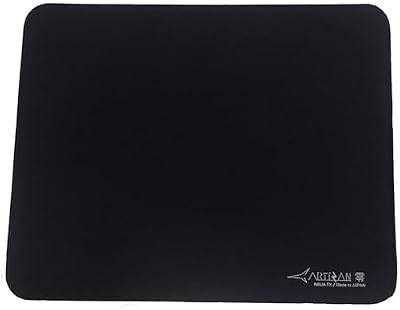
Logitech G502 HERO Wired Gaming Mouse

The Dealer watches your cursor, and every decision in this game is a deliberate click, so the mouse is the primary instrument. The G502 HERO is a wired gaming mouse built around Logitech’s HERO sensor, with eleven programmable buttons and onboard memory for stored profiles.
Specs:
– HERO optical sensor, up to 25,600 DPI as rated by the maker
– Wired USB connection
– 11 programmable buttons
– Adjustable weight system with removable weights
– Onboard memory for profiles
SteelSeries Arctis Nova 7 Gen 2 Wireless Headset

The nightclub pulse, the shell racking and the Dealer’s movements are the game’s tension, and they land better on a headset than on monitor speakers. The Arctis Nova 7 Gen 2 is a wireless gaming headset with simultaneous 2.4 GHz and Bluetooth connections, so it can stay paired to a PC and a phone at once.
Specs:
– 40 mm neodymium drivers, per the maker’s specification
– 2.4 GHz wireless and Bluetooth, usable simultaneously
– Battery life rated by the maker at up to 54 hours
– Detachable noise-cancelling microphone
– USB-C charging
8BitDo Ultimate 2 Bluetooth Controller

Steam lists the game with partial controller support plus DualShock and DualSense support, so a pad is a legitimate way to play from the couch, with the understanding that the mouse remains the reference input. The Ultimate 2 Bluetooth is 8BitDo’s flagship pad, with TMR electromagnetic sticks and a charging dock in the box.
Specs:
– Bluetooth wireless with USB-C wired fallback
– TMR electromagnetic joysticks
– Two remappable back buttons
– Charging dock included
– Trigger stops and swappable stick caps
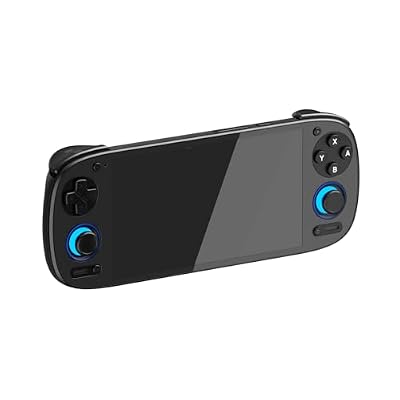
Valve Steam Deck OLED 512GB

Given the badge discussion above, the Deck belongs on this list with its caveat attached: Valve’s current report marks the game Unsupported, so this is a pick for owners who already run unbadged native games, not a promise. The hardware itself, a 7.4-inch HDR OLED handheld with a 512 GB NVMe drive, is well matched to a 300 MB game.
Specs:
– 7.4-inch HDR OLED display, 1280 by 800
– 512 GB NVMe storage
– AMD APU with 16 GB LPDDR5 memory
– Wi-Fi 6E and Bluetooth 5.3
– Sold by Valve through its own store; Amazon listings are third-party sellers
Keychron V3 Wired Mechanical Keyboard

A compact wired board suits a game that asks little of the keyboard but lives on a desk full of atmosphere. The V3 is an 87-key mechanical keyboard with QMK and VIA remapping support, in this verified variant fitted with K Pro Brown tactile switches and a rotary knob.
Specs:
– 87-key tenkeyless layout, wired USB-C
– Keychron K Pro Brown tactile switches
– QMK and VIA support for remapping
– Rotary knob on this variant
– Hot-swappable PCB
How to choose
Start with the store, because it decides the feature set. Buy on Steam if multiplayer, achievements or leaderboards matter at all; buy on itch if a standalone, client-free copy of the solo game is the priority and the missing extras are acceptable. Check the one hardware gate before either: your graphics card must support Vulkan, which the store listing states outright. Beyond that, the requirements are so light that age of hardware is rarely the issue. For input, treat the mouse as the default and a controller as a couch alternative. Deck owners should make a deliberate decision about the Unsupported badge rather than discovering it after purchase.
Who should skip
Skip the itch copy if your group wants multiplayer, because that mode exists only on Steam. Skip the game entirely on Mac, because no macOS build exists on either store and none has been announced. Deck owners who only play titles carrying a Verified or Playable badge should wait and watch the report rather than buy on a native build’s reputation. Finally, anyone who dislikes gambling-styled tension or very short, self-contained sessions will find the loop thin, however well it runs.
FAQ
Is Buckshot Roulette native on Linux, or does it need Proton?
It is native. Steam’s record flags Linux as true with a published Linux requirements tab, and the itch.io download has included a Linux build since December 2023. Proton is not required on desktop; the Windows build’s Platinum record on ProtonDB is a fallback footnote only.
Why does the Steam Deck page call the game Unsupported?
Valve’s compatibility report resolves to Unsupported with a single item stating that SteamOS does not support the game, while listing the native runtime as the recommended one. The report gives no reason and records no performance or legibility deductions. As shown today, the badge is Unsupported; this article reports it as shown rather than explaining it away.
Does the itch.io version have multiplayer?
No. The itch page itself notes the absence of the online leaderboard and multiplayer. Online play for two to four players arrived on 31 October 2024 as a free update to the Steam version only, so groups need Steam copies.
Can Linux and Windows players join the same multiplayer table?
Yes, on Steam. Lobbies are not split by operating system, and the native Linux copy connects to the same Steam pool as the Windows copy. The condition is simply that everyone plays the Steam version.
Final verdict
Buckshot Roulette is one of the simplest Linux stories in this series: a genuine native build on two stores, a Vulkan requirement as the only real gate, and a solo game that asks almost nothing of the hardware. Steam is the complete route, itch is the direct one, and the Steam Deck badge is an unresolved oddity in Valve’s paperwork rather than a verdict on the build itself. Desktop Linux players can buy either copy with confidence.