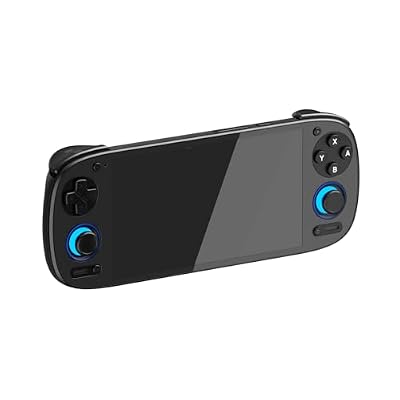
- Top Pick: Valve Steam Deck OLED 512GB
- Runner-up: Keychron V3 Wired Mechanical Keyboard
- Also consider: Logitech G502 HERO Wired Gaming Mouse
Citizen Sleeper and its sequel Citizen Sleeper 2: Starward Vector are dice-driven narrative RPGs built around reading: rolls that decide how a day on Erlin’s Eye, or out in the Starward Belt, turns out. Linux players get neither game natively, so the whole question is how the Windows builds behave through Proton.
This series status article reads the record for both games from the same sources: Steam’s own platform flags and published requirements, ProtonDB’s summary for each title, and Valve’s own Steam Deck compatibility reports. The two games land in the same place on almost every measure, with one shared weakness that matters more in a text-heavy RPG than in most genres.
As an Amazon Associate, we earn from qualifying purchases.
Quick answer
Neither Citizen Sleeper game has a native Linux build: Steam’s flags list Windows and Mac only for both the 2022 original and Citizen Sleeper 2: Starward Vector. Both run through Proton at Platinum on ProtonDB, and both are rated Steam Deck Playable, held back by a single shared deduction: interface text that Valve’s test found not legible.
Status at a glance
| Check | Citizen Sleeper | Citizen Sleeper 2: Starward Vector |
|---|---|---|
| Native Linux build | No | No |
| Steam platform flags | Windows, Mac | Windows, Mac |
| ProtonDB tier | Platinum | Platinum |
| ProtonDB reports behind the tier | 49, strong confidence | 13, moderate confidence |
| Steam Deck rating | Playable | Playable |
| Deck deduction | Interface text not legible | Interface text not legible |
| Anti-cheat or publisher launcher | None | None |
No native build for either game
Steam’s appdetails record for Citizen Sleeper (app 1578650) lists platforms windows=true, mac=true, linux=false, and the sequel (app 2442460) returns exactly the same flags. Jump Over The Age developed both games and Fellow Traveller published them; the original released on 5 May 2022 and Starward Vector on 31 January 2025. Neither store page publishes a real Linux requirements tab.
One trap is worth naming because it catches readers in Steam’s own data: both records still carry a linux_requirements block, but the minimum and recommended lists inside it are empty shells. An empty template block is not a build. The platform flags are the ruling evidence, and they say the Linux version does not exist. The Mac build is also not a route in: it is a separate macOS binary that a Linux system cannot run.
What the Windows builds ask for is modest. The original’s published minimum is Windows 7 or later, a 64-bit processor, 4 GB of RAM and a DirectX 11 compatible GPU, with 2 GB of storage. The sequel raises the floor only slightly, to Windows 10 with the same memory and graphics class. Steam’s category record for both games lists single-player, full controller support and Steam Cloud, and neither game involves an anti-cheat client or a publisher launcher. That structural simplicity is the background to the Proton record below.
The original through Proton
ProtonDB’s summary for Citizen Sleeper reads Platinum on its headline tier, its best-reported tier and its trending tier, with strong confidence across 49 reports. Unanimity at the top tier across that many reports is the strongest pattern the database produces, and it fits the game’s shape: a 2D interface-driven RPG with no anti-cheat, no launcher and no demanding rendering path to trip over.
The game itself is complete on the Steam build. The original campaign on Erlin’s Eye is joined by the three free episodes, Flux, Refuge and Purge, which were added after launch and extend the station’s story. Steam’s feature list for the game also records a set of accessibility options that suit its reading-first design: a mouse-only option, play without timed input, camera comfort and colour alternatives. None of that changes under Proton: the whole package is the same Windows build.
Starward Vector through Proton
The sequel’s ProtonDB summary is also Platinum on headline, best-reported and trending measures, but the article states the honest qualification: that tier rests on 13 reports with moderate confidence, a much thinner pool than the original’s. A Platinum drawn from a small pool is still a clean record with no pattern of failures behind it, yet it deserves less certainty than the first game’s.
Starward Vector moves the series off the station: the Sleeper has a ship, gathers a crew and takes on contracts across the Starward Belt, with the dice system extended by crew dice and job stress. The Windows minimum rises to Windows 10 while memory and graphics requirements stay in the same light class, and Steam’s category record again lists full controller support, this time naming DualShock and DualSense support, plus Steam Cloud. Nothing in the sequel adds a compatibility gate the original lacked.
Steam Deck: Playable, with one deduction that matters here
Valve’s own compatibility report rates both games Playable rather than Verified, and the two reports are effectively identical. Three checks pass for each title: the default controller configuration is fully functional, the controller glyphs match the Deck, and the default configuration is performant. The single deduction is the same in both: interface text is not legible at the Deck’s screen size.
In most genres that deduction is a footnote. In Citizen Sleeper it is close to the whole experience, because the games are read more than they are watched: dialogue, journal entries and dice outcomes all arrive as text. Two documented points soften it. The sequel’s Steam feature list includes adjustable text size, an in-game setting that speaks directly to the deduction. And on a desktop monitor the deduction does not apply at all: it is a verdict about a seven-inch handheld screen, not about the build.
Which copy to buy
The Steam copy is the route this article recommends, for both games. It is the copy ProtonDB’s record describes, the copy Valve’s Deck report covers, and the one where Proton applies automatically with no manual setup. Saves sync through Steam Cloud, which both games list.
GOG sells both games as well, and its own pages underline the platform position: the first game is listed as working on Windows and Mac OS X, and the sequel’s GOG page lists Windows. A GOG copy is the same Windows build sold without DRM, so a Linux buyer would set it up manually under Wine or a community launcher instead of getting Steam’s automatic Proton handling, and GOG Galaxy has no Linux client. The Microsoft Store and Game Pass PC copies are a harder dead end: they are Windows app packages that Proton cannot install or run at all, whatever the subscription catalogue holds at any given moment.
Gear for long reading sessions
Valve Steam Deck OLED 512GB

The handheld both games are rated Playable on; the OLED panel is the version of the Deck screen that gives small text its best chance.
Specs:
- 7.4-inch HDR OLED display, 1280 by 800, up to 90 Hz refresh
- 512 GB NVMe internal storage
- Wi-Fi 6E and Bluetooth 5.3
- USB-C with DisplayPort alt mode for docked play
- Sold through Valve’s own store; Amazon listings are third-party sellers
Keychron V3 Wired Mechanical Keyboard

A tenkeyless board for the desktop route, where these mouse-and-keyboard-friendly games are most comfortable over long sessions.
Specs:
- 87-key TKL layout, knob version, Carbon Black
- Keychron K Pro Brown tactile switches, hot-swappable
- QMK and VIA programmable, with Mac, Windows and Linux keycap sets
- USB-C wired connection, 1000 Hz polling rate
- Double-shot PBT keycaps, OSA profile
Logitech G502 HERO Wired Gaming Mouse

Citizen Sleeper supports a mouse-only control option, which makes a precise, comfortable mouse a genuine fit for the whole game.
Specs:
- HERO 25K optical sensor, 100 to 25,600 DPI
- 11 programmable buttons
- Adjustable weight system with removable weights
- LIGHTSYNC RGB lighting
- USB wired connection
8BitDo Pro 2 Bluetooth Controller
Both games carry full controller support, and this pad covers the docked and couch route with a classic layout.
Specs:
- Bluetooth and USB-C wired modes
- Two pro back buttons, remappable in 8BitDo Ultimate Software
- Works with Switch, Windows, Android and Raspberry Pi
- Rechargeable battery, maker-rated up to 20 hours of play
- Hall Effect stick models are the current listing under this ASIN
Samsung T9 Portable SSD 2TB

A fast external drive for a shared Steam library; both Sleeper games are small, so the capacity serves the rest of the shelf.
Specs:
- 2 TB capacity, USB-C connection
- Maker-rated sequential reads up to 2,000 MB/s and writes up to 1,950 MB/s on a USB 3.2 Gen 2×2 host; lesser ports run at their own ceiling
- Aluminium enclosure with maker-stated drop resistance
- USB-C to C and USB-C to A cables in the box
How to choose
Choose the original first if you are new to the series: it has the deeper ProtonDB evidence base, the complete station campaign plus its three free episodes, and the same Platinum record as the sequel at a lower hardware floor. Choose Starward Vector if you have finished the first game and want the ship, crew and contract structure; its Proton record is equally clean, simply younger and thinner.
Choose your storefront by route, not habit: Steam for automatic Proton and the Deck rating, GOG only if you accept a manual Wine setup for the sake of a DRM-free copy. On the Deck, plan around the text deduction before you buy either game: the sequel’s adjustable text size is the documented mitigation, while the original asks you to live with its interface size on the small screen. On any desktop Linux machine, the deduction does not apply and the choice is about which story you want.
Who should skip
Skip both games on Linux if you only buy native builds on principle; there is no native version on any announced roadmap. Skip the Game Pass or Microsoft Store copies entirely for Linux play, since that packaging cannot be installed through Proton. Skip the Deck as your only screen for these games if small interface text strains you, because Valve’s one deduction lands on the activity the games consist of. And skip the sequel for now if you want a Proton record proven by dozens of reports rather than a promising handful.
FAQ
Is there a native Linux version of Citizen Sleeper or its sequel?
No. Steam’s platform flags for both games list Windows and Mac only, and neither store record publishes Linux system requirements. The empty Linux requirements block in the data is a template shell, not evidence of a build.
Why are both games only Playable, not Verified, on Steam Deck?
Valve’s report passes both games on controller configuration, glyphs and performance, and deducts the same single point on each: interface text is not legible at the Deck’s screen size. For two games built out of reading, that one deduction is the badge.
Does the Game Pass version work on Linux?
No. The Game Pass and Microsoft Store PC copies are Windows app packages, and Proton cannot install or run that packaging. The Steam copy is the version with a Proton record behind it.
Which game should a Linux player start with?
The original. Its Platinum tier rests on 49 reports with strong confidence, against the sequel’s 13 reports at moderate confidence, and its story stands alone. Starward Vector’s record is clean but younger.
Final verdict
Citizen Sleeper is one of the safest Proton bets in the narrative RPG shelf: no native build, and no need for one, with a Platinum record on the original that has held across 49 reports and a sequel following the same pattern on a thinner base. The one caveat is specific: on the Steam Deck’s small screen, Valve finds the text in both games hard to read, and in games made of text that is the deduction to weigh. On desktop Linux, even that caveat falls away.