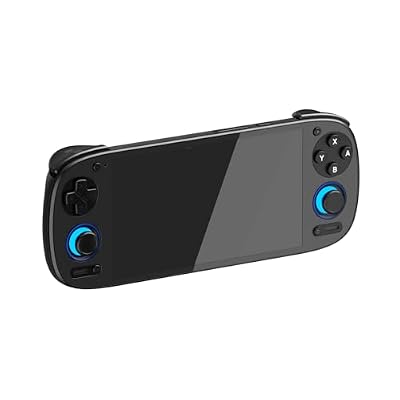
- Top Pick: 8BitDo Ultimate 2 Bluetooth Controller
- Runner-up: Valve Steam Deck OLED 512GB
- Also consider: ASUS ROG Ally X
Ask a Linux gamer where the platform feels effortless rather than negotiated, and the answer is rarely the blockbuster shelf. It is the indie catalogue. While big-budget releases arrive through a compatibility layer and a prayer to the anti-cheat gods, a remarkable share of independent games simply ship a Linux build next to the Windows one, install cleanly, and run as if the platform were the home system all along. That is no accident: it is the product of how indie games are built, and who builds them.
This guide maps that catalogue honestly: why independent developers lead on Linux support, the classes that dominate the scene, the native standouts worth a place on any drive, and how discovery works across Steam, GOG and the itch storefront. It closes with the hardware that suits this kind of play, because the indie shelf rewards a good controller and a handheld far more than raw graphics muscle.
As an Amazon Associate, we earn from qualifying purchases.
Quick answer
Indie games are the strongest part of Linux gaming because so many ship native Linux builds instead of relying on Proton. Cross-platform engines, small teams, single-player designs with no kernel anti-cheat, and storefronts that treat Linux as a first-class shelf mean roguelites, metroidvanias, farming sims, deckbuilders and puzzle games usually install and play without workarounds.
Why indies lead on Linux
The first reason is tooling. Most indie games are built in engines that treat Linux as a standard export target rather than an exotic port. Unity and Unreal both publish Linux builds from the same project, and Godot, the open-source engine behind a growing slice of the scene, exports to Linux in a couple of clicks. GameMaker, RPG Maker and the Ren’Py visual novel engine follow the same pattern. When a Linux version costs an afternoon of testing instead of a porting contract, small teams ship it.
The second reason is who the developers are. Independent teams skew technical, many build on Linux workstations, and their communities include a vocal Linux minority that files precise bug reports. A two-person studio cannot afford a support department, but it can read a well-written crash log. That feedback loop rewards shipping the build.
The third reason is design. Indie games are overwhelmingly single-player or small-scale co-op, which means no kernel-level anti-cheat, the single largest blocker for big multiplayer titles on Linux. Nothing in a farming sim or a deckbuilder needs to inspect your operating system kernel, so nothing stands between the build and the player.
Finally, there is history. The bundle era trained a generation of indie developers to ship for Windows, Mac and Linux together as a matter of course, and the habit stuck, long before the Steam Deck made it commercially fashionable.
The class map
The indie catalogue is not one genre but a cluster of them. Roguelites and roguelikes are the deepest bench: short runs, procedural variety, and a design culture rooted in open-source classics. Metroidvanias follow close behind, precision platformers with hand-drawn maps that reward a good D-pad above everything else. Farming and life sims form the cosy wing, built for long, low-pressure sessions. Deckbuilders and card battlers grew from a niche into a dominant class of their own. Puzzle games are everywhere and almost always native. Visual novels are close to fully covered, thanks to routine Linux exports from their engine. Around those sit the management and automation indies, twin-stick arena games, and the survivors-style horde titles that turned minimal graphics into an art form. Most of these games were designed to run on the laptops their makers owned, which makes them natural fits for integrated graphics, older desktops and handhelds alike.
The native standouts
The honour roll is long, so consider it a shelf of reliable starting points rather than a ranking. Hades pairs a native Linux build with some of the finest action design in the roguelite class. Hollow Knight remains the metroidvania benchmark and ships native. Celeste is the precision platformer standard, also native, and brutally fair about its difficulty. Stardew Valley anchors the farming class with a native build and years of updates. Dead Cells, Slay the Spire, Into the Breach and FTL all carry native Linux versions and reward short sessions. Factorio, from a studio that treats its Linux build as a point of pride, is the automation class at its most polished, and Terraria covers the sandbox-survival corner natively. Vampire Survivors, minimal graphics and native alike, proved the point at the survivors end of the map.
The honest caveats matter too. Some beloved indies are Windows builds that lean on Proton instead, Balatro among them, and they generally run beautifully that way, but a Proton game is a promise about a compatibility layer, not a native port. A few titles have let their Linux builds rot after launch, so checking recent player reports before buying remains a sensible habit.
Discovery and storefronts
Steam is the default shelf, and its Linux labelling is the most useful: a native build is marked on the store page, and the Steam Deck compatibility badge doubles as a quick quality signal even for desktop players. GOG is the second home, selling DRM-free copies of many indie standouts with offline installers, including Linux versions where the developer supplies them.
The third storefront is the scene’s beating heart. The itch storefront built its culture on small, strange, experimental games, and Linux builds are a routine part of that culture rather than a special request. Developers upload per-platform builds side by side, pay-what-you-want releases are common, and game jams pour out a constant stream of free experiments, many playable natively on day one. Browsing it is the best discovery habit a Linux player can build.
How to choose
Start from the class, not the title. For short, repeatable runs that respect a busy schedule, the roguelite bench (Hades, Dead Cells, Slay the Spire) is the deepest on the platform. For one long world to live in, the farming class around Stardew Valley is the cosy default. Players who think in systems should go straight to Factorio. For a single masterpiece to savour slowly, Hollow Knight and Celeste are the twin peaks of their classes. And if your gaming happens in handheld bursts, prioritise Deck Verified badges, which in this catalogue usually mean a native or flawless build.
Who should skip this
Skip the indie-first approach if your gaming life is organised around competitive multiplayer shooters and live-service titles, because that is precisely the corner where Linux still fights anti-cheat decisions. Skip it too if you only value photorealistic spectacle, since this catalogue trades graphical muscle for design density. And if you dislike pixel art and stylised presentation on principle, much of the shelf will not win you over. Everyone else will find the richest native catalogue on the platform here.
Five pieces of kit for the indie shelf
8BitDo Ultimate 2 Bluetooth Controller

Precision platformers and metroidvanias live or die on the D-pad, and this controller treats it as a headline feature rather than an afterthought. It pairs over Bluetooth, a 2.4 GHz receiver or a wire, carries TMR joysticks and switchable trigger modes, and suits the twin-stick and action classes that fill the indie map. On Linux it presents as a standard gamepad, which is exactly what this catalogue wants.
Specs:
– Connectivity: Bluetooth, 2.4 GHz wireless, wired USB-C
– Joysticks: TMR with anti-drift design
– Triggers: switchable Hall effect and tactile modes
– Extras: two back buttons, charging dock included
– Model: 80ND, Black
Valve Steam Deck OLED 512GB

The Deck is the indie machine: a Linux handheld whose store badge system was practically built for this catalogue. The OLED screen flatters hand-drawn art, the modest APU sips power on 2D titles, and suspend-and-resume suits run-based games perfectly.
Specs:
– Display: 7.4-inch HDR OLED, up to 90 Hz
– Storage: 512 GB NVMe SSD, microSD expansion
– Memory: 16 GB LPDDR5
– System: SteamOS, Linux based
– Model: 814585022254
ASUS ROG Ally X

For the indie games that lean on Proton and the heavier 3D corners of the catalogue, the Ally X offers the stronger hardware. It ships with Windows, and installing Bazzite turns it into a console-style Linux handheld with the same Steam library front end.
Specs:
– Processor: AMD Ryzen Z1 Extreme
– Memory: 24 GB LPDDR5
– Storage: 1 TB PCIe SSD
– Display: 7-inch Full HD, 120 Hz, FreeSync Premium
– Model: RC72LA (90NV00F1-M00320)
Logitech G502 HERO Wired Gaming Mouse

Deckbuilders, management sims and puzzle games are mouse games, and the G502 HERO is the button-heavy classic of the wired world. Eleven programmable buttons map neatly onto card battlers and automation titles, the sensor is precise well past the point this catalogue needs, and onboard memory means profiles live on the mouse rather than in vendor software, which suits Linux desktops well.
Specs:
– Sensor: HERO 25K optical, up to 25,600 DPI
– Buttons: 11 programmable
– Memory: onboard profiles
– Weight: adjustable with five 3.6 g weights
– Model: 910-005469
Logitech MX Master 3S Wireless Mouse

For the slow end of the catalogue, the farming sims and colony builders played for an evening at a time, the MX Master 3S is the long-session choice. Its shaped shell, quiet clicks and free-spinning scroll wheel suit hours of gentle clicking, it connects over Bluetooth or its Logi Bolt receiver, and Logitech lists Linux among its supported systems outright.
Specs:
– Sensor: Darkfield, up to 8,000 DPI, tracks on glass
– Connectivity: Bluetooth and Logi Bolt receiver
– Battery: rechargeable, USB-C
– Scrolling: electromagnetic free-spin wheel
– Model: 910-006557, Graphite
FAQ
Do indie games on Linux need Proton?
Many do not. A large share of the indie catalogue ships native Linux builds, especially titles built in Unity, Godot, GameMaker or Ren’Py. The rest usually run through Proton, and because most are single-player with no kernel anti-cheat, their Proton record is far stronger than the big-budget average.
Is the Steam Deck good for indie games?
It is the best-matched hardware in gaming. Indie titles are light on power draw, the Verified programme covers much of the catalogue, and run-based designs fit suspend-and-resume play. A desktop Linux PC runs the same library, but the Deck is where the catalogue’s shape and the hardware’s shape coincide.
Where do I find indie games that are not on Steam?
The itch storefront is the main answer, with per-platform builds uploaded side by side and a strong culture of Linux support. GOG is the other, selling DRM-free copies with offline installers. Between the two, most notable indie releases are covered outside Steam as well.
What should I check before buying an older indie game?
Check that the Linux build is still maintained. A small number of older titles have let their native builds fall behind the Windows version. Recent player reports on the store page will say so plainly, and where a native build has rotted, the Proton route is usually the safer decision.
Final verdict
Indie games are not the consolation prize of Linux gaming; they are its centre of gravity. The engines are cross-platform, the teams are close to their Linux players, the designs avoid the anti-cheat wall entirely, and the storefronts treat the platform as a resident rather than a guest. Build your library from the roguelite, metroidvania, farming, deckbuilder and puzzle shelves, add a controller with a serious D-pad and a handheld that runs the catalogue natively, and Linux stops feeling like the alternative platform.