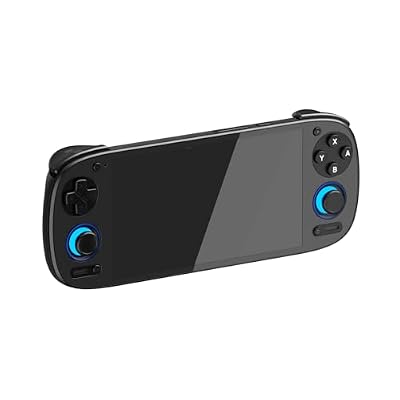
- Top Pick: AYN Thor Pro (12GB RAM, 256GB)
- Runner-up: Retroid Pocket 5 (Black)
- Also consider: Anbernic RG557 (White)
Every classic light gun library was built around a peripheral that no longer works. The NES Zapper, the Namco GunCon and the Sega Virtua Gun all read the timing of a CRT as it drew the picture, flash by flash and line by line. A modern LCD or OLED panel draws the whole frame differently, adds its own display processing, and gives the gun nothing it can read. That is why an original gun pointed at any current screen, handheld or television, simply never registers a hit.
So on a retro handheld, the gun itself is gone and the aiming has to be replaced by something else. What decides whether Duck Hunt, Virtua Cop or House of the Dead still feels right is which replacement aiming method a handheld supports, how accurate that method is, and whether the chip is strong enough for the systems where the big light gun libraries live: the arcade boards, the Dreamcast and PlayStation 2, the Wii pointer catalogue, and the touch shooters of the DS.
As an Amazon Associate, we earn from qualifying purchases.
Quick Answer
No original light gun works on a modern handheld screen, because those guns read CRT scanline timing that flat panels do not produce. The best retro handhelds replace the gun with gyro pointing, touchscreen taps or a stick-driven crosshair. The AYN Thor Pro leads for touch libraries, while the Retroid Pocket 5 is the gyro all-rounder.
Three Ways a Handheld Replaces the Gun
The first replacement is the touchscreen. Many cores and standalone emulators let a tap register as a shot exactly where the finger lands, which is the fastest and most precise aiming a handheld can offer. It is also how the DS library was designed to work in the first place, so touch-native shooters feel completely natural. The trade-offs are real: your finger covers the target at the moment of the shot, long sessions smear the screen, and holding a larger device one-handed while tapping with the other is tiring.
The second replacement is gyro pointing. Android handhelds expose a gyroscope to emulators, and RetroArch and Dolphin can map that motion to the pointer, so tilting the device moves the crosshair roughly where you point it. This feels closest to holding a gun, and it is the only method that makes the Wii pointer library, the largest light gun catalogue ever released, play the way it was designed to. Gyro aim drifts over time and needs a recentering button habit, and it works best seated, with small deliberate movements rather than big arm swings.
The third replacement is the analog stick driving an on-screen crosshair. Every emulator supports it, it needs no special hardware, and it is accurate enough for slower gallery games. For fast arcade shooters it is the weakest method by a wide margin, because the crosshair can only travel as fast as the stick pushes it. Treat stick aim as the fallback that keeps a game playable, not as the reason to buy a device. The five picks below are ranked by how well they cover the first two methods, then by the power their libraries demand.
The Five Handhelds, Ranked by Aiming Method
AYN Thor Pro: the touch and dual-screen answer
The Thor Pro is the strongest pick for the touch half of the library. Its main AMOLED panel is a full touchscreen, and the second screen underneath recreates the DS layout that touch shooters were built on, so games designed around tapping targets play with their original control scheme intact. The Snapdragon 8 Gen 2 also has the headroom for the Wii pointer library in Dolphin and for PlayStation 2 gun games, with gyro available for pointer mapping when touch is not offered. Hall sticks and triggers cover the fallback method comfortably.
Specs:
- Chip: Snapdragon 8 Gen 2
- Displays: 6.0-inch AMOLED main screen and 3.92-inch AMOLED second screen, both touch
- Memory: 12GB RAM, 256GB storage
- Controls: hall effect sticks and triggers, gyroscope, dual touchscreens
- Battery: 6,000 mAh
Retroid Pocket 5: the gyro all-rounder
The Pocket 5 is the most balanced aiming package in one screen. Its gyroscope feeds pointer controls in RetroArch and Dolphin, the 5.5-inch AMOLED is a proper touchscreen for tap shooting, and the Snapdragon 865 runs the Dreamcast and arcade libraries at full speed while handling a large share of the Wii and PlayStation 2 catalogues. The 1080p panel keeps small crosshairs and distant targets readable, which matters more in this genre than raw resolution bragging.
Specs:
- Chip: Snapdragon 865
- Display: 5.5-inch AMOLED touchscreen, 1080p
- Memory: 8GB RAM, 128GB storage
- Controls: hall effect sticks, gyroscope, touchscreen
- Battery: 5,000 mAh
Anbernic RG557: the power pick for Wii and PlayStation 2
The RG557 earns its place on performance ceiling. Light gun libraries on the Wii and PlayStation 2 are where weaker handhelds stumble, because pointer emulation runs on top of already demanding cores. The Dimensity 8300 gives those systems real headroom, the 5.48-inch AMOLED touchscreen covers tap aiming, and the gyroscope supports pointer mapping in Dolphin. If your target list is mostly Resident Evil rail shooters and Time Crisis rather than 8-bit and 16-bit gallery games, this is the safer buy.
Specs:
- Chip: Dimensity 8300
- Display: 5.48-inch AMOLED touchscreen, 1080p
- Memory: 12GB RAM, 256GB storage
- Controls: capacitive sticks, gyroscope, touchscreen
- Battery: 5,500 mAh
Anbernic RG556: AMOLED touch and gyro for less
The RG556 covers the same two aiming methods as the picks above it, on the same size class of AMOLED touchscreen, at a mid-range tier. The Unisoc T820 handles the arcade, Dreamcast and PlayStation libraries comfortably and reaches into the lighter end of the Wii and PlayStation 2 catalogues, which is where its ceiling sits. Hall sticks and hall triggers make the fallback crosshair method as good as it gets, and the six-axis gyroscope is properly exposed to emulators for pointer play.
Specs:
- Chip: Unisoc T820
- Display: 5.48-inch AMOLED touchscreen, 1080p
- Memory: 8GB RAM, 128GB storage
- Controls: hall effect sticks and triggers, six-axis gyroscope, touchscreen
- Battery: 5,500 mAh
Anbernic RG406H: the 4:3 purist for the classic libraries
Most of the genre’s golden age, the PlayStation, Saturn and arcade boards of the nineties, was drawn for 4:3 screens. The RG406H is the only pick here with a native 4:3 panel, so those games fill the display with no side bars and the crosshair travels across a picture at its original proportions. The panel is a touchscreen for tap aiming, the gyroscope supports pointer mapping, and the T820 runs those older libraries with room to spare. Its ceiling is the same as the RG556: buy it for the classic era, not for Wii ambitions.
Specs:
- Chip: Unisoc T820
- Display: 4.0-inch IPS touchscreen, 960 by 720, 4:3
- Memory: 8GB RAM, 128GB storage
- Controls: hall effect sticks, six-axis gyroscope, touchscreen
- Battery: 5,000 mAh
How to Choose
Start with your library, because it decides the aiming method. A list built on DS touch shooters points at the Thor Pro. A list built on the Wii pointer catalogue needs gyro plus real chip headroom, which means the Pocket 5, the RG557 or the Thor Pro. A list built on PlayStation, Saturn and arcade boards is served by any pick here, and the RG406H shows those games at their native shape.
Next, be honest about how you aim. Gyro pointing rewards small wrist movements and a recentering habit, and it is the closest feel to a real gun. Touch is more accurate but occupies a hand and a fingertip. If you know you will default to the stick crosshair, save money and buy for screen and comfort instead, because stick aim equalizes the field.
Finally, match the chip to the heaviest system on your list, not the average. Pointer emulation adds work on top of the core, so a device that merely runs a Wii or PlayStation 2 game may still feel sluggish when the pointer layer is active. Headroom is what keeps the crosshair responsive.
Who Should Skip These Handhelds
Skip this entire category if only original hardware satisfies you. No handheld makes a Zapper or GunCon work, because the limitation is the display technology, not the emulator, and no setting changes that. Players who want a real trigger in hand should look at modern PC light gun setups built for flat panels and a television instead.
Skip the premium picks if your library stops at the 16-bit era, where even the RG406H is generous. And skip gyro-focused buying if you mostly play lying down or on transport, where motion aiming is impractical and the touchscreen or stick will do the work anyway.
Frequently Asked Questions
Can I use an original NES Zapper or GunCon with a handheld?
No. Those guns depend on CRT scanline timing and the way a tube display draws a frame. Handheld screens are LCD or OLED panels that draw images differently, so the gun cannot detect where it is pointed. Emulators replace the gun with touch, gyro or stick aiming instead.
Which aiming method feels closest to a real light gun?
Gyro pointing, because the crosshair follows where you tilt the device rather than where you push a stick. It still is not identical: there is no trigger under your finger and the gyro drifts, so regular recentering becomes part of the technique.
Are Wii light gun games playable on these handhelds?
Yes, through Dolphin, which maps the Wii Remote pointer to gyro, touch or stick input. The Wii catalogue is the largest light gun library on any console, and the stronger picks here, the Thor Pro, Pocket 5 and RG557, run a good share of it well.
Do light gun games work in RetroArch on Android handhelds?
Yes. RetroArch cores for the arcade, Dreamcast, PlayStation and Saturn systems offer light gun device types that accept touch and pointer input, so tap shooting works on every pick in this list without extra accessories.
Final Verdict
The light gun genre survives on handhelds by changing how you aim, not by reviving the gun. Buy the AYN Thor Pro if touch libraries and the DS catalogue matter most, the Retroid Pocket 5 for the best single-screen gyro balance, the RG557 for Wii and PlayStation 2 headroom, the RG556 for AMOLED touch and gyro at a mid-range tier, and the RG406H if the 4:3 classics are your whole list. Pick by aiming method first and chip second, and the genre’s best libraries stay genuinely fun.