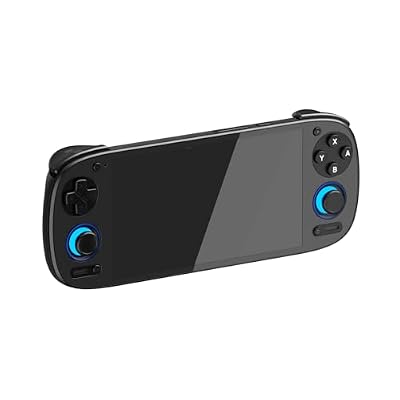
A roguelike run lives or dies on a single step. One accidental diagonal walks you into a monster house, and an hour of careful progress is gone. That is why this genre reverses the usual handheld buying logic: the chip barely matters, because the classic shelf runs perfectly on almost anything, while the D-pad matters more than in any other category we cover. A sloppy cross that rocks onto diagonals is not an annoyance here; it is a run-ending defect.
As an Amazon Associate, we earn from qualifying purchases.
This guide ranks five picks by pad precision and session fit first. The library is the emulated one: the Mystery Dungeon line, from Torneko and Shiren on the Super Famicom through Chocobo and Pokémon Mystery Dungeon on later systems, plus Azure Dreams and the other cartridge-era crawlers that borrowed the formula. Dump your own cartridges and discs, and every machine below plays that shelf at full speed.
This article contains affiliate links, and we may earn a commission when you buy through them, at no extra cost to you.
Quick Answer
Buy for the pad and the wake-up, not the processor. The Retroid Pocket 5 leads with a primary-position D-pad, instant Android resume and a light body built for short runs. The Legion Go S is the Windows pick for its 1200-line screen and readable text, and a SanDisk Extreme card holds the whole genre shelf.
The Shelf: Mystery Dungeon and Its Cousins
The roguelike most handheld players actually emulate is not the ASCII original but the Mystery Dungeon family, Chunsoft’s series that put the permadeath dungeon on consoles. Torneko on the Super Famicom started it, Shiren the Wanderer deepened it, and the line kept going through Chocobo’s Dungeon and the Pokémon Mystery Dungeon games on Game Boy Advance and Nintendo DS. Azure Dreams on the PlayStation folds monster raising around the same one-more-floor core.
These games share a hardware profile that flatters modest machines. They are turn-based, so nothing moves until you do, and grid-based, so every input is a deliberate step in one of eight directions. They were also designed for short, repeatable sessions, because death sends you back to the entrance. An emulator’s job is to present the grid cleanly and register each step exactly once, which is why this ranking is about control and comfort rather than power.
The Pad Is the Game
In a Mystery Dungeon game, the D-pad is not one input among many. It is the steering, the menu cursor and, held with a button, the diagonal movement tactics depend on. Eight-way movement on a four-switch pad means diagonals come from pressing two directions at once, and a pad with a shallow pivot or sloppy cardinal separation hands you diagonals you never asked for. In a platformer that costs a life; at floor thirty, it costs the run.
Judge pads the way the manufacturers describe them. A cross in the primary position, up and left where the thumb rests first, suits a library that rarely touches the analog stick; a pad below the stick asks your thumb to travel for the input you use constantly. Lenovo fits its Legion controllers with Hall effect sticks and triggers, which solves stick drift, but the D-pad itself is a conventional membrane design on both Lenovo machines, as across this group. No handheld here ships a documented anti-diagonal mechanism, so the ranking rests on position, size and travel as each maker describes them.
The Permadeath Contract: Save States, Honestly
Every emulator here offers save states, and every roguelike was designed as if they did not exist. This deserves plain language. The genre’s save rules are the game: Mystery Dungeon titles save between floors and punish death by stripping your inventory or levels, and that punishment makes a deep run tense. Saving mid-floor and reloading after a bad step does not break the software, but it quietly cancels the contract the design is built on: the run becomes a puzzle you rewind.
That is a choice, not a crime, and this guide will not moralise about it. Plenty of players use states to learn a game’s systems before playing it straight, and the DS entries even build in a rescue system that assumes failure is routine. The discipline is yours to set: RetroAchievements hardcore mode exists for players who want an external referee, since it disables save-state loading while achievements are earned.
Session Shape: One More Floor, Then Sleep
Roguelike sessions have a distinctive rhythm: five minutes becomes forty, then death ends the run and the device goes back in a pocket. The hardware trait that matches is resume behaviour. An Android handheld wakes from sleep straight back into the suspended game, suiting a genre played in bursts. A Windows handheld sleeps well too, but its fuller operating system takes longer to settle, so saving at a floor boundary before sleeping the device is a habit worth building.
Battery draw is the other half of session fit, and here the genre is kind. Turn-based 2D games sip power on any hardware. Weight matters more than watts: a handheld you happily hold for one more floor beats a heavier one left on the desk.
Small Screens, Small Text
The last axis is legibility. Roguelikes talk to you in text: combat logs, item descriptions, hunger warnings, the shopkeeper’s prices, and the DS entries add a second screen of map or log. A 1920 by 1200 screen renders the low-resolution originals at clean integer multiples with room for the log, while a 1080-line panel still scales the Game Boy Advance and Super Nintendo shelves evenly.
The Five Picks, Ranked by Pad and Session Fit
Retroid Pocket 5: The Run-in-Your-Pocket Pick
The Pocket 5 takes the top spot because its design lines up with the genre point by point. The D-pad sits in the primary position above the left stick, so the input this library lives on is the one your thumb finds first. Android wakes it instantly into a suspended run, matching the burst rhythm of the genre. At roughly 280 grams it is the machine you actually carry, and the 5.5-inch AMOLED panel gives dungeon palettes real contrast while scaling the cartridge shelves cleanly.
Specs:
- Chip: Snapdragon 865
- Memory and storage: 8GB RAM, 128GB built in
- Display: 5.5-inch AMOLED, 1920 by 1080, touchscreen
- Battery: 5000 mAh
- Weight: about 280 g
- System: Android 13
Buy it here: https://www.amazon.com/dp/B0DT4G4PD2?tag=gamingpcrev04-20
Lenovo Legion Go S: The Windows Reading Pick
The Go S is the pick for players whose library lives on Windows, and its case rests on the screen. The 8-inch panel carries 1200 lines, the tallest count here, rendering the classic shelves at clean integer scales and giving combat logs and item text real breathing room. The Ryzen Z2 Go chip is far more than a turn-based library needs, so runs stay silent and cool. Its D-pad sits below the left stick, the one ergonomic compromise, and at about 740 grams it is a two-handed commitment, not a pocket machine. This listing is the Z2 Go Windows 11 configuration; others share the name.
Specs:
- Chip: AMD Ryzen Z2 Go, Zen 3, 4 cores and 8 threads
- Memory and storage: 16GB LPDDR5x, 512GB built in
- Display: 8-inch, 1920 by 1200, 48 to 120Hz VRR
- Battery: 55.5 Wh
- Weight: about 740 g
- System: Windows 11
Buy it here: https://www.amazon.com/dp/B0DTBN55K9?tag=gamingpcrev04-20
ASUS ROG Xbox Ally: The Light Windows Pick
The base Xbox Ally is the lightest Windows route into this library at about 670 grams. Its 7-inch 1080p screen scales the Game Boy Advance shelf at a clean multiple, the Ryzen Z2 A chip idles through turn-based games, and the 60 Wh battery outlasts any reasonable session. The D-pad sits below the stick, as on the Lenovo, and the smaller panel gives logs less room than the Go S.
Specs:
- Chip: AMD Ryzen Z2 A, Zen 2, 4 cores and 8 threads
- Memory and storage: 16GB LPDDR5X, 512GB built in
- Display: 7-inch IPS, 1920 by 1080, 120Hz, touchscreen
- Battery: 60 Wh
- Weight: about 670 g
- System: Windows 11
Buy it here: https://www.amazon.com/dp/B0FM6C3ZMN?tag=gamingpcrev04-20
Lenovo Legion Go 2: The Big-Text Pick
The Go 2 is surplus hardware for this genre, stated openly: no Mystery Dungeon game needs its Ryzen Z2 or 32GB of memory. It earns its place with the 8.8-inch OLED panel, the largest and kindest reading surface here and the pick for players who find handheld text tiring. Against that, roughly 920 grams with controllers attached is a lot of machine to hold over a dungeon, and its pad sits below the stick.
Specs:
- Chip: AMD Ryzen Z2, 8 cores and 16 threads
- Memory and storage: 32GB LPDDR5X, 2TB built in
- Display: 8.8-inch OLED, 1920 by 1200, 144Hz
- Battery: 74 Wh
- Weight: about 920 g with controllers
- System: Windows 11
Buy it here: https://www.amazon.com/dp/B0FYR2V7ZB?tag=gamingpcrev04-20
SanDisk 1TB Extreme microSDXC: The Whole Shelf on a Card
The fifth pick is not a handheld but the card that makes the genre’s size advantage concrete. The entire emulated roguelike shelf, every Mystery Dungeon entry across four systems plus the surrounding cartridge crawlers, occupies a small corner of a 1TB card. Every machine above reads microSD, so one card moves your dungeon shelf between them. Rated speeds are not stated; for turn-based games, card speed barely matters.
Specs:
- Capacity: 1TB
- Format: microSDXC, UHS-I
- Model: SDSQXAV-1T00-GN6MA
- Rated speeds: not stated
- Compatibility: microSD slot on all four handhelds above
Buy it here: https://www.amazon.com/dp/B09X7MPX8L?tag=gamingpcrev04-20
How to Choose
Start with the pad, the input this genre cannot compromise on. If your thumb will live on the cross, favour the machine that puts the D-pad in the primary position, which here means the Pocket 5. Then weigh session shape: players who dip in and out all day benefit from Android’s instant resume, while players with an existing Windows emulator setup should stay on Windows. Next, text: if logs and menus tire your eyes, panel size and line count matter most, and the Go 2 and Go S pull ahead. Ignore processing power; buy headroom only if other shelves will use it.
Who Should Skip
Skip this entire category if you play roguelikes primarily on a desktop with a keyboard, since the genre’s PC natives already assume one. Skip the Windows machines if your library is the cartridge shelf, because Android covers it for less weight and longer standby. Skip the Go 2 if small text has never bothered you; its screen advantage would go to waste. And for the Mystery Dungeon entries still sold as modern re-releases, the official version is the simpler path.
FAQ
Do these handhelds run Shiren and Torneko at full speed?
Yes. The Super Famicom and Game Boy Advance shelves are among the lightest in emulation, and every chip in this guide exceeds their needs by a wide margin. Performance is not a deciding factor here.
Should I use save states in a roguelike?
That is a design question, not a technical one. Save states work everywhere, but the Mystery Dungeon games were balanced around death carrying a cost, and mid-floor reloading removes it. Many players learn with states, then play straight; RetroAchievements hardcore mode can enforce the discipline if you want it enforced.
Which screen is best for the Nintendo DS Mystery Dungeon games?
A taller panel helps, because the DS entries use the second screen for maps and logs. The 1200-line screens on the two Lenovo machines give stacked layouts the most room, while the Pocket 5 handles them well, its touchscreen standing in for the DS stylus input.
Final Verdict
The roguelike shelf asks less of a handheld than any other in this cluster: an honest D-pad, a fast wake, readable text and a body light enough for one more floor. The Retroid Pocket 5 answers all four and takes the top spot. The Legion Go S is the Windows alternative with the better reading screen, the Xbox Ally trims the weight, the Legion Go 2 maximises text size, and the SanDisk card holds the whole genre.