Ravenlok: Legendary Edition is the fairytale action adventure from Cococucumber, released 11 April 2025, in which a young heroine steps into a mirrored kingdom to fulfil a prophecy. Its voxel art and pad-first design raise the usual question: is either route, Linux or Steam Deck, officially supported?
The record answers more bluntly than most games in this series. Steam sells a Windows build and nothing else, Valve has never published a Steam Deck test, and the one community report on file describes a game that opens but accepts no input.
As an Amazon Associate, we earn from qualifying purchases.
Quick answer
No. Ravenlok: Legendary Edition ships for Windows only: Steam’s record flags Linux false, the Linux requirements field is an empty list, and the app’s single depot is a Windows build. Valve has never reviewed it for Steam Deck, and ProtonDB holds exactly one report, which rates the game borked because it accepts no input.
One platform on the flag line, one depot on disk
Start with the flags. Steam’s record for app 1072290 reads windows true, mac false, linux false. The requirements fields match: the Windows field is genuinely populated at both tiers, asking at minimum for Windows 10, a 2.0 GHz Intel processor, 4 GB of memory and a GeForce GTX 900-series class card, with a 3.0 GHz processor, 8 GB and a GTX 10-series card recommended, and 4 GB of storage at both tiers. The Mac requirements field is an empty list and the Linux requirements field is an empty list: no Linux system text was ever published for this game.
The depot table closes what the flags open. SteamDB lists exactly one content depot for the app, depot 1072291, configured for Windows, holding 5.09 GiB on disk, its manifest a Windows delivery of executables, libraries and Unity asset bundles. The public branch stands on build 18575013, dated 23 May 2025, and the store package a purchase delivers, sub 359500, contains the app and that one depot and nothing else; two CD-key packages grant the same depot. No Linux depot exists inside the app’s table or hiding in a package. The osarch field is an empty string, so nothing about the build’s architecture can be claimed from it either.
Two gaps complete the record. Steam names no drm_notice and no ext_user_account_notice, so the record states no third-party DRM and no external account requirement. SteamDB’s detected technologies are the Unity Engine, a game development kit SDK, UnityBurst, UnityIL2CPP and cURL: engine plumbing only. Are We Anti-Cheat Yet carries no entry for the game across its full dataset, searched by name and by app number. The store categories are Single-player, Steam Achievements, Full controller support, Gamepad Recommended, DualShock and DualSense controller support, Steam Cloud and Family Sharing; the genres are Action, Adventure, Indie and RPG.
The family scan finds nothing to hide behind
Some games in this series carry a stray Linux flag on a soundtrack or a populated tab over an undelivered depot. Ravenlok offers neither complication, because the family is almost empty. The record publishes no DLC array at all: no soundtrack app, no art book, no supporter pack exists under this app on Steam.
The one relative is the Ravenlok: Legendary Edition Demo, app 3077830, a separate store app released on 1 April 2025 and judged separately here. It agrees with the full game on every layer: windows true, mac false, linux false, empty-list Linux field. A demo never ported cannot lend the full game a platform it does not have, and in this family nothing tries to.
The Steam Deck file is simply empty
Valve’s compatibility endpoint answers for this app, and what it returns is a blank sheet. The resolved category is 0, the untested value, for Steam Deck, SteamOS and Valve’s other hardware categories alike, and every item list is empty: no checks passed or failed, no notes, no tested build, no runtime, no test date. There is no paperwork to compare against the current branch build, because no paperwork exists.
That emptiness has to be reported as itself, not rounded into a verdict. An untested game is not a failed game: Valve has simply never published a result, so this article claims no Deck rating in either direction. What can be said is narrower. The game lists full controller support and a Gamepad Recommended category, so its input shape suits a handheld on paper, and the build a Deck would run is the same Windows build 18575013, launched through Proton by default. Whether that combination behaves is a question only the community file speaks to.
ProtonDB: one report, and it says borked
ProtonDB’s summary record for this app was read in full, and it is the thinnest file in this batch. It holds exactly one report. The headline and trending tiers read pending, and both the best-reported and provisional tiers read borked, with a confidence rating of inadequate. A one-report file proves little, and this article treats it at exactly that weight: it is the only graded community evidence that exists, and it points the wrong way.
The report itself describes a specific failure. The game installs and opens, its cinematic plays, but it does not start play: the cinematic loops until an input should carry it to the main menu, and no input is accepted, from controller or mouse and keyboard alike. The reporter tried several Proton versions; the game accepted input once under Proton 9.0-4, then behaved the same way on the next launch. One report on one machine is not a universal verdict, but the file contains no successful run to set against it.
One check could not be completed. The game page copy fetched here surfaced the report text but not the page’s native-classification heading, so this article neither claims that heading agrees with Steam nor alleges the stray-tag pattern seen elsewhere in this series. The gap is disclosed rather than filled.
GOG sells no edition of this game
The second storefront offers no alternative route. GOG’s catalogue holds no product record for Ravenlok: the game’s natural product addresses on GOG resolve to the store’s general games catalogue, which is the answer GOG gives for a title it does not sell. Search endpoints returning nothing would not settle that on their own, since they are known to miss games GOG does sell, which is why the ruling rests on the product addresses. The Steam copy is the only PC edition on sale, and it is a Windows build.
Gear that fits an untested Windows build
Because Valve’s file is empty, the gear below follows the parts of the record that do exist: full controller support, a light build, and a Proton route whose one report is an input failure.
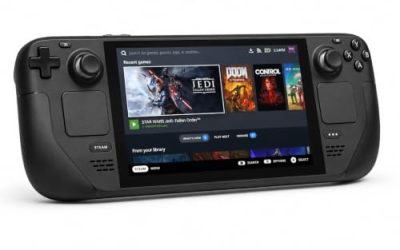
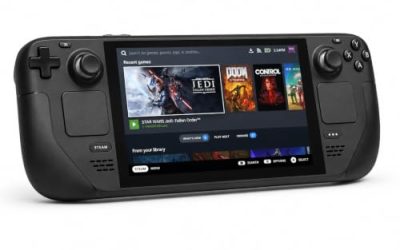
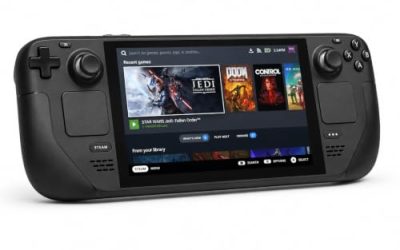
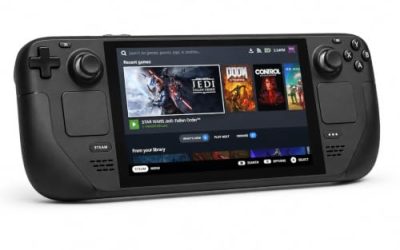
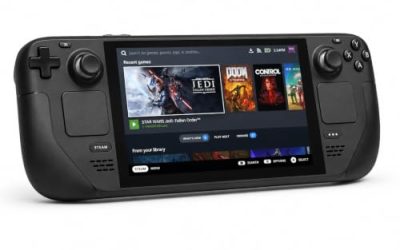
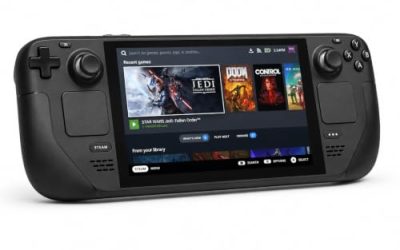
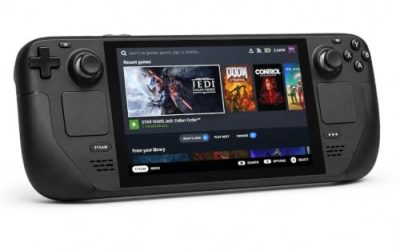
Valve Steam Deck OLED 512GB

The obvious handheld for a pad-first fairytale adventure, with one caveat: Valve has published no test, so its case rests on Steam Input and Proton, not on any badge. The game’s requirements sit far below the Deck’s APU.
Specs
- Display: 7.4-inch HDR OLED, 1280 by 800, up to 90 Hz
- Processor: AMD Zen 2 and RDNA 2 custom APU
- Memory: 16 GB LPDDR5
- Storage: 512 GB NVMe, plus a microSD slot
- Wireless: Wi-Fi 6E and Bluetooth
- Channel note: Valve sells the Deck mainly through its own store, so Amazon listings are third-party sellers
8BitDo Ultimate 2 Bluetooth Controller

The docked and desktop pad pick. Steam lists full controller support, and this pad covers the couch case with modern sticks, triggers and back buttons.
Specs
- Connectivity: Bluetooth wireless and USB-C wired
- Joysticks: TMR electromagnetic, anti-drift design
- Triggers: Hall effect, with mode switching
- Extras: two remappable back buttons, motion control
- In the box: charging dock included
Xbox Wireless Controller, Carbon Black

The safest guest pad in PC gaming: Steam Input support is universal, the glyphs match what most games display, and it pairs over Bluetooth or its own wireless standard. For a game whose one Proton report is an input failure, a second pad on a different connection path doubles as a diagnostic.
- Connectivity: Xbox Wireless and Bluetooth
- Port: USB-C for wired play
- Controls: hybrid D-pad, dedicated Share button
- Power: AA batteries or optional rechargeable pack
Logitech G502 HERO

The record recommends a gamepad for this game, so a mouse is not its primary input; at a desk it still earns its place for library management and the desktop sessions around the game.
Specs
- HERO optical sensor, up to 25,600 DPI
- 11 programmable buttons
- Adjustable weight system
- Wired USB connection
- On-board memory profiles
Samsung T9 Portable SSD 2TB

For moving a game library between machines, or keeping an offline backup of installers, a fast USB-C drive is the simple answer. The headline figure needs a Gen 2×2 host port; on a lesser port the drive runs at that ceiling instead.
Specs
- Capacity: 2 TB portable SSD
- Interface: USB 3.2 Gen 2×2, USB-C connector
- Maker-rated speeds: up to 2,000 MB per second read, 1,950 MB per second write
- Features: Dynamic Thermal Guard, maker-rated drop resistance
How to choose
Choose the Steam copy; it is the only PC edition on sale. On Windows the route is uncomplicated: light build, full controller support, no DRM or account layer in the record. On Linux, go in with the record’s own expectations: there is no native build to select, the default Proton install is the only route, and the single community report describes an input failure, so treat the purchase as a test you may need to refund rather than a settled play. On Steam Deck, no badge stands behind the game; it is an untested title, and the same input caveat applies.
Who should skip
Skip this one if you are shopping for a native Linux release: none exists, and no stray flag in the family pretends otherwise. Skip it if you need a Steam Deck verdict before buying, because Valve’s file is empty. Skip it if a one-report borked file is not a risk you accept, since no successful Proton report balances it. And skip it if you want a DRM-free installer from a second storefront, because no GOG edition exists.
FAQ
Is Ravenlok native on Linux?
No. Steam’s record for app 1072290 flags Windows only, the Linux requirements field is an empty list, and the app’s only depot is a Windows build of 5.09 GiB. No Linux depot exists in the app’s table or in any package, and the demo agrees on every layer.
Is Ravenlok Steam Deck Verified?
Valve has published no verdict at all. Its endpoint returns category 0, the untested value, with empty item lists for Steam Deck and SteamOS alike: no tested build, no runtime, no notes. Untested is not the same as unsupported, but it is not a badge either, and this article claims none.
How well does Ravenlok run under Proton?
The community file is one report deep. ProtonDB’s summary reads pending on the headline and trending tiers and borked on the best-reported tier, with inadequate confidence. The single report says the game installs and opens but accepts no input at the menu, across several Proton versions. No successful run is on record.
Can I buy Ravenlok on GOG instead?
No. GOG holds no product record for the game: its natural product addresses there resolve to the general catalogue, the answer GOG gives for a title it does not sell. The Steam copy is the only PC edition, and it is a Windows build.
Final verdict
Ravenlok: Legendary Edition is a Windows-only release whose Linux paper trail is defined by absences: no Linux flag, no Linux requirements text, no Linux depot, no DLC family, no GOG edition, and a Steam Deck file Valve has never filled in. What Linux players get instead is a default Proton route backed by exactly one community report, and that report says the game opens but takes no input. Buy the Steam copy for Windows without hesitation; buy it for Linux or Deck only as an experiment, knowing the record promises nothing.
Product and ASIN Reference
| Product | ASIN |
|---|---|
| Valve Steam Deck OLED 512GB | B0CQ3RWQQZ |
| 8BitDo Ultimate 2 Bluetooth Controller | B0F194QFT2 |
| Xbox Wireless Controller, Carbon Black | B08DF248LD |
| Logitech G502 HERO | B07GBZ4Q68 |
| Samsung T9 Portable SSD 2TB | B0CHFS9K14 |