How to use this list
Prices on PC parts move fast enough that any specific number I print here will be stale within a month. What doesn’t move as fast is the shape of the market: the relative gap between a budget part and a mid-range one, where diminishing returns kick in, and which categories are worth stretching for versus which aren’t. This list is organized by price band and role, not by exact SKU, so you can map it onto whatever the market is doing when you’re actually buying.
Check current street prices before you buy. MSRP is frequently fiction, especially for GPUs in the first few months after launch.
GPU price bands
Graphics cards are the single biggest line item in most builds and the one most likely to be priced above MSRP due to demand. Roughly:
| Band | Typical use case | What you’re paying for |
|---|---|---|
| Budget (entry-level) | 1080p, esports titles, older AAA at medium settings | Just enough VRAM and shader count to not bottleneck a budget CPU |
| Mid-range | 1080p high / 1440p medium-high, 60+ fps | The sweet spot — best fps-per-dollar in the whole stack |
| Upper mid-range | 1440p high-ultra, entry 4K | Headroom for ray tracing and upscaling without compromise |
| High-end / flagship | 4K, high refresh, VR | Diminishing returns — you’re paying 60-80% more for 15-25% more performance |
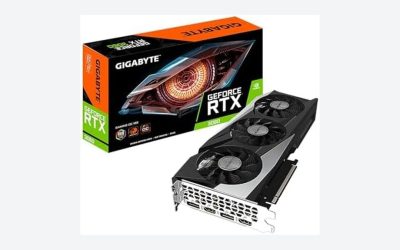
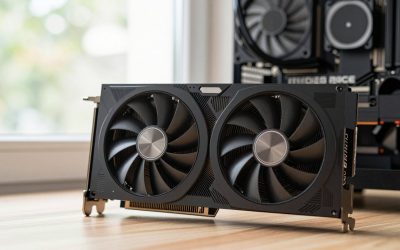
The mid-range band is almost always the correct answer for most people. The jump from budget to mid-range buys real, visible frame rate. The jump from upper mid-range to flagship buys bragging rights and maybe 15 fps. If you want to see what’s currently available in that sweet spot, browsing a mid-range graphics card listing will show you current street prices faster than any article can.
CPU price bands
CPUs are more predictable than GPUs because there’s less speculative demand, but the same logic applies: mid-range chips carry most gamers and general users just fine, and the top-end parts mostly matter for heavy multithreaded work like video encoding, 3D rendering, or running VMs.
For a pure gaming build, pairing a mid-range CPU with a stronger GPU almost always beats the reverse. The CPU hits a frame rate ceiling that the GPU can’t push past; above that ceiling, extra CPU spend does nothing for games but a lot for productivity tasks. If your use case is 90% gaming, don’t let a CPU upgrade eat the budget you should be putting into the GPU.
Cooling: where cheap is usually fine
This is the category where I’ll tell you to stop spending sooner than you’d think. A decent air cooler in the $30-50 range handles the vast majority of CPUs at stock settings without thermal throttling. You need to step up to a 240mm or 280mm AIO liquid cooler only if you’re overclocking, running a high-TDP chip (think 170W+ sustained), or building in a case with genuinely poor airflow.
Failure mode to watch for: cheap AIOs eventually suffer pump failure or coolant permeation through the tubing, usually in the 3-5 year range, after which the cooler quietly becomes a radiator with a dead pump and your CPU starts thermal throttling under load. A good air cooler has no pump to fail — it’s a slab of metal and a fan, and the fan is a $10 replacement part if it ever dies. If you’re not overclocking, air cooling isn’t a compromise, it’s the more reliable choice. If you do want liquid cooling for noise or aesthetics, look at 240mm AIO cooler options rather than going straight to 360mm, which is overkill for anything short of a flagship CPU under sustained load.
PSU and storage: don’t cut corners here
Power supplies and storage are the two categories where buying cheap can actually cost you other parts. A bargain-bin PSU with poor voltage regulation can send a bad transient through your system and take a GPU or motherboard with it when it fails. Spend on a unit from a reputable maker with at least an 80+ Bronze rating, ideally Gold if your GPU draws more than 250W. This isn’t a place to shave $20.
Storage is more forgiving. A mainstream NVMe SSD in the 1TB range is the baseline for a game-focused build now that install sizes routinely hit 80-150GB per title. Beyond baseline NVMe speeds, paying more for a higher-tier drive mostly buys sustained write performance that matters for video editing or large file transfers, not game load times, which plateau once you’re off a mechanical hard drive.
Where to actually save money
If the budget is tight, the categories that tolerate cuts without hurting the experience are: case (a $50 case cools and houses parts as well as a $150 one, you’re paying for looks and extra fan mounts), cooling (per above), and RAM speed beyond the sweet spot your platform actually uses — buying faster RAM than your motherboard and CPU can take advantage of is money that does nothing.
The categories that don’t tolerate cuts: PSU, and the GPU/CPU balance for your actual use case. A mismatched build, where you overspent on one and starved the other, is the most common way people end up disappointed with a build that was, on paper, within budget.