Monster Prom is a competitive dating sim for one to four players, built around stat checks and a race to land a prom date. It was developed by Beautiful Glitch and released on 27 April 2018, with Steam’s record naming Xelu and Those Awesome Guys as its publishers. Because the game is a fixture of local-multiplayer lists, Linux players keep asking the same question: does it actually ship a Linux build, or is the store page’s platform flag another one with nothing behind it?
This time the answer survives every layer of the record. The store flags, the requirements fields, the depot table, the purchase package and the game’s one piece of DLC all point the same way, and a second storefront sells the same native build. The complications sit elsewhere: in a Deck test sheet certifying a Proton configuration the game does not need, and in a ProtonDB file that could not be read this session.
As an Amazon Associate, we earn from qualifying purchases.
Quick answer
Yes. Monster Prom is native on Linux. Steam flags all three desktop platforms, the Linux requirements field is written out in the game’s own words, and the depot table holds a full-size Linux build that the purchase package delivers. The Second Term DLC agrees, the Deck badge reads Verified, and GOG sells a Linux edition too.
What Steam’s record actually says
Start with the flags, where this cluster usually starts lying. Monster Prom’s record flags Windows, Mac and Linux all true. Flags alone settle nothing, so the next layer is the requirements fields, and here the Linux tab is genuinely populated: it asks for Ubuntu, in the record’s own phrasing, or anything that makes sense, a processor from the last five years, 4 GB of RAM and 1 GB of storage. That is not a copied Windows block: the Windows field speaks of Windows 7 or higher and the Mac field of OS X, each in its own terms. No platform gets a recommended tier, a uniform gap that reads as house style.
The category list describes a couch-first game: single-player, multi-player, shared and split screen play, online PvP entries, partial controller support, Steam Achievements, trading cards and Remote Play Together. Two absences matter below: the record carries no DRM notice and no external-account notice. The app configuration also registers a dedicated Linux client icon with its own file hash: the genuine article, not a leftover asset.
Depots and the purchase package
SteamDB’s depot table is where a flagged Linux build either materialises or evaporates. Monster Prom’s table lists three full content depots: Windows at 2.84 GiB, macOS at 2.87 GiB and Linux at 2.87 GiB, with the Linux depot carrying the largest download of the three. No stub, no locked depot. The only other depot belongs to the DLC, a marker a few kilobytes in size, normal for content riding inside the base game’s files.
Delivery decides whether any of this reaches a paying customer. The single store package a purchase grants reads Windows, Mac and Linux all true on Steam’s own package record, and it grants the game app itself, so a normal purchase installs the Linux build directly: the anti-stranded shape. The public branch is current, serving a build updated in November 2025, so the three-platform shape is maintained, not a launch-era fossil.
The family check: Second Term
The full DLC array holds exactly one app: Monster Prom: Second Term, a content expansion released in February 2019. Family sweeps here usually hunt for a soundtrack wearing a false Linux flag over an empty record. Second Term is the opposite case: it flags all three platforms true, and its Linux requirements field is populated with the same wording as the base game’s. A content DLC has no executable of its own, so its flag is paperwork rather than delivery, but the paperwork agrees with the game instead of inflating it. The sequels are separate apps and play no part here.
Anti-cheat, from three separate sources
Three sources get a say, and the article keeps them apart. Steam’s record names no anti-cheat, and carries neither a DRM notice nor an external-account notice. SteamDB’s detection lists engine and middleware plumbing only: the Unity engine, the Mono SDK and the Photon SDK, the last being networking middleware rather than a cheat countermeasure. The Are We Anti-Cheat Yet dataset, checked across its 1,167 listed games by name and by app id, carries no entry for Monster Prom at all. Nothing in any source suggests a kernel-level blocker.
Steam Deck: Verified, with a Proton line on a native game
Valve’s own compatibility endpoint returned no readable sheet this session, so the verdict and paperwork here were read from SteamDB’s republication of Valve’s compatibility data, disclosed as such. The category is Verified, Valve’s top grade: all four checks pass, covering full functionality under the default configuration, matching glyphs, legible text and strong default performance. The configuration notes are clean for a dialogue-driven game: gamepad input, no manual keyboard invocation, no small-text flag, no internet required for setup or single-player. SteamOS separately reads Compatible.
Two paperwork points follow. First, the sheet’s recommended runtime reads proton-7.0-1: the configuration Valve certified is the Windows build under Proton, on a game whose own Linux depot sits in the same package. That is a quirk, not a contradiction; the badge grades what Valve tested. Second, the test dates from 23 February 2022, on build 8052956, while the public branch now serves build 20786767. The paperwork predates the current build, making this a candidate for the factual Deck-paperwork supplement list.
The ProtonDB file that could not be read
ProtonDB’s summary endpoint failed on every route tried this session, and the game’s page yielded no extractable heading, tier or report count either. This article therefore claims no ProtonDB tier and no report count; the gap is disclosed rather than filled in from memory. What the page did surface, at individual-report weight, is a Deck filing praising the native version over the Proton version Valve’s testing selected: the native build allowed true fullscreen at the Deck’s aspect ratio where the Proton route letterboxed, at the cost of reversed d-pad inputs that Steam Input remapping fixed. One report is texture, not a tier.
GOG: a second storefront with the same native build
GOG’s search endpoints return zero products for this title, a known blind spot, so the verdict rests on GOG’s own live product page, identity-checked against Steam’s record: the description matches this game, and the page’s structured data names Those Awesome Guys, one of the two publishers on Steam’s record. That record lists its operating systems as Windows, Linux and macOS. A GOG edition therefore exists, and it carries the Linux build.
Gear for a couch-first native build
The gear below follows the record: the badged handheld, pads for the shared-screen multiplayer, a mouse for desk sessions, and travelling storage.
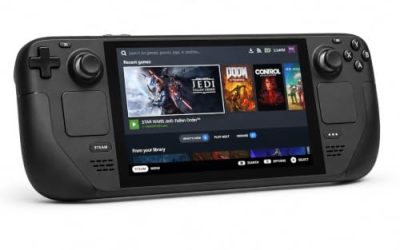
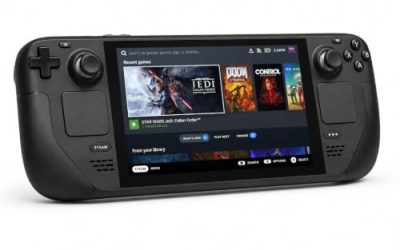
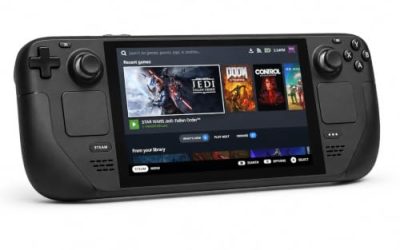
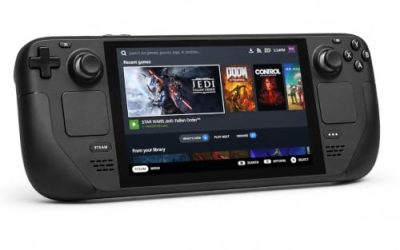
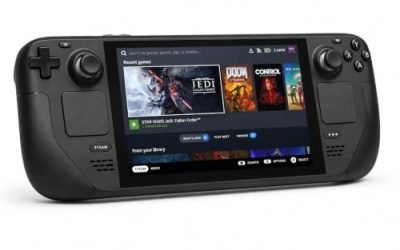
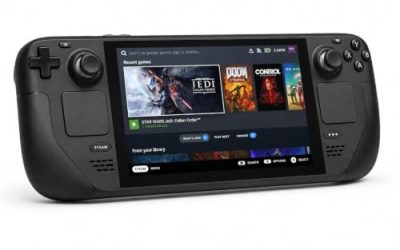
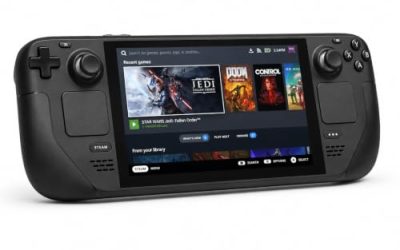
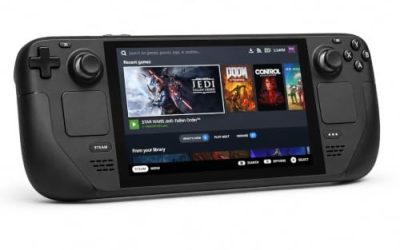
Valve Steam Deck OLED 512GB

The handheld the Verified badge was written for. Valve’s sheet passes the game on every check, and the native build means the Deck runs the game’s own Linux depot rather than a compatibility layer.
Specs
- Display: 7.4-inch HDR OLED, 1280 by 800, up to 90 Hz
- Processor: AMD Zen 2 and RDNA 2 custom APU
- Memory: 16 GB LPDDR5
- Storage: 512 GB NVMe, plus a microSD slot
- Wireless: Wi-Fi 6E and Bluetooth
- Channel note: Valve sells the Deck mainly through its own store, so Amazon listings are third-party sellers
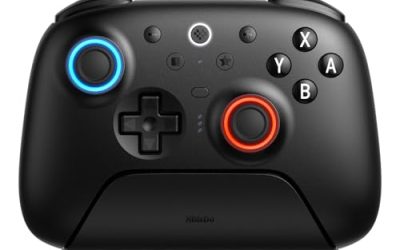
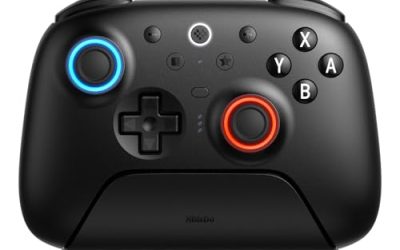
8BitDo Ultimate 2 Bluetooth Controller
The docked and desktop pad pick. The multiplayer is built for shared screens and passed controllers; this pad covers the couch case with modern sticks, triggers and back buttons.
Specs
- Connectivity: Bluetooth wireless and USB-C wired
- Joysticks: TMR electromagnetic, anti-drift design
- Triggers: Hall effect, with mode switching
- Extras: two remappable back buttons, motion control
- In the box: charging dock included
Xbox Wireless Controller, Carbon Black
The safest guest pad in PC gaming: Steam Input support is universal, the glyphs match what most games display, and it pairs over Bluetooth or its own wireless standard. Extra pads in this shape are the easy answer.
- Connectivity: Xbox Wireless and Bluetooth
- Port: USB-C for wired play
- Controls: hybrid D-pad, dedicated Share button
- Power: AA batteries or optional rechargeable pack
Logitech G502 HERO
A game of menus, dialogue choices and inventory screens rewards a precise wired mouse at a desk: stat management becomes single clicks, and eleven programmable buttons cover the confirm and cancel inputs a long session repeats.
Specs
- HERO optical sensor, up to 25,600 DPI
- 11 programmable buttons
- Adjustable weight system
- Wired USB connection
- On-board memory profiles
Samsung T9 Portable SSD 2TB
For moving a Linux game library between machines, or an offline backup of installers, a fast USB-C drive is the simple answer. The headline figure needs a Gen 2×2 host port; on a lesser port the drive runs at that ceiling.
Specs
- Capacity: 2 TB portable SSD
- Interface: USB 3.2 Gen 2×2, USB-C connector
- Maker-rated speeds: up to 2,000 MB per second read, 1,950 MB per second write
- Features: Dynamic Thermal Guard, maker-rated drop resistance
How to choose
Choose either storefront on library preference, because both sell the native build. On a Linux desktop or laptop, install and launch; no compatibility tool is part of the default route, and the requirements are modest. On a Steam Deck, the Verified badge means the game passes Valve’s checks as tested, with the caveat that the test predates the current build; players wanting the native build’s fullscreen behaviour may need to select it deliberately rather than accept the certified configuration. For input, one pad per player is the natural shape of the game.
Who should skip
Skip this one if you want a solo narrative game with no competitive layer: the design assumes rivals, even when the other seats are filled by the game itself. Skip it if mature themes and bawdy humour are a hard boundary, because the store page’s content caution leads with exactly that. Skip the ProtonDB question if a missing community file bothers you: this session could not read one, and no tier will be invented to fill the space. And skip the sequels’ store pages when checking this game’s status, since Monster Roadtrip and Monster Con are separate apps.
FAQ
Is Monster Prom native on Linux?
Yes. Steam flags Linux true, the Linux requirements field is populated in the game’s own wording, the depot table holds a full-size Linux build, and the purchase package delivers it. GOG’s edition lists Linux too.
Does the Second Term DLC work on Linux too?
Its record agrees with the base game: all three platforms flagged, with a populated Linux requirements field mirroring the original’s. As a content expansion with no executable of its own, its content rides inside the base game’s builds.
Is Monster Prom Steam Deck Verified?
Yes. Valve’s record, read through SteamDB’s republication after Valve’s endpoint returned no readable sheet, gives the top category with all four checks passing. The test ran in February 2022 on an older build than the current branch, and the certified configuration names a Proton runtime despite the native build.
What does ProtonDB say about Monster Prom?
Nothing this article can quote. The summary endpoint failed on every route tried and the game page yielded no readable tier or report count, so no tier is claimed. A single readable Deck report praised the native build over the Proton route; it stands as one player’s filing, not a rating.
Final verdict
Monster Prom is one of the cleanest native files in this cluster: flag, populated field, full-size depot, purchase package, DLC paperwork and a second storefront all agree, with no trap surface in the family. The honest caveats are about paperwork, not delivery: Valve’s Verified test certifies an older build under a Proton runtime the game does not need, and ProtonDB’s file could not be read this session. Buy it on Steam or GOG, install the native build, and hand out the controllers.
Product and ASIN Reference
| Product | ASIN |
|---|---|
| Valve Steam Deck OLED 512GB | B0CQ3RWQQZ |
| 8BitDo Ultimate 2 Bluetooth Controller | B0F194QFT2 |
| Xbox Wireless Controller, Carbon Black | B08DF248LD |
| Logitech G502 HERO | B07GBZ4Q68 |
| Samsung T9 Portable SSD 2TB | B0CHFS9K14 |