Our Short List of 3

- Display: 7.4-inch HDR OLED, 1280 by 800, up to 90 Hz
- Processor: AMD Zen 2 and RDNA 2 custom APU
- Memory: 16 GB LPDDR5
- Storage: 512 GB NVMe, plus a microSD slot

- Connectivity: Bluetooth wireless and USB-C wired
- Joysticks: TMR electromagnetic, anti-drift design
- Triggers: Hall effect, with mode switching
- Extras: two remappable back buttons, motion control

- Connectivity: Xbox Wireless and Bluetooth
- Port: USB-C for wired play
- Controls: hybrid D-pad, dedicated Share button
- Power: AA batteries or optional rechargeable pack
All 5 Picks at a Glance
| Product | Specs | Action |
|---|---|---|
| Valve Steam Deck OLED 512GB |
| Check price on Amazon |
| 8BitDo Ultimate 2 Bluetooth Controller |
| Check price on Amazon |
| Xbox Wireless Controller, Carbon Black |
| Check price on Amazon |
 Logitech G502 HERO |
| Check price on Amazon |
 Samsung T9 Portable SSD 2TB |
| Check price on Amazon |
Life is Strange: Double Exposure, Deck Nine Games’ October 2024 return to Max Caulfield, was built for Windows and nothing else. Steam’s record flags exactly one platform, the package on sale contains exactly one content depot, and the Linux requirements tab exists only as an empty shell: a heading with nothing underneath it. There is no native build to find here.
What the game does have is an unusually clean compatibility file. ProtonDB’s community record sits at the top tier on every measure, and Valve has tested the game on Steam Deck against the build still current today, awarding its strongest badge. The honest summary is split: the native answer is a flat no, while the Proton answer is about as good as a Windows-only release gets.
As an Amazon Associate, we earn from qualifying purchases.
Quick answer
No. Life is Strange: Double Exposure ships as a Windows-only build on Steam, with no Linux depot, no Linux launch entry and an empty Linux requirements tab. The working route is Proton: ProtonDB rates the game Platinum across 38 reports, and Valve rates it Verified on Steam Deck against the current public build.
The verdict in one table
| Question | Answer from the record |
|---|---|
| Native Linux build | No |
| Native Mac build | No |
| Linux route | Proton |
| Steam Deck | Verified, tested on the current build |
| SteamOS | Compatible |
| Controller support on the record | Full |
| GOG edition | None |
| Anti-cheat or account requirement | None named |
Reading the Steam record layer by layer
Start with the platform flags, the layer most summaries stop at: Windows true, Mac false, Linux false. Flags alone have misled before, so the layers below matter more. The depot census is decisive: the sold package contains a single content depot, depot 1874001, at 21.81 GiB, and the size total filtered to Windows equals the unfiltered total exactly. No Linux depot, no Mac depot, no shared depot. The only other depots are the two upgrade packs covered below, plus the standard Windows redistributables: the Visual C++ 2022 runtime and the DirectX June 2010 package.
The requirements tabs tell the same story more subtly. The Windows tab is fully populated at both tiers; the Mac and Linux tabs hold nothing, each a heading over an empty list. The registered assets complete the picture: a client icon, a client tga and a community icon, but no Linux client icon, and the extended operating-system field is an empty string. Every layer points the same direction, which is why this article rules the game not native without qualification.
One detection deserves a sentence so it is not mistaken for a requirement. SteamDB’s technology scan lists an Epic Online Services kit among the build’s libraries. That is a library detection, not a store condition: the record carries no DRM notice and no external account notice.
The two upgrade apps, read individually
The base game lists two add-on apps, both read on their own records rather than assumed. App 3012890 is the Deluxe Upgrade, a 410.32 MiB depot whose full-game pointer names the base game, flagged Windows only. App 3012900 is the Ultimate Upgrade, a 658.40 MiB depot, likewise Windows only. Neither adds a platform the base game lacks, and there is no soundtrack app in this family. The upgrades change the cosmetic shelf, not the platform ruling.
What the ProtonDB file actually says
ProtonDB’s summary for this app was read in full, and it is unanimous: settled Platinum, best-reported Platinum, trending Platinum, across 38 reports, with confidence rated strong. For an Unreal Engine narrative adventure, that is the profile of a Windows build that travels through Proton without structural friction: reports describe installs that launch, play and finish, with performance on the highest graphics preset as the recurring note rather than compatibility failures.
One part of the ProtonDB page needs correcting rather than quoting. The page displays a heading reading “Natively Supports:” above the requirements summary. That heading is generated from the game’s Linux requirements field, and here that field is the empty shell described above. Steam’s record, the authority this article follows, shows no Linux build in any layer. If the heading suggests native Linux support, it is wrong; the Platinum file describes the Windows build under Proton, nothing more.
Valve’s Deck test, and why its date matters
Valve rates the game Verified on Steam Deck, and the paperwork behind the badge is unusually current. The test was recorded on 18 August 2026 against build 16505703, the current public branch build, first built in November 2024 and still live. The badge was not earned on a launch-window build that later patches superseded; it grades the exact build a buyer downloads today. One transparency note: Valve’s compatibility endpoint returned unreadable output when queried for this article, so the test sheet was read through SteamDB’s republication of Valve’s data, which reproduces the sheet in full.
The sheet is a clean pass on all four headline checks: all functionality is accessible with the default controller configuration, the game shows Steam Deck controller icons, in-game text is legible, and the default graphics configuration performs well. Valve names the recommended runtime as a release candidate from the Proton 11 line. SteamOS is rated Compatible separately, on the same checks. The single note concerns external pads: the game does not default to external Bluetooth or USB controllers, and may require manually switching the active controller through the Quick Access Menu. The game’s own record lists full controller support, so this is a device-priority note, not a support gap.
The storefront question: GOG
GOG does not sell this game. The ruling rests on GOG’s own catalogue data rather than on a missing page: a catalogue search for the series returns four products, the original Life is Strange: Complete Season and the Before the Storm line, every one flagged Windows only, and no Double Exposure product among them. The natural GOG address for this title redirects to the catalogue index instead of resolving to a product page, matching the empty catalogue result. There is no DRM-free edition to weigh against the Steam copy, and the earlier entries GOG does carry are Windows builds anyway.
A final documentation check: the anti-cheat tracker Are We Anti Cheat Yet was read in full, all 1,167 entries, and holds no entry for this app or any Life is Strange title. For a single-player game with no anti-cheat named on its record, that silence is expected, and is reported as silence rather than a verdict.
Gear that fits the record
The picks below follow the record’s shape: the handheld Valve tested, two pads for docked and desktop play, a mouse for menu-heavy sessions, and fast storage for a travelling library.
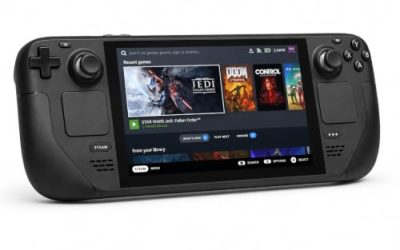
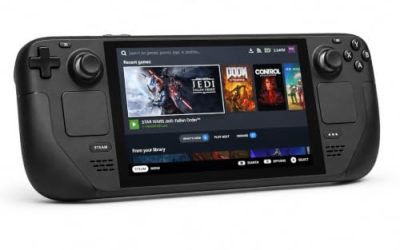
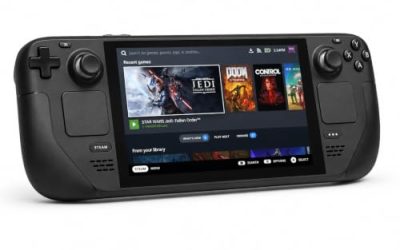
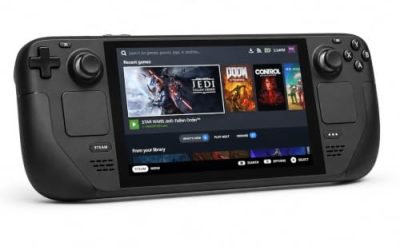
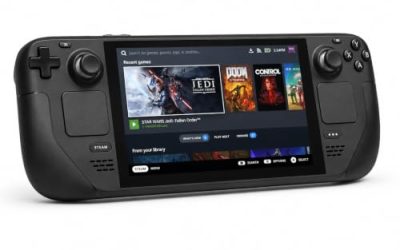
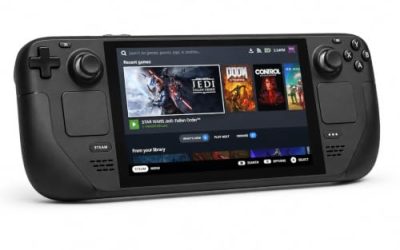
Valve Steam Deck OLED 512GB
- Display: 7.4-inch HDR OLED, 1280 by 800, up to 90 Hz
- Processor: AMD Zen 2 and RDNA 2 custom APU
- Memory: 16 GB LPDDR5
- Storage: 512 GB NVMe, plus a microSD slot
The handheld the Verified badge was written for. Valve tested the current build on this hardware class and passed it on every check.
8BitDo Ultimate 2 Bluetooth Controller
- Connectivity: Bluetooth wireless and USB-C wired
- Joysticks: TMR electromagnetic, anti-drift design
- Triggers: Hall effect, with mode switching
- Extras: two remappable back buttons, motion control
The docked and desktop pad pick. Steam lists full controller support for the game, and this pad covers the couch case with modern sticks and triggers plus back buttons for menu shortcuts.
Xbox Wireless Controller, Carbon Black
- Connectivity: Xbox Wireless and Bluetooth
- Port: USB-C for wired play
- Controls: hybrid D-pad, dedicated Share button
- Power: AA batteries or optional rechargeable pack
The safest guest pad in PC gaming: Steam Input support is universal, the glyphs match what most games display, and it pairs over Bluetooth or its own wireless standard. On the handheld, an external pad may need a manual Quick Access Menu switch before it takes over.
Logitech G502 HERO
- HERO optical sensor, up to 25,600 DPI
- 11 programmable buttons
- Adjustable weight system
- Wired USB connection
A narrative game spends much of its time in dialogue wheels, journals and inventory screens, and at a desk a precise wired mouse turns those trips into single clicks.
Samsung T9 Portable SSD 2TB
- Capacity: 2 TB portable SSD
- Interface: USB 3.2 Gen 2×2, USB-C connector
- Maker-rated speeds: up to 2,000 MB per second read, 1,950 MB per second write
- Features: Dynamic Thermal Guard, maker-rated drop resistance
For moving a Linux game library between machines, or keeping an offline backup of installers, a fast USB-C drive is the simple answer. The headline figure needs a Gen 2×2 host port; on a lesser port the drive runs at that ceiling.
How to choose
Choose the Steam copy, because it is the only PC edition on sale and the exact build both compatibility records describe. On a Linux desktop or laptop, install under Proton and start with the default compatibility tool; a Platinum file with strong confidence says the current build needs no rescue work. If performance on the highest preset disappoints, the community notes point at the graphics settings rather than at Proton. On a Steam Deck, the Verified badge against the current build means no configuration work is expected: install, launch, and only visit controller settings if you pair an external pad, which may need the Quick Access Menu switch. A pad is the native shape of play on every screen; a mouse earns its place for long desktop sessions in the journal and inventory.
Who should skip
Skip this one if you buy only native Linux builds on principle: there is no Linux version, no announced path to one, and the empty requirements tab is a leftover field, not a promise. Skip it if a Platinum file built on 38 reports feels thin, because that file plus Valve’s test sheet is the entire evidence base. Skip the GOG route entirely, since no edition exists there. And skip it if you have not played the original Life is Strange and care about story order: this is a sequel in everything but name.
FAQ
Is Life is Strange: Double Exposure native on Linux?
No. Steam flags the game Windows only, the package contains a single Windows content depot, the Linux requirements tab is an empty shell, and no Linux client icon is registered. The ProtonDB page’s “Natively Supports” heading comes from that empty field and describes no real build.
How well does it run under Proton?
ProtonDB’s full summary rates it Platinum on the settled, best-reported and trending tiers, across 38 reports with strong confidence. Reports describe complete playthroughs, with performance on the highest preset the main recurring note.
Is it Steam Deck Verified?
Yes. Valve tested the game on 18 August 2026 against build 16505703, still the current public build, and passed it on all four headline checks. The one note: external controllers do not take over by default and may need a manual Quick Access Menu switch.
Can I buy it on GOG instead?
No. GOG’s catalogue carries the original Life is Strange and Before the Storm, all Windows only, and holds no product record for Double Exposure. Steam is the only PC storefront selling it.
Final verdict
Life is Strange: Double Exposure is a Windows-only release whose Linux story is nonetheless settled. Every layer of Steam’s record agrees there is no native build: one platform flag set, one content depot, empty Mac and Linux requirement shells, Windows redistributables and no Linux icon. Against that closed door, the compatibility evidence is the strongest a Windows-only game can present: a unanimous Platinum file on ProtonDB and a Verified Deck badge earned on the build still current. Buy the Steam copy, play it through Proton on the desktop or badged on the Deck, and ignore any page that tells you a native version exists.
Product and ASIN Reference
| Product | ASIN |
|---|---|
| Valve Steam Deck OLED 512GB | B0CQ3RWQQZ |
| 8BitDo Ultimate 2 Bluetooth Controller | B0F194QFT2 |
| Xbox Wireless Controller, Carbon Black | B08DF248LD |
| Logitech G502 HERO | B07GBZ4Q68 |
| Samsung T9 Portable SSD 2TB | B0CHFS9K14 |