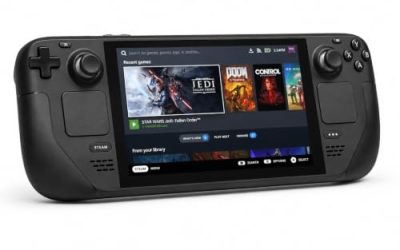
Our Short List of 3

- Display: 7.4-inch HDR OLED, 1280 by 800, up to 90 Hz
- Processor: AMD Zen 2 and RDNA 2 custom APU
- Memory: 16 GB LPDDR5
- Storage: 512 GB NVMe, plus a microSD slot

- Connectivity: Bluetooth wireless and USB-C wired
- Joysticks: TMR electromagnetic, anti-drift design
- Triggers: Hall effect, with mode switching
- Extras: two remappable back buttons, motion control

- Connectivity: Xbox Wireless and Bluetooth
- Port: USB-C for wired play
- Controls: hybrid D-pad, dedicated Share button
- Power: AA batteries or optional rechargeable pack
All 5 Picks at a Glance
| Product | Specs | Action |
|---|---|---|
| Valve Steam Deck OLED 512GB |
| Check price on Amazon |
| 8BitDo Ultimate 2 Bluetooth Controller |
| Check price on Amazon |
| Xbox Wireless Controller, Carbon Black |
| Check price on Amazon |
 Logitech G502 HERO |
| Check price on Amazon |
 Samsung T9 Portable SSD 2TB |
| Check price on Amazon |
KinitoPET, troy_en’s 2024 horror title built around a cheerful virtual desktop assistant whose behaviour gradually turns unsettling, never received a Linux build. Steam’s record is plain about it: the store flags the game for Windows alone, and the Mac and Linux requirement fields are empty shells. There is no second platform hiding in the paperwork.
The Linux question is therefore a Proton question, and an unusual one. The game presents itself as a simulated desktop environment, so its community file is less about frame rates than about which desktop features a compatibility layer can reproduce. Valve has also tested the game on Steam Deck. This piece reads each record separately.
As an Amazon Associate, we earn from qualifying purchases.
Quick answer
KinitoPET is not native on Linux: Steam flags the game Windows only, its Linux requirements field is an empty shell, and the single purchase package delivers the Windows build. The route is Proton: ProtonDB rates it Bronze across 25 reports, and Valve rates it Playable on Steam Deck.
The status at a glance
| Question | Answer from the record |
|---|---|
| Native Linux build | No — Steam flags read Windows only |
| Linux requirements tab | Empty shell — headings over blank lists |
| ProtonDB record | Bronze, 25 reports, read from the game page |
| Steam Deck verdict | Playable, tested March 2025 on the current build |
| GOG edition | None — no product record exists |
| Anti-cheat or launcher | None named by any source checked |
What Steam’s own record says
Steam’s appdetails record for KinitoPET (app 2075070, confirmed against the record itself) names troy_en as developer, troy_en and veil as publishers, and a 9 January 2024 release date. The platform flags read Windows true, Mac false, Linux false.
The Windows minimum is genuinely populated: Windows 10, a Core i3-3220, 4 GB of RAM, a GeForce GTX 960 and 850 MB of storage, with an OpenGL ES 3.0 note. The Mac and Linux fields, by contrast, are empty shells: Minimum and Recommended headings over empty lists, with no requirement text under either of them.
The delivery layers settle the question. SteamDB’s depot table lists exactly one content depot, a Windows 64-bit English depot of just under 800 MiB, beside only a Windows .NET redistributable. No Linux or Mac depot exists in any form, and the app configuration registers no Linux client icon. The decisive layer is the package: the game’s single purchase package, read through Steam’s packagedetails record, flags Windows true and Mac and Linux false, so a normal purchase delivers the Windows build by construction. The public branch has not moved since February 2024, so this is a settled record, not a port in progress.
Steam lists the game as single-player with Steam Achievements and Family Sharing.
The family sweep: an empty room
Some records in this cluster mislead through their relatives. KinitoPET offers none of that surface. Its record carries no DLC array at all, and a Steam store search for the name returns exactly one app, the game itself. There is no soundtrack, art book, supporter pack or demo to open. The false-flag trap has no room to stand in.
The anti-cheat layer is equally quiet, with the three sources kept separate. Steam’s store record names no anti-cheat and carries no DRM or account notice. SteamDB’s detection finds engine technology only, the Godot Engine and the Mono SDK. Are We Anti-Cheat Yet, searched by name and app id across its full dataset, carries no entry for KinitoPET. Nothing in any record describes an anti-cheat block on the Linux route.
The Proton file
One evidence note first: ProtonDB’s summary endpoint returned an error page for this app on repeated attempts this session, so the figures here are read from the game’s ProtonDB page itself, a Bronze headline tier across 25 reports. That is a page-level read; no tier split and no confidence figure is claimed.
The heading check was completed, and it is a stray: the page heads its requirements block “Natively Supports:”, a label Steam’s record contradicts at every layer. The article follows Steam.
The reports themselves explain the Bronze. The file splits: several filings describe a game that installs but does not open, or opens to a black window and closes; others report a full playthrough. The recurring theme among those who do get in is specific to this game’s design: features that lean on the real Windows desktop behave differently inside a compatibility layer. Filings describe the wallpaper not appearing, bundled mini applications such as the camera and paint apps not opening as expected because the environment lacks those components, a print action in one segment that crashes the game, and late-game moments built around volume and monitor control that cannot reproduce their effect. None of that is a performance problem; it is an operating-system imitation running inside one. Expect the core game to be reachable and some of its desktop tricks to land differently, which is exactly the profile a Bronze tier describes.
The Steam Deck sheet
Valve rates KinitoPET Playable on Steam Deck, and SteamOS separately Compatible. The verdict and its items were read from Valve’s own compatibility endpoint, which answered directly this session. Three advisory items hold the game below the top badge: it sometimes shows mouse, keyboard or non-Deck controller icons, entering some text requires manually invoking the on-screen keyboard, and some in-game text is small and may be difficult to read. Against those, the two load-bearing checks pass: all functionality is accessible under the default controller configuration, and the default graphics configuration performs well. The sheet’s recommended runtime is proton-stable; the badge certifies the Windows build under Proton.
The paperwork is better than this series usually finds. Valve’s test is dated 21 March 2025, and the build it tested is the same build the public branch still serves, unchanged since February 2024, so the paperwork describes the exact download a buyer receives today. At least one Deck report in the Proton file describes finishing the game with a community Proton build and layout, consistent with Valve’s grade.
The storefront ruling
There is no second copy to weigh. GOG’s catalogue search surfaces no KinitoPET product, only an unrelated fuzzy match, and the game’s natural GOG address resolves to the general catalogue rather than to any product page. No GOG edition exists. The Steam copy is the only PC edition sold.
Gear that fits the record
The gear below follows the record’s shape: the handheld Valve tested, two pads for docked and desktop play, a mouse for a game built around a desktop interface, and library storage.
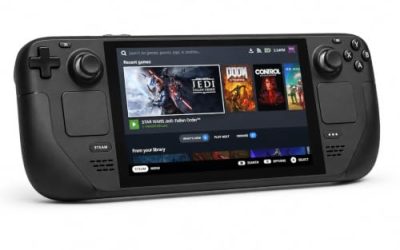
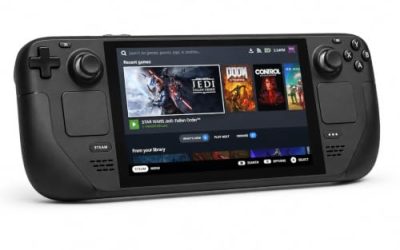
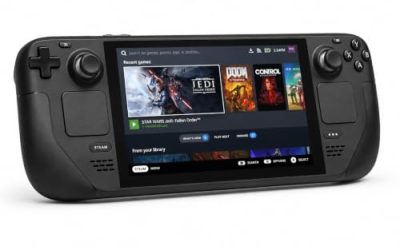
Valve Steam Deck OLED 512GB
- Display: 7.4-inch HDR OLED, 1280 by 800, up to 90 Hz
- Processor: AMD Zen 2 and RDNA 2 custom APU
- Memory: 16 GB LPDDR5
- Storage: 512 GB NVMe, plus a microSD slot
The handheld the Playable badge was written for. Valve’s sheet passes the game on performance and its default controller configuration.
8BitDo Ultimate 2 Bluetooth Controller
- Connectivity: Bluetooth wireless and USB-C wired
- Joysticks: TMR electromagnetic, anti-drift design
- Triggers: Hall effect, with mode switching
- Extras: two remappable back buttons, motion control
The docked and desktop pad pick, covering the couch case with modern sticks and triggers plus back buttons for the inputs a long session repeats.
Xbox Wireless Controller, Carbon Black
- Connectivity: Xbox Wireless and Bluetooth
- Port: USB-C for wired play
- Controls: hybrid D-pad, dedicated Share button
- Power: AA batteries or optional rechargeable pack
The safest guest pad in PC gaming: Steam Input support is universal, and it pairs over Bluetooth or its own wireless standard. One caution from Valve’s sheet: the game sometimes shows mouse, keyboard or non-Deck icons, so on-screen glyphs may not match the pad in hand.
Logitech G502 HERO
- HERO optical sensor, up to 25,600 DPI
- 11 programmable buttons
- Adjustable weight system
- Wired USB connection
This game’s interface is a desktop, which makes a precise wired mouse the natural primary input on a PC. Eleven programmable buttons cover the point, click and confirm work the simulated environment asks for.
Samsung T9 Portable SSD 2TB
- Capacity: 2 TB portable SSD
- Interface: USB 3.2 Gen 2×2, USB-C connector
- Maker-rated speeds: up to 2,000 MB per second read, 1,950 MB per second write
- Features: Dynamic Thermal Guard, maker-rated drop resistance
For moving a Linux game library between machines, or keeping an offline backup of installers, a fast USB-C drive is the simple answer. The headline figure needs a Gen 2×2 host port; on a lesser port the drive runs at that ceiling.
How to choose
Choose the Steam copy, because it is the only PC edition on sale and the exact build both records describe. On desktop or laptop, go in with the Bronze file in mind: install under Proton, expect the main game to run, and expect the desktop-dependent set pieces, the wallpaper, the bundled mini apps, the print moment, to behave differently or not at all, because the layer does not supply the Windows components they call. On Steam Deck, the frozen branch makes the decision simpler than most: the tested build is the current build, the performance check passes, and the known costs are small text and manual keyboard calls, both on Valve’s sheet. For input, the mouse is the honest primary on a desktop install; a pad earns its place docked or on the handheld.
Who should skip
Skip this one if you are shopping for a native Linux horror game: this is not one, and no storefront sells a Linux build. Skip it if the desktop trickery is the whole appeal and you want every moment to land exactly as designed, because the Proton file says plainly that several cannot inside a compatibility layer. Skip it if a Bronze community tier is below your threshold. And skip the Deck plan if small in-game text and manual on-screen keyboard calls are deal-breakers, since Valve lists both.
FAQ
Is KinitoPET native on Linux?
No. Steam’s record for app 2075070 flags Windows only, the Linux requirements field is an empty shell, the depot table holds a single Windows depot, and the sole purchase package flags Windows only. No native build exists on any storefront.
How well does KinitoPET run under Proton?
ProtonDB’s page rates the game Bronze across 25 reports. The file splits between installs that do not open and completed playthroughs, and the recurring complaints concern Windows-desktop-dependent features, the wallpaper, bundled mini apps and a print action, misbehaving inside the compatibility layer rather than performance.
What does the Steam Deck Playable badge mean here?
Valve tested the game in March 2025 against the build still on the public branch, passing it on controller functionality and performance. The badge stops at Playable over three listed items: controller glyphs that may not match, text entry needing the on-screen keyboard invoked manually, and some small in-game text.
Can I buy KinitoPET on GOG instead?
No. GOG’s catalogue holds no product record for the game, and its natural GOG address resolves to the general catalogue. The Steam copy is the only PC edition on sale.
Final verdict
KinitoPET is a Windows-only release whose paperwork is easy to read once the one stray label is set aside: a false Linux flag, an empty-shell field, a single Windows depot and a Windows-only package all say the same thing, and the family cupboard is bare. What Linux players get instead is a narrow, honestly graded Proton route: a Bronze community file whose complaints are about desktop imitation rather than speed, and a Playable Deck badge tested against the build still on sale. Buy the Steam copy if that profile suits you, and do not let a requirements heading sell you a native build that does not exist.
Product and ASIN Reference
| Product | ASIN |
|---|---|
| Valve Steam Deck OLED 512GB | B0CQ3RWQQZ |
| 8BitDo Ultimate 2 Bluetooth Controller | B0F194QFT2 |
| Xbox Wireless Controller, Carbon Black | B08DF248LD |
| Logitech G502 HERO | B07GBZ4Q68 |
| Samsung T9 Portable SSD 2TB | B0CHFS9K14 |