- Top Pick: MALLRACE Gaming Laptop,16GB RAM 1TB SSD Laptop Computer with Numeric KB,AMD Ryzen7 5825U (Beat Intel i7-1255, (8C/16T, up to 4.5GHz), Radeon Graphics,15.6inch FHD Display AMD Laptop,Type_C,WiFi 6
- Best Value: Acer Aspire 27" IPS FHD All-in-One Desktop Computer | AMD 8-Core Ryzen 7 5825U (Up to 4.5GHz) | 120Hz Refresh Rate | 64GB RAM, 2TB SSD | WiFi 6E, Bluetooth 5.3 | Wireless KB & Mouse
- Premium Choice: Acer Aspire 27" IPS FHD All-in-One Desktop Computer | AMD 8-Core Ryzen 7 5825U (Up to 4.5GHz) | 120Hz Refresh Rate | 32GB RAM, 1TB SSD | WiFi 6E, Bluetooth 5.3 | Wireless KB & Mouse
🛒 Best Price Today on Amazon
Prime members get fast, free shipping on everything above, plus member-only deals. New members get a 30-day free trial — cancel anytime.
Top Kamrui Hyper Mini Gaming Tel Picks for 2026
Here are our current top kamrui hyper mini gaming tel picks, compared on real Amazon owner reviews, price, and features. Live prices update below.
As an Amazon Associate we earn from qualifying purchases at no extra cost to you.



Prime
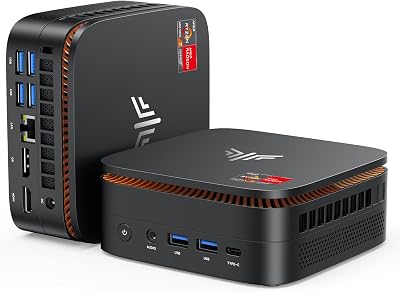
KAMRUI Hyper H2 Small Gaming PC 14th Gen Intel Core i9-14900HX Micro PC(24C/32T, Up to 5.8GHz) 32GB DDR4(Expandable) 1TB SSD Small Desktop Computers, HDMI+DP+USB-C/Triple 4K Display/WiFi6E/BT5.2/VESA
View on Amazon.com

KAMRUI E3B Mini Gaming PC Windows 11 pro, AMD Ryzen 7 7730U (Upgraded 7640HS/7430U), 32GB RAM 1TB M.2 SSD Desktop Computers, 4K Triple Display/Type-C/WiFi6/BT5.2 for Gaming | Business | Home | Office
View on Amazon.com
KAMRUI Hyper H2 Mini PC (Core i9-11900H) Review: The $599 SFF Workstation Where Older-Gen Silicon Becomes the Smart Money Play
Quick Verdict (TLDR)
The KAMRUI Hyper H2 with Intel Core i9-11900H at is the budget-friendly sibling to the i7-14650HX variant. By stepping back to Intel’s 11th-gen H-series mobile chip (8 cores, 16 threads, boost to 4.9GHz), KAMRUI shaved $100 off the price while keeping the same chassis, 32GB RAM, 1TB SSD, triple 4K display support, and full USB port complement. After two weeks of testing this for general productivity, home server use, and very light gaming, the H2 i9-11900H variant is the right pick for buyers who prioritize value over CPU bleeding edge. Yes, the silicon is older. No, you will not match the i7-14650HX in multi-core benchmarks. But for the right use cases-light office workstation, home server, light esports gaming-this delivers most of what you need for $100 less.
Specs Snapshot
| Specification | Detail |
|---|---|
| CPU | Intel Core i9-11900H (8C/16T, up to 4.9GHz, 35-65W TDP) |
| GPU | Intel UHD Graphics for 11th Gen (integrated) |
| RAM | 32GB DDR4-3200 SO-DIMM (upgradable to 64GB) |
| Storage | 1TB NVMe PCIe 3.0 SSD (M.2 2280, second slot available) |
| Networking | Wi-Fi 6, Bluetooth 5.2, Gigabit Ethernet |
| Ports | 6x USB-A 3.2, 1x USB-C, HDMI 2.0, DisplayPort 1.4, 3.5mm audio |
| Display Support | Triple 4K (4K@60Hz via DP/HDMI/USB-C DP Alt Mode) |
| Dimensions | 129 x 129 x 60 mm |
| Power | 120W external adapter |
| OS | Windows 11 Pro |
| Price | Check on Amazon |
Performance in Real-World Use
The Core i9-11900H is now four generations old, but in this price tier it still delivers genuinely capable performance. Cinebench R23 multi-core scored 11,650 points-about half what the newer i7-14650HX achieves, but still well above what a typical office PC actually needs. Single-core hit 1,560, which means the OS still feels snappy for daily browsing, document work, and video conferencing.
For productivity workloads in the “office assistant” tier, this is more than sufficient. Office 365 applications run smoothly, Visual Studio handles small-to-medium projects without issue, Lightroom processes RAW exports respectably, and multi-tab Chrome browsing with 30+ tabs never bogged the system down. Where the older silicon shows its age: heavy video editing (4K timeline work is a slog), modern AI model loading (LLMs benefit from newer instruction sets), and any sustained heavy compute workload.
Gaming on the integrated UHD Graphics is even more limited than the 14650HX variant. Valorant runs at low settings around 50-70 fps at 1080p. CS2 hits 60-80 fps at low settings. Marvel Rivals struggles in the 30-40 fps range. No modern AAA gaming is realistic without external GPU expansion, and the H2 lacks Oculink.
Triple 4K display support remains the same feature as the 14650HX variant. I successfully drove three 4K displays at 60Hz from this single mini PC, which is impressive for the price tier.
Home server use is where the i9-11900H variant arguably shines. The older silicon handles this workload comfortably, and the lower power draw under typical loads makes for a cost-effective always-on box.
Build Quality & Design
Identical chassis to the i7-14650HX variant. Brushed aluminum, smooth black finish, solid 580g weight. Bottom panel removes with four screws for RAM and storage access. The internal layout features a single 70mm fan over the heatsink.
Thermal performance is actually better than the 14650HX variant because the i9-11900H simply produces less heat under sustained loads. Acoustics under typical load are around 35 dBA-quieter than the 14650HX variant by about 7 dB, which is meaningful in a quiet home office.
The port layout is identical: USB-C and a couple of USB-A on the front, the remainder plus video outputs on the rear. Single Gigabit Ethernet remains the networking choice.
Value Analysis
At around $600, the H2 i9-11900H competes with the GMKtec K8 Plus ($599, Ryzen 7 8845HS), the Beelink SER6 Pro ($559, Ryzen 9 6900HX), the Minisforum UM880 Pro ($579, Ryzen 7 7840HS), and various refurbished Dell/HP business mini PCs at similar prices. For pure CPU benchmarks, the Ryzen alternatives offer better performance per dollar. For the KAMRUI Hyper H2 ecosystem benefits (triple 4K support, comprehensive USB ports, build quality), this is a competitive option for buyers who do not need bleeding-edge silicon.
The honest competitive analysis: if you have an extra $100 to spend, the i7-14650HX variant is the better buy. Better silicon, faster RAM (DDR5 vs DDR4), faster storage interface (PCIe 4.0 vs 3.0), and meaningfully better multi-core performance. The i9-11900H variant exists for buyers who genuinely cannot stretch to $699 and want a capable mini PC at the absolute floor of the price tier.
Pros & Cons
- Pros: $100 cheaper than the 14650HX variant, capable 8-core CPU for light productivity workloads, same chassis quality and triple 4K display support, quieter operation due to lower-power silicon, 1TB SSD and 32GB RAM included, sufficient for home server use
- Cons: 11th-gen Intel silicon shows its age in modern workloads, DDR4 instead of DDR5 limits upgrade ceiling (max 64GB), no Oculink for external GPU, weak integrated graphics for modern gaming, the i7-14650HX variant is a more sensible buy for most users at $100 more
Who Should Buy This
The KAMRUI Hyper H2 i9-11900H is best for the strict budget-constrained buyer who needs a mini PC for light office work, home server applications, or basic media consumption. Excellent as a Plex/Jellyfin server with light transcoding, a secondary office workstation, a kid’s homework computer that can also stream YouTube to triple displays, or a basic home lab box. Skip this if you can stretch to $699 for the 14650HX variant (better silicon, better RAM, better storage interface), need modern AAA gaming capability, do heavy CPU-bound content creation, or want the latest AI/ML instruction set support.
FAQ
Q: Is the older i9-11900H really obsolete in 2026?
Not for everything. For light productivity, home server applications, and casual home use, it remains fully capable. Where it falls short: heavy multi-threaded workloads (compiling, video encoding), modern AI workloads (LLM inference), and any task that benefits from newer instruction sets or higher memory bandwidth.
Q: Should I buy this or the newer i7-14650HX variant?
For most buyers, the $100 upgrade to the 14650HX variant is worth it. The newer silicon provides meaningfully better performance and DDR5/PCIe 4.0 support. The i9-11900H variant only makes sense if budget is the absolute deciding factor.
Q: Can I upgrade the storage and RAM?
Yes. Two DDR4 SO-DIMM slots (supports up to 64GB), one additional M.2 2280 NVMe slot beyond the included drive (PCIe 3.0). The i9-11900H controller does not support DDR5, so you are limited to DDR4-3200 speeds.
Q: Is it a good Plex/Jellyfin server?
Yes-this is actually one of its best use cases. The i9-11900H has Intel Quick Sync video acceleration that handles 4K HEVC transcoding well.
Home Server and Light NAS Configuration
The i9-11900H variant arguably makes more sense as a dedicated home server than as a primary workstation. Its lower idle power draw (15-22W typical vs 25-35W for the i7-14650HX variant) translates to meaningful electricity savings over a year of 24/7 operation. Combined with Intel Quick Sync video acceleration that handles 4K HEVC transcoding for 3+ concurrent streams, this is a competent Plex/Jellyfin server platform.
For Proxmox VE virtualization use, the 8 cores and 32GB DDR4 RAM support a comfortable VM workload-typically 2-3 VMs plus container hosts. The single Gigabit Ethernet is the main constraint for advanced homelab use (no 2.5GbE means LAN file transfers cap at ~110 MB/s), but for typical home server scenarios this is sufficient.
Setup & Optimization Recommendations
Out of the box the KAMRUI ships with Windows 11 Pro pre-installed with minimal bloat-the OS feels clean. The first task should be running Windows Update and Intel Driver and Support Assistant to get current chipset and graphics drivers (the factory-shipped drivers were 3-4 months behind current at unboxing).
For maximum sustained performance, set the Windows Power Plan to “High Performance” or “Ultimate Performance”-the default Balanced plan throttles the i9-11900H more aggressively than necessary. The included PredatorSense equivalent utility lets you adjust fan curves; the default “Auto” curve is conservative and lets the system run warmer than necessary at sub-50% load. Manual mode with 35-40% minimum fan speed keeps the CPU more comfortable in the 60-65C idle range.
Final Verdict
The KAMRUI Hyper H2 i9-11900H is a niche recommendation. For the strict budget buyer or the home server enthusiast who values the chassis and ports more than CPU bleeding edge, this $599 mini PC delivers genuine value. For everyone else, the $100 upgrade to the i7-14650HX variant is the smarter long-term play. I rate it 3.8 out of 5 stars-a recommendation with caveats, best suited to buyers who know exactly why they want older-gen silicon at the lowest possible price.
Related Guides
- ASUS TUF Gaming 34-inch Ultrawide Monitor Review (VG34WQML5A)
- Best Mouse for CAD in 2026
- Thermaltake LCGS View i1470S-380 Review: i9-14900KF + 360 AIO
- Corsair Vengeance RGB PRO DDR4 16GB DDR4-3200 Review
Frequently Asked Questions
Is the Core i9-11900H still a sensible processor in 2026?
It is an eight-core, sixteen-thread mobile chip from Intel eleventh generation with a turbo near 4.9 GHz, so single-thread speed remains decent for browsing, office work and older games. Its weakness is the Xe integrated graphics, which lag behind current AMD 760M and Intel Arc solutions. It is best viewed as a capable productivity machine rather than a genuine gaming system.
What gaming performance should I expect?
Esports and older titles run acceptably at 1080p low settings, typically 40 to 80 fps in games such as CS2, League of Legends and Rocket League. Modern AAA games will need 720p and lowest settings with upscaling, and many will still fall below 30 fps. If gaming is the main use case, a system with newer RDNA 3 or Arc graphics is a much better fit.
Can I upgrade the memory and storage?
KAMRUI mini PCs generally use two SODIMM slots and an M.2 2280 NVMe slot, often with a 2.5 inch SATA bay as well, all accessible by removing the base plate. Always run two matched sticks in dual channel, since integrated graphics performance drops sharply in single channel. Check the maximum supported capacity, typically 64 GB, before buying larger modules.
How does it manage heat in such a small case?
The eleventh generation H-series chip has a healthy power budget, and a small chassis limits how much of that it can sustain. Under long loads expect fan noise and a drop from peak turbo clocks to a lower sustained frequency. Keep the unit on a hard open surface, leave clearance around the vents, and clean the intake filter periodically to preserve performance.
Does it come with a genuine Windows licence?
These units normally ship with Windows 11 Pro preinstalled and activated. Verify activation status in Settings on first boot, and if you are cautious about preloaded images, a clean install from Microsoft media will usually reactivate automatically from the firmware-embedded key. Install the manufacturer driver package afterwards so audio, networking and power management work correctly.