- Top Pick: Alex Tech 25ft – 1/4 inch Split Wire Loom Tubing – Black
- Best Value: Alex Tech 25ft – 1/2 inch Cord Protector Wire Loom Tubing Cable Sleeve Split Sleeving For USB Cable Power Cord Audio Video Cable – Protect Cat From Chewing Cords – Black
- Premium Choice: Alex Tech 25ft – 1/2 inch Split Wire Loom Tubing – Black
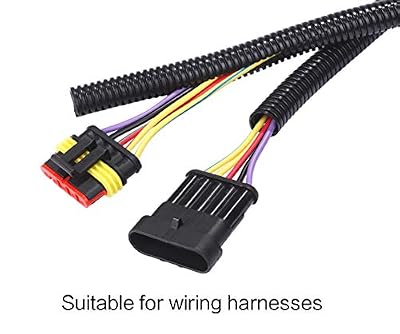
The Alex Tech 25ft Split Wire Loom 1/4 in is the narrow sibling of the brand’s 1/2-inch loom — a slimmer polyethylene tube sized for single power cords, individual USB runs or two slim audio cables. The slit-tube design lets the sleeve slip over an existing cable without unplugging, and the 25-foot continuous length is generous: enough to sleeve every visible cable behind a desk in one purchase. At around $11 for 25 feet it is one of the cheapest ways to clean up a setup where you want each cable in its own visible run rather than bundled together. This Alex Tech 25ft 1/4 in Split Loom review covers material, capacity, install and who it is for.
- Alex Tech 25ft 1/4 in Split Loom at a Glance
- Material Quality and Durability
- Installation and Mounting
- Capacity and Cord Bundling
- Aesthetics — Hide vs Cover vs Color Match
- Use Cases — Desk, TV, Wall
- Verdict
- Frequently Asked Questions
- More Cable Management Reviews
- Related Articles
- Related Articles
- Related Guides




As an Amazon Associate we earn from qualifying purchases. Product prices and availability are accurate as of the date/time indicated.
🛒 Best Price Today on Amazon
Prime members get fast, free shipping on everything above, plus member-only deals. New members get a 30-day free trial — cancel anytime.
As an Amazon Associate we earn from qualifying purchases.


Alex Tech 25ft 1/4 in Split Loom at a Glance
| Component | Specification |
|---|---|
| Type | Narrow split wire loom (slit polyethylene tube) |
| Length per unit | 25 ft (one continuous tube, cut to size) |
| Capacity (cord count) | 1 cable per sleeve (1 thick, or 2 to 3 slim cables) |
| Cord diameter range | Single cable up to about 1/4 in (6 mm) outer diameter |
| Material | Polyethylene (PE), flexible split tube |
| Color options | Black |
| Mounting method | Free-standing — rests on the desk or floor |
| Paintable | Not designed to be painted |
| Approx price | Around $11 |
Material Quality and Durability
The 1/4-inch loom uses the same polyethylene formulation as the brand’s 1/2-inch loom — same flexibility, same UV resistance for indoor use, same memory in the slit that keeps the tube closed around the cable. The narrower diameter changes the use case rather than the durability characteristics: the loom is for protecting and tidying single cables rather than bundling several into one run. The wall thickness scales down with the diameter so the loom remains flexible enough to bend around a desk corner without kinking. Indoors and out of direct sun, the PE material is essentially permanent — a 25-foot 1/4-inch loom installed in 2026 will still be sound in five years. Two or three rolling chair passes a day across the loom does not mark it, and the clean scissor cut at each end keeps the tube from fraying.
Installation and Mounting
The split design is the install advantage. Open the slit, lay the cable inside, and the loom’s memory closes the tube around it; no plug has to be removed. The narrower 1/4-inch diameter is a little fiddlier than the 1/2-inch version because the slit opens a smaller arc, so a short, careful run along the cable with two thumbs works better than trying to feed the cable in lengthways. The 25-foot continuous length suits a setup where each visible cable gets its own sleeve — a desk with a separate power cord, HDMI cable and USB-C cable might run three 6-foot sleeves rather than one 6-foot bundle. As with the larger looms, mounting clips are not supplied; a small pack of self-adhesive clips along a desk leg holds the loom flat against the wood.
Capacity and Cord Bundling
The 1/4-inch internal diameter takes a single cable of typical gauge — a laptop charger output lead, an HDMI cable, a USB-C cable, a thin audio cable — comfortably. Two slim cables (two USB-C cables, or a USB-C plus a thin audio cable) fit but leave the loom near full. For three or more cables the 1/2-inch loom is the right product; the 1/4-inch loom is deliberately sized for one-cable-per-sleeve work. The 25-foot length is generous for this use: a typical multi-monitor desk has six or seven cables visible behind it, and 25 feet covers a 3- to 4-foot sleeve on each.
Aesthetics — Hide vs Cover vs Color Match
Single-cable looms produce a different visual outcome from multi-cable bundling. Rather than one fat black tube containing the entire mess, you get several thinner parallel black lines — a look that some buyers prefer because each cable retains its identity (the HDMI runs one way, the USB-C another) and the bundle does not become a single visually heavy object. Against a dark desk or behind a dark TV stand, the narrow looms read as a tidy line of equal-thickness tubes. Where the wall is the visible surface, neither size of wire loom is the right product — choose a paintable Delamu raceway instead. The narrow loom is the right choice where the cable runs are visible but the desk is the prominent visual surface.
Use Cases — Desk, TV, Wall
The 25-foot 1/4-inch loom suits three classic scenarios. Behind a multi-monitor desk it sleeves each monitor’s power and signal cable separately, so the cables retain their identity for future rework rather than becoming one indivisible bundle. Behind a TV stand it sleeves the HDMI cables individually, which is useful where the TV’s input arrangement places its HDMI ports far apart. Around a multi-PC bench it sleeves USB and audio cables to keep them visually distinct from the power runs. It is less suited to two- or three-cable bundles — the 1/2-inch loom is the right size for those — and to single thick power cords (an IEC kettle lead fits the 1/2-inch loom more cleanly).
Verdict
At around $11 for 25 feet the Alex Tech 25ft 1/4 in Split Wire Loom is the right buy where each visible cable should keep its own identity rather than disappear into a bundle. The PE material is durable, the split tube installs without unplugging anything, and 25 feet covers a multi-cable desk in one purchase. The trade-offs are honest: it is for single-cable runs, the black PE is unmistakable against pale surfaces, and it does not mount on its own. For buyers also picking out one of the cases in our best PC cases roundup, the narrow loom is the finish that makes a clean desk match a clean PC build. The narrow loom is also a useful alternative when you have already used the 1/2-inch loom on a primary run and want to sleeve secondary cables (the boom mic cable, the headphone cable, the charging cable from a wireless mouse base) without breaking the visual line of the primary bundle. Many buyers end up with both diameters in stock — the wider for the main bundle, the narrower for the auxiliary runs — and the combination gives the cleanest finish for a multi-cable workstation. Plain, durable and well-judged at the price.
Frequently Asked Questions
What is the difference between the 1/4 in and 1/2 in Alex Tech looms?
The 1/4 in loom sleeves a single cable at a time and keeps each cable visually distinct; the 1/2 in loom bundles two or three cables into one tube. Use the 1/4 in for per-cable sleeving, the 1/2 in for bundling.
Will the 1/4 in loom fit a thick power cord?
It fits typical desk and TV power cords. A thick IEC kettle lead is a tight fit — use the 1/2 in loom for heavier power cords.
Can you cut the 1/4 in Alex Tech loom to length?
Yes. The 25-foot tube cuts cleanly with household scissors, and the trimmed ends do not fray. Size each cable run individually for the cleanest result.
Is the 1/4 in loom paintable?
No. Like all wire looms, it is a low-energy polyethylene plastic that paint does not adhere to. For visible wall runs that need to match the wall colour, choose a paintable PVC raceway instead.
More Cable Management Reviews
- JOTO 4-Pack Cable Management Sleeve Zipper Review
- AGPTEK White Cable Sleeve 2-Pack 5ft 1.2 in Review
- Yecaye Cord Hider 113in One-Cord Concealer Review
- D-Line Cable Management Box Power Strip Holder Review
- Alex Tech 10ft Cord Protector Wire Loom 1/2 in Review
- Alex Tech 25ft Cord Protector Wire Loom 1/2 in Review
- Alex Tech 10ft Cable Sleeve 1/2 in Review
- Delamu Cord Hider 157in Wire Wall Cover Review
Affiliate Disclosure: As an Amazon Associate, we earn from qualifying purchases. If you click a link and make a purchase, we may earn a small commission at no extra cost to you. Prices and availability are accurate as of publication and may change.
Related Articles
Looking for more on this topic? Browse the hand-picked guides below — each one applies the same scoring rubric used in this review.