Isonzo is a large-scale online multiplayer shooter from BlackMill Games, released on 13 September 2022 and built on the Unity engine. It is also the third entry in the studio’s World War I series, after Verdun and Tannenberg, which are separate games with separate records; everything below is about Isonzo alone, ruled on its own Steam record.
The short version is that this is one of the clean cases. Steam flags Isonzo for Windows, macOS and Linux alike, and unlike the many records where a Linux flag turns out to be an empty shell, every layer underneath the flag agrees with it: a real Linux build sits in the packages on sale, the Linux requirements are published in full, and the add-on family carries the same flag. No compatibility layer is required to play this game on Linux.
As an Amazon Associate, we earn from qualifying purchases.
Quick answer
Yes. Isonzo is native on Linux. Steam flags the game for Windows, macOS and Linux, the Linux system requirements are fully published, and a 25.13 GiB Linux depot sits inside the packages Steam sells today. ProtonDB classifies the game Native with a Platinum summary across 60 reports, and Valve rates it Playable on Steam Deck.
Three builds, one package
The depot census is where false native claims usually fall apart, and here it is the strongest evidence in the file. The game ships three full content depots of near-identical size: a Windows 64-bit depot at 25.09 GiB, a macOS 64-bit depot at 25.01 GiB, and a Linux 64-bit depot at 25.13 GiB. The Linux depot is not a stub or a leftover: its current manifest, dated March 2026, contains native shared libraries and the full Unity bundle set, and it sits inside the packages a buyer actually receives, including the standard store package and the Deluxe and First Wave editions.
That maintenance date matters. The Linux build is on the same public branch build as the other platforms, updated in step with them rather than abandoned at launch. A native build that is still being rebuilt alongside the Windows version more than three years after release is a delivered product, not a historical artefact.
The requirements page backs the flags
Steam’s record publishes a complete Linux requirements tab at both tiers, not a heading over an empty list. The minimum tier names a 64-bit processor and operating system, an Intel Core i5-4670K or AMD Ryzen 5 1400, 8 GB of RAM, a GeForce GTX 970 or Radeon R9 290 with 4 GB of video memory, and 30 GB of storage. The record also registers a dedicated Linux client icon alongside the Windows and Mac assets, a small asset that only exists when a Linux build is part of the delivery.
Controller support on the game’s own record reads partial, and that is the only controller claim made here: the store record’s field says partial, and Valve’s Deck configuration likewise assumes a gamepad with some functions falling back to other inputs.
The add-on family votes the same way
All fourteen apps in the game’s DLC array were read individually, and every one of them flags Linux true: the thirteen unit-pack expansions and, as the fourteenth entry, the soundtrack. That last point deserves a sentence of its own, because in this catalogue the soundtrack is usually where a misleading Linux flag hides. Here there is no trap to rule on: the album flags Linux because the whole family does, the base game included. One expansion, the Avanti Savoia pack, drops the Mac flag while keeping Linux, which underlines that these flags were set per platform rather than copied blindly.
Multiplayer, and the anti-cheat paperwork
Isonzo is an online game, so the anti-cheat question decides whether a native build is worth anything in practice. The Steam record names no anti-cheat product: there is no DRM notice and no third-party account notice on the record, and the networking technologies detected in the build are middleware, Epic Online Services and Photon, not anti-cheat systems. The AreWeAntiCheatYet database, read in full, holds no entry for this game in either direction, so the tracker’s position is documentation silence rather than a verdict.
The practical evidence sits in ProtonDB’s file instead: the reports are filed mostly on the native runtime, and the multiplayer sections of those filings rate online play Excellent. A small number of filings report the native build failing to launch on their setup, and some players choose to run the Windows build under Proton instead; both routes are documented in the same file, which is what a healthy native release looks like on paper.
What ProtonDB’s file actually measures
ProtonDB classifies Isonzo as Native, and its game page carries the “Natively Supports:” heading; for once, that heading agrees with Steam’s record instead of contradicting it. The full summary reads Platinum as the settled tier, Platinum as the best-reported tier and Platinum trending, across 60 reports with strong confidence. Because the classification is Native, that Platinum describes the game’s standing on Linux as a whole, most of it earned by the native build rather than by a compatibility layer.
Steam Deck: Playable, on old paperwork
Valve rates Isonzo Playable on Steam Deck, with SteamOS separately rated Compatible. The passing item is the one that matters most: the default graphics configuration performs well on the device. The deductions are input and text issues: some functionality is not accessible under the default controller configuration and may need the touchscreen, the virtual keyboard or a community configuration; the game sometimes shows mouse, keyboard or non-Deck controller icons; entering text requires manually invoking the on-screen keyboard; and some in-game text is small and may be difficult to read.
Two paperwork points belong with the badge. Valve’s test dates to 18 October 2022, against build 9514048, while the current public build is far newer, so the badge grades a superseded build. And the test configuration names proton-stable as the recommended runtime even though a native build exists, so the badge’s paperwork describes a Proton run; ProtonDB’s file includes Deck reports filed on the native runtime for readers who want the other route documented.
The storefront ruling
There is no second storefront copy to weigh. GOG’s catalogue returns no Isonzo product, and the game’s natural product address on GOG redirects to the catalogue front page, which is how GOG treats titles it does not sell. No GOG edition exists, so the Steam copy is the only PC edition and the buy: it is the copy that carries the native build, the Deck badge and the ProtonDB file described above.
Gear that fits the record
The gear below follows the record’s shape: the handheld the Playable badge was written for, two pads for docked and desktop play given the partial controller rating, a mouse for menu-heavy desktop sessions, and library storage.
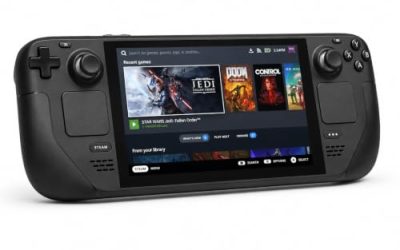
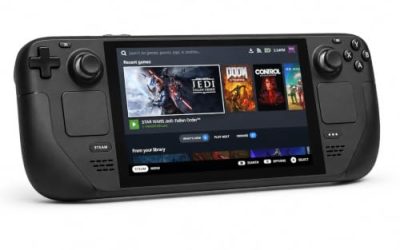
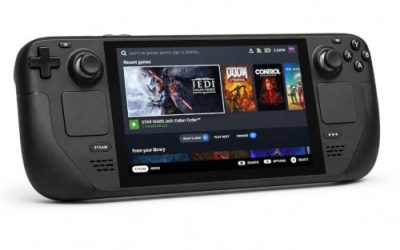
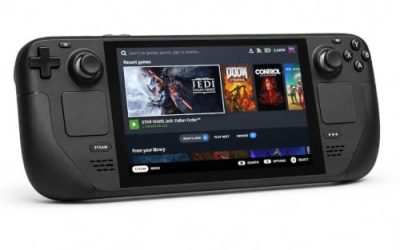
Valve Steam Deck OLED 512GB

The handheld the Playable badge was written for. Valve’s own test sheet passes the default graphics configuration on this hardware, and the published Linux minimums sit far below what the APU offers.
Specs
- Display: 7.4-inch HDR OLED, 1280 by 800, up to 90 Hz
- Processor: AMD Zen 2 and RDNA 2 custom APU
- Memory: 16 GB LPDDR5
- Storage: 512 GB NVMe, plus a microSD slot
- Wireless: Wi-Fi 6E and Bluetooth
- Channel note: Valve sells the Deck mainly through its own store, so Amazon listings are third-party sellers
8BitDo Ultimate 2 Bluetooth Controller
The docked and desktop pad pick. The record rates controller support partial, so a pad with remappable back buttons helps cover the functions the default configuration leaves out.
Specs
- Connectivity: Bluetooth wireless and USB-C wired
- Joysticks: TMR electromagnetic, anti-drift design
- Triggers: Hall effect, with mode switching
- Extras: two remappable back buttons, motion control
- In the box: charging dock included
Xbox Wireless Controller, Carbon Black
The safest guest pad in PC gaming: Steam Input support is universal, and the glyphs match what most games display when they fall back to non-Deck controller icons, as Valve’s notes say this one sometimes does.
- Connectivity: Xbox Wireless and Bluetooth
- Port: USB-C for wired play
- Controls: hybrid D-pad, dedicated Share button
- Power: AA batteries or optional rechargeable pack
Logitech G502 HERO
The record’s partial controller rating makes a mouse the natural desktop fallback for menus and settings screens, and eleven programmable buttons cover the inputs a long session repeats.
Specs
- HERO optical sensor, up to 25,600 DPI
- 11 programmable buttons
- Adjustable weight system
- Wired USB connection
- On-board memory profiles
Samsung T9 Portable SSD 2TB
A three-platform game with three full depots is a heavy library entry, and a fast USB-C drive is the simple way to move a Linux game library between a desktop and a laptop. The headline figure needs a Gen 2×2 host port; on a lesser port the drive runs at that ceiling.
Specs
- Capacity: 2 TB portable SSD
- Interface: USB 3.2 Gen 2×2, USB-C connector
- Maker-rated speeds: up to 2,000 MB per second read, 1,950 MB per second write
- Features: Dynamic Thermal Guard, maker-rated drop resistance
How to choose
Choose the Steam copy, because it is the only PC edition on sale and the one that carries the native build. On a Linux desktop, install it as a native game: no compatibility tool needs selecting, and the published minimums are the yardstick for your hardware. On Steam Deck, expect the Playable experience Valve describes: performance passes, while text size and the default controller configuration are the known friction, and a community configuration is the documented workaround. If the native build misbehaves on your setup, the same ProtonDB file documents the Windows build under Proton as a fallback route rather than a dead end.
Who should skip
Skip this one if you want a DRM-free offline installer, because no GOG edition exists to buy. Skip it if small on-screen text on a handheld rules a game out for you, since Valve’s own sheet flags exactly that. Skip it if you require a formal anti-cheat verdict before playing an online game: the record names none and the tracker is silent, so the assurance here comes from community filings, not from a published ruling. And skip it if you came looking for Verdun or Tannenberg; those are different games, covered by their own records.
FAQ
Is Isonzo native on Linux?
Yes. Steam flags the game for Linux, the Linux requirements are published in full, a 25.13 GiB Linux depot sits inside the packages on sale with a current manifest, and a Linux client icon is registered on the record. ProtonDB classifies the game Native.
Does Isonzo run on Steam Deck?
Valve rates it Playable, with SteamOS Compatible. The default graphics configuration performs well; the deductions cover the default controller configuration, controller glyphs, manual keyboard invocation and small text. The test dates to October 2022 and grades a superseded build, and its configuration names proton-stable as the recommended runtime despite the native build.
Does Isonzo use anti-cheat that blocks Linux?
The Steam record names no anti-cheat product and carries no DRM or account notice, and the anti-cheat tracker holds no entry for the game. ProtonDB’s filings, mostly on the native runtime, rate online multiplayer Excellent, which is the practical evidence available.
Can I buy Isonzo on GOG instead?
No. GOG’s catalogue holds no Isonzo product and the game’s product address there redirects to the catalogue front page. The Steam copy is the only PC edition on sale.
Final verdict
Isonzo is native on Linux, and it is one of the rare records where the claim needs no asterisks: flags, requirements, depot, icon and the whole DLC family agree, and the Linux build is still maintained on the current branch. ProtonDB’s Platinum file and Valve’s Playable badge both sit on top of that foundation, with the badge’s age and its Proton-flavoured paperwork stated plainly. Buy the Steam copy and play the native build.
Product and ASIN Reference
| Product | ASIN |
|---|---|
| Valve Steam Deck OLED 512GB | B0CQ3RWQQZ |
| 8BitDo Ultimate 2 Bluetooth Controller | B0F194QFT2 |
| Xbox Wireless Controller, Carbon Black | B08DF248LD |
| Logitech G502 HERO | B07GBZ4Q68 |
| Samsung T9 Portable SSD 2TB | B0CHFS9K14 |