The Lord of the Rings: Return to Moria sends a company of Dwarves back into Khazad-dûm to mine, craft, build and fight through its depths, alone or in online co-op. It is Free Range Games’ survival-crafting take on the Fourth Age of Middle-earth, published by North Beach Games; the August 27, 2024 date on its record is the Steam launch, a year after its first PC appearance elsewhere.
For Linux players the only question that matters is what kind of build Steam actually sells. This article reads the record layer by layer — flags, requirements, depots, the add-on family, Valve’s Deck sheet and the ProtonDB file. There is no Linux build to buy, but the Windows build carries one of the stronger Proton records in its genre.
As an Amazon Associate, we earn from qualifying purchases.
Quick answer
Return to Moria has no native Linux build. Steam’s record is Windows-only on every layer — flags, requirements and depots — so Linux players run the Windows build through Proton, where 57 ProtonDB reports settle at Platinum. Valve rates the game Playable on Steam Deck, with small interface text as the only deduction.
The record, layer by layer
Start with the platform flags on the game’s own store record: Windows true, Mac false, Linux false. Flags alone never settle a ruling here, so the next layer is the requirements tabs. The Windows tab is genuinely populated at both tiers — 64-bit Windows 10 or 11, a quad-core Intel Core i5, 8 GB of memory and a GeForce GTX 1060 at minimum, rising to a six-core Core i7, 16 GB and an RTX 2060 recommended, with DirectX 12 and 20 GB of storage. The Mac and Linux tabs are empty shells: Minimum and Recommended headings over empty lists. A populated Linux tab is where a real port announces itself; here there is nothing under them.
The depot census says the same thing in a third language. The sold package — the single package group on the record — delivers one content depot of 17.72 GiB, joined by the Digital Art Exhibition’s small depot and five size-less depots marked unused. The only redistributables are the Windows pair, the VC 2022 and DirectX runtimes. There is no Linux depot, no macOS depot and no shared depot in the census, the registered assets are the standard client icons with no Linux client icon among them, and SteamDB detects a Windows-side Unreal Engine build. Every layer agrees: the package contains a Windows build and nothing else.
The soundtrack wears the Linux flag
The add-on family is where this record tries to mislead a careless reader, so each of the eight listed apps was read individually. Seven of them — Durin’s Folk, the Rohan, Beorn’s Lodge, Orc Hunter, Ent-craft and Yule-tide packs, and the Digital Art Exhibition — are content add-ons flagging Windows alone, matching the base game.
The eighth app is the trap. The Return to Moria Soundtrack, a music app, flags Windows, Mac and Linux all true — the only all-true record in the family. A scan that unions platform flags across a game’s family would credit Return to Moria with Mac and Linux support it does not have, on the strength of an album. A soundtrack’s flags describe where its audio files can be sold, not where the game runs; the ruling follows the base game, and the base game is Windows-only.
Proton: a Platinum file with honest friction
Because there is no native build, Proton is the whole story for Linux players, and the community file is strong. ProtonDB’s summary reads Platinum as the settled tier, Platinum as the best-reported tier and Platinum as the trending tier, drawn from 57 reports with a strong confidence rating. Most filings describe the game running out of the box on current Proton builds, including Proton 10.0-3, with online co-op rated Excellent or Good where it is scored.
The same page carries a stray “Natively Supports” heading above its requirements block. That heading is wrong: Steam’s record, read in full above, shows a Windows-only game with an empty Linux requirements shell, and this article follows Steam.
The honest friction in the file is worth naming. One filing reports the game would not boot from an NTFS-formatted drive and ran once installed on a btrfs filesystem instead — a practical reason to keep the library on a Linux-native filesystem. A few filings on high-end hardware report asset-streaming stutter, one noting it is a game-side trait rather than a Linux fault.
Steam Deck: Playable, with one deduction
Valve’s own compatibility record resolves to Playable, with SteamOS separately rated Compatible. The passes are the three that matter for a long crafting session: the default controller configuration is fully functional, the game shows Steam Deck controller icons, and the default graphics configuration performs well. The single deduction is interface text that can be small and difficult to read — a real consideration in a menu-heavy crafting game. A further note says external controllers may need a manual Quick Access Menu switch to become primary. The sheet names gamepad as the supported input, matching the game’s own full-controller-support listing.
Two dating details belong with the badge. Valve’s test paperwork, read through SteamDB’s republication of Valve’s sheet, was recorded on October 24, 2024 against build 16083861, with a release candidate of Proton 9.0-3 as the recommended runtime. The public branch has moved far since, so the grade certifies an earlier build than the one a buyer downloads today. Nothing suggests the position has worsened, but the badge itself is a 2024 measurement.
Co-op, anti-cheat paperwork and the GOG question
Return to Moria is built around online co-op and cross-platform multiplayer, so the anti-cheat question is a fair one. The game’s record names no anti-cheat, and SteamDB’s detection finds the Epic Online Services SDK — cross-play and session plumbing, noted as a detection, not an anti-cheat verdict. The community tracker Are We Anti-Cheat Yet holds no entry for this game in either direction across its full list — documentation silence, not a clearance; the practical evidence is the ProtonDB file, where online play is filed as working.
On GOG there is nothing to rule in: GOG’s own catalogue holds no product record for Return to Moria in any edition, so there is no GOG copy to compare against the Steam build, which remains the only PC edition.
Gear for the mines
The picks follow the record’s shape: the tested handheld, two pads, a mouse for menu-heavy hours, and fast storage.
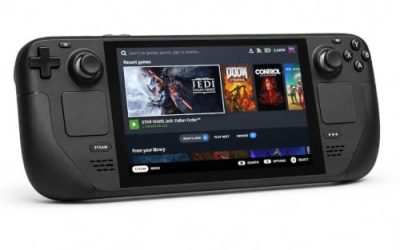
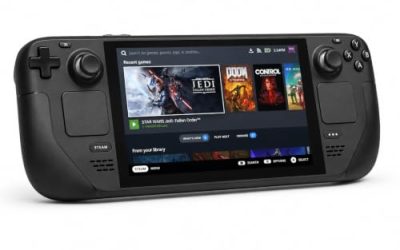
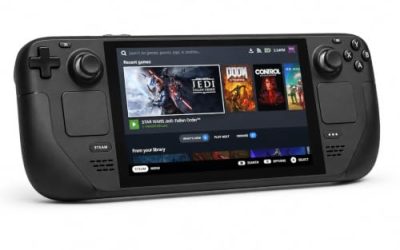
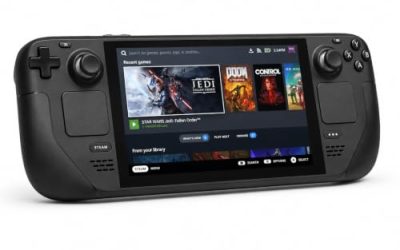
Valve Steam Deck OLED 512GB

The handheld the Playable sheet was written for: Valve passed its default configuration on performance and controls, and the small-text deduction is easier to live with on the OLED panel.
Specs
- Display: 7.4-inch HDR OLED, 1280 by 800, up to 90 Hz
- Processor: AMD Zen 2 and RDNA 2 custom APU
- Memory: 16 GB LPDDR5
- Storage: 512 GB NVMe, plus a microSD slot
- Wireless: Wi-Fi 6E and Bluetooth
- Channel note: Valve sells the Deck mainly through its own store, so Amazon listings are third-party sellers
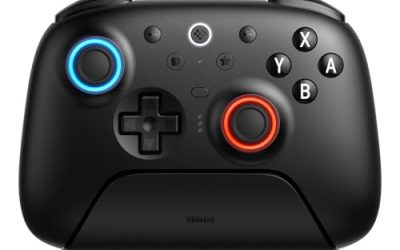
8BitDo Ultimate 2 Bluetooth Controller
The docked and desktop pad pick: full controller support is on the game’s record, and this pad adds back buttons for the menu shortcuts a crafting session repeats.
Specs
- Connectivity: Bluetooth wireless and USB-C wired
- Joysticks: TMR electromagnetic, anti-drift design
- Triggers: Hall effect, with mode switching
- Extras: two remappable back buttons, motion control
- In the box: charging dock included
Xbox Wireless Controller, Carbon Black
The safest guest pad in PC gaming: Steam Input support is universal, the glyphs match what most games display, and it pairs over Bluetooth or its own wireless standard. On the handheld, the sheet’s note applies — an external pad may need a manual Quick Access switch first.
- Connectivity: Xbox Wireless and Bluetooth
- Port: USB-C for wired play
- Controls: hybrid D-pad, dedicated Share button
- Power: AA batteries or optional rechargeable pack
Logitech G502 HERO
Base building, smelting and inventory sorting are mouse work; a precise wired mouse turns repeated clicks into single, accurate ones, and eleven programmable buttons cover the confirm, cancel and camera inputs.
Specs
- HERO optical sensor, up to 25,600 DPI
- 11 programmable buttons
- Adjustable weight system
- Wired USB connection
- On-board memory profiles
Samsung T9 Portable SSD 2TB
One ProtonDB filing could not boot the game from an NTFS drive; a fast portable SSD keeps the library on Linux-formatted storage and easy to move between machines. The headline figure needs a Gen 2×2 host port; on a lesser port the drive runs at that ceiling.
Specs
- Capacity: 2 TB portable SSD
- Interface: USB 3.2 Gen 2×2, USB-C connector
- Maker-rated speeds: up to 2,000 MB per second read, 1,950 MB per second write
- Features: Dynamic Thermal Guard, maker-rated drop resistance
How to choose
Choose the Steam copy: it is the only edition on either storefront, and the build both compatibility records describe. On a desktop or laptop, install it on a Linux-native filesystem rather than a shared Windows-format drive, leave Proton at a current stable or Experimental build, and expect the out-of-the-box experience the Platinum file describes; if a session stutters during asset streaming, treat it as a game-side trait before reaching for launch options.
On Steam Deck, choose it if the small-text deduction does not put you off: the controls and performance passes are genuine, and the crafting menus are the only place the deduction bites. Docked play with an external pad sidesteps most of the text issue on a larger screen, external-pad switch note in mind.
Who should skip
Skip it if you only buy native Linux builds: there is no port here, no Linux depot in the package, and nothing pointing at one in progress. Skip it, too, if small interface text on a handheld is a hard problem and you have no docked or desktop option — the Deck deduction targets exactly the screens this game spends its time on. And if your library lives on an NTFS drive you cannot reformat or supplement, read the ProtonDB filings first, because at least one install would not boot from that filesystem.
FAQ
Is Return to Moria native on Linux?
No. Steam flags the game Windows-only, the Linux requirements tab is an empty shell, and the census holds a single Windows content depot. The only Linux flag in the family belongs to the separate soundtrack app, which says nothing about the game. Linux players run the Windows build through Proton.
How well does Return to Moria run under Proton?
ProtonDB’s summary settles at Platinum — settled, best-reported and trending — from 57 reports with a strong confidence rating. Most filings describe out-of-the-box runs on current Proton builds, with online co-op scored Excellent or Good. A minority report asset-streaming stutter, and one reports the game refusing to boot from an NTFS-formatted drive.
Is Return to Moria Steam Deck Verified?
It is rated Playable, one step below Verified. Valve’s sheet passes the default controller configuration, the Deck controller icons and default performance, with a single deduction for small interface text, plus the external-controller switch note. The test paperwork dates from October 2024 and grades an earlier build than the current public one.
Can I buy Return to Moria on GOG instead?
No. GOG’s catalogue holds no product record for the game in any edition, so there is no GOG copy to buy. The Steam package is the only PC edition, and it is Windows-only — Linux play means the Steam copy under Proton.
Final verdict
Return to Moria is a Windows-only release with no native Linux build on any layer of its record — and, by the standards of Proton gaming, that barely matters. A Platinum ProtonDB file across 57 reports, a Playable Deck sheet whose only deduction is small text, and full controller support on the game’s own record make this a safe survival-crafting buy for Linux players, provided the library sits on a Linux-native filesystem and the Deck’s 2024-vintage paperwork is understood for what it is. The soundtrack’s Linux flag is a paperwork illusion; the game underneath it runs through Proton, and it runs well.
Product and ASIN Reference
| Product | ASIN |
|---|---|
| Valve Steam Deck OLED 512GB | B0CQ3RWQQZ |
| 8BitDo Ultimate 2 Bluetooth Controller | B0F194QFT2 |
| Xbox Wireless Controller, Carbon Black | B08DF248LD |
| Logitech G502 HERO | B07GBZ4Q68 |
| Samsung T9 Portable SSD 2TB | B0CHFS9K14 |