- Top Pick: HYPEREV AX3000 Gaming Router WiFi Booster for PS5, PC & Consoles – Dual Band WiFi 6 Game Accelerator, Low Ping & Lag Reduction, 2402Mbps, Includes 90-Day GearUP VIP Core Plan
- Best Value: Auto Router Rebooter Timer, 12H/24H/72H Adjustable Restart Switch for WiFi Modem & Bridge, Metal Housing Power Reset Device for Cache Cleanup & Overheating Prevention (12cm)
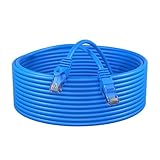
- Premium Choice: Cables Direct Online Pack of 2 – Cat5e 100FT Network Ethernet Patch Cable, 350Mhz Internet Wire, Backwards Compatible with Cat5, for PC, Modem, Router, Consoles for Home and Office, Blue
Nothing kills a competitive match faster than a spike in your ping. You line up the perfect shot, click, and a split-second later the game registers your enemy has already moved, killed you, and teabagged your corpse. That delay is latency, and in fast-paced 2026 titles running at 128-tick servers and 240Hz displays, even a modest amount of it puts you at a real disadvantage. The good news is that most ping problems are fixable at home with the right settings and a little hardware know-how. This guide walks through everything that affects your connection, from the cable behind your PC to the route your data takes across the internet, so you can shave off every millisecond that is actually in your control.
- What Ping and Latency Actually Mean
- Wired Ethernet vs WiFi: The Single Biggest Fix
- Choose the Closest Game Server
- How to Reduce Ping With Router QoS Settings
- Close Bandwidth Hogs and Background Apps
- ISP and Routing Problems
- Do Gaming VPNs Actually Lower Ping?
- DNS Settings: Small but Worth Doing
- Hardware: Router and Network Card
- Related Guides
- Frequently Asked Questions
- Related Articles
As an Amazon Associate we earn from qualifying purchases. Prices and availability are accurate as of the date/time indicated and are subject to change.
As an Amazon Associate we earn from qualifying purchases.

🛒 Best Price Today on Amazon
Prime members get fast, free shipping on everything above, plus member-only deals. New members get a 30-day free trial — cancel anytime.
What Ping and Latency Actually Mean
The words “ping” and “latency” get used interchangeably, but they are slightly different ideas. Latency is the total time it takes for a packet of data to travel from your PC to the game server and back again, measured in milliseconds (ms). Ping is the specific tool and the number most games display to represent that round-trip time. When your game shows “34ms,” that is your round-trip latency to the server you are connected to. Lower is always better: 20ms feels instant, 60ms is fine for most people, and anything above 100ms starts to feel sluggish, with rubber-banding and delayed hit registration.
Two related terms matter just as much as raw ping. Jitter is the variation in latency from one packet to the next. A stable 50ms ping is far more playable than a connection that bounces between 20ms and 120ms, because the game engine cannot predict your inputs smoothly. Packet loss is when data never arrives at all, forcing the game to guess or wait, which produces the freeze-and-teleport effect that ruins gunfights. Reducing latency is really about improving all three: lower ping, lower jitter, and zero packet loss.
Wired Ethernet vs WiFi: The Single Biggest Fix
If you take one thing away from this guide, make it this: plug in an Ethernet cable. WiFi is convenient, but it is a shared, interference-prone medium. Your signal competes with neighbors’ networks, microwave ovens, Bluetooth devices, and the physical walls between you and the router. Even excellent WiFi 6E and WiFi 7 setups introduce extra latency and jitter compared to a copper cable, and they are far more prone to random spikes when someone else in the house streams video or downloads an update.
A wired connection gives you a dedicated, consistent path to your router. In real-world testing, moving from WiFi to Ethernet routinely drops ping by 5 to 20ms and, more importantly, eliminates the jitter and packet loss that cause those maddening one-second freezes. A basic Cat6 cable is inexpensive and supports gigabit speeds over the distances found in a typical home. If running a cable across the house is impractical, a pair of powerline adapters or a MoCA adapter that uses your existing coaxial wiring will beat WiFi for stability in most homes. Reserve WiFi for phones and tablets, and give your gaming PC or console the hard line.
Optimizing WiFi When You Have No Choice
If wiring truly is not an option, you can still reduce ping over WiFi. Connect to the 5GHz or 6GHz band rather than the congested 2.4GHz band, sit as close to the router as possible with a clear line of sight, and log into your router to pick the least crowded channel. Keeping the router elevated and away from other electronics helps too. These steps narrow the gap, but they will never fully match a cable. For a deeper look at squeezing performance out of a home setup, see our guide on optimizing your home network for gaming.
Choose the Closest Game Server
Physics sets a hard floor on latency: data cannot travel faster than light through fiber, so distance directly adds milliseconds. A server on another continent might sit at 150ms no matter how perfect your local setup is. Most competitive games let you either pick a region manually or filter the server browser by ping. Always select the data center geographically nearest to you, and double-check this setting after major patches, because games sometimes reset your region or auto-select a distant one. In matchmaking titles, restricting your search to your home region rather than “any region” trades slightly longer queue times for dramatically lower ping.
How to Reduce Ping With Router QoS Settings
Quality of Service (QoS) is a router feature that prioritizes certain traffic. When enabled and configured to give your gaming device or game traffic top priority, QoS ensures that a background download or a family member’s 4K stream cannot steal the bandwidth your game needs, keeping ping low even on a busy network. Log into your router’s admin page, find the QoS or “gaming mode” section, and either assign your PC’s IP address the highest priority or enable a preset gaming profile. Many modern gaming routers include adaptive QoS that automatically detects and prioritizes game packets, which is one of the most reliable ways to tame jitter in a household with multiple heavy internet users.
Close Bandwidth Hogs and Background Apps
Before blaming your ISP, look at your own machine and network. Cloud backup tools, Windows Update, game launchers downloading patches, and streaming services all consume bandwidth and can saturate your upload, which spikes ping badly. Open Task Manager and sort by network usage to spot offenders, then pause or schedule them for off-hours. On the network side, ask housemates to avoid large downloads during your sessions, or lean on the QoS settings above to protect your traffic automatically. Browser tabs playing video and Discord screen-sharing at high bitrates are common hidden culprits worth closing before a ranked session.
ISP and Routing Problems
Sometimes the problem is not in your home at all. Your data travels through many intermediate “hops” between your ISP and the game server, and a congested or poorly routed hop can add latency you cannot fix directly. To diagnose this, run a tracert (Windows) or traceroute command to the game server’s address, or use a tool like WinMTR that repeatedly pings every hop. If you see high latency or packet loss beginning at a specific hop outside your network and it persists, the issue lies with your ISP or an internet backbone provider. Document the results and contact your ISP, or consider switching to a provider with better peering if the problem is chronic. If the trouble appears in your first hop, the fault is your own router or modem. Our overview of diagnosing internet connection issues covers these tools in more depth.
Do Gaming VPNs Actually Lower Ping?
Gaming VPNs and “network accelerator” services market themselves as ping reducers, and the truth is nuanced. A VPN adds an extra stop between you and the server, which usually increases latency. However, in specific cases where your ISP routes traffic inefficiently, a VPN with well-optimized peering can send your packets along a shorter or less congested path, occasionally lowering ping. Treat these services as a last-resort experiment, not a guaranteed fix. Test with and without the VPN using the same server, and only keep it if you see a consistent, measurable improvement. For most players on a decent ISP, a VPN will make ping worse, and free VPNs almost always do.
DNS Settings: Small but Worth Doing
Changing your DNS server does not directly lower in-game ping, because DNS only handles the initial lookup that translates a server name into an IP address. That said, a fast, reliable DNS provider like Cloudflare (1.1.1.1) or Google (8.8.8.8) speeds up matchmaking, game launcher loading, and server connections, and it can improve reliability if your ISP’s default DNS is slow or occasionally fails. It is a free, two-minute change in your router or Windows network settings, so there is no reason not to do it even though the in-match benefit is minimal.
Hardware: Router and Network Card
Your equipment sets the ceiling for what software tweaks can achieve. An aging router struggles under load, and its CPU can become a bottleneck that adds latency the moment several devices are active. A modern router with strong QoS, WiFi 6E or WiFi 7 support, and a capable processor handles busy households far better and keeps your gaming traffic prioritized. If you are considering an upgrade, our breakdown of the best gaming routers of 2026 compares the current standouts.
On the PC side, the network interface card (NIC) matters less than the router but is not irrelevant. Many motherboards ship with reliable onboard Ethernet, but budget boards occasionally use cheaper controllers prone to driver issues and micro-stutter. A dedicated 2.5GbE NIC with a quality Intel or Realtek controller and up-to-date drivers can smooth out an unstable connection, and keeping your existing NIC drivers current often resolves mysterious latency problems on its own. If you are building or upgrading a machine, factor networking into the plan alongside the rest of your components; our full gaming PC build guide walks through balancing every part.
Frequently Asked Questions
What causes high ping?
High ping comes from several sources: physical distance to the game server, using WiFi instead of a wired connection, network congestion from other devices or downloads, an overloaded or outdated router, inefficient routing by your ISP, and background applications consuming bandwidth. Because the causes stack, the fix is usually a combination: switch to Ethernet, pick the nearest server, enable QoS, and close bandwidth-heavy apps. If ping stays high after all of that, the problem is likely with your ISP’s routing rather than your home setup.
Does a wired connection reduce ping?
Yes. Switching from WiFi to a wired Ethernet connection is the single most effective way to reduce ping for most players. A cable provides a dedicated, interference-free path to your router, typically cutting latency by 5 to 20ms and, more importantly, eliminating the jitter and packet loss that cause freezing and rubber-banding. If you can only make one change, run an Ethernet cable to your gaming device.
Do gaming VPNs lower ping?
Usually not. A VPN adds an extra hop between you and the server, which generally increases latency. In rare cases where your ISP routes traffic poorly, a VPN with optimized peering can find a shorter path and lower ping slightly. Test it against the same server with and without the VPN, and only keep it if you see a consistent improvement. Free VPNs almost always make ping worse.
What is a good ping for gaming?
Under 20ms is excellent and feels instant. Anywhere from 20 to 60ms is very good and suitable for competitive play. Between 60 and 100ms is playable for most games but noticeable in fast shooters. Above 100ms you will experience delayed hit registration and rubber-banding, and above 150ms many competitive games become frustrating. Aim for the lowest number you can achieve to the server nearest you, and prioritize a stable, jitter-free connection over chasing the absolute minimum.