- Top Pick: Google Nest Thermostat – Smart Thermostat for Home – Programmable Wifi Thermostat – Snow
- Best Value: Google Nest Thermostat – Smart Thermostat for Home – Programmable Wifi Thermostat – Charcoal
- Premium Choice: Google Nest Learning Thermostat (4th gen) + Nest Temperature Sensor (2nd gen) – Silver
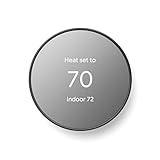
The Google Nest Thermostat in Snow is Google’s more affordable smart thermostat, a simpler product than the well-known Nest Learning Thermostat that ditches the auto-learning schedule in favour of a lower price, a fresh design, and tight Google Home integration. Priced around $130, it is intended as a first smart thermostat for households that do not need the Learning’s sensor array. This Google Nest Thermostat review covers setup, smart home integration, day-to-day use, and how it fits a gamer-streamer home that wants smart climate control without overspending.

Google Nest Thermostat - Smart Thermostat for Home - Programmable Wifi Thermostat - Snow


As an Amazon Associate we earn from qualifying purchases. Product prices and availability are accurate as of the date/time indicated.
🛒 Best Price Today on Amazon
Prime members get fast, free shipping on everything above, plus member-only deals. New members get a 30-day free trial — cancel anytime.
As an Amazon Associate we earn from qualifying purchases.



Google Nest Thermostat (Snow) at a Glance
| Component | Specification |
|---|---|
| Type | Smart thermostat (entry-tier Nest) |
| Voice assistant | Works with Google Assistant and Amazon Alexa |
| Display size | 3.3″ mirror-finish front panel with internal display |
| Smart home protocols | Wi-Fi, Bluetooth Low Energy (no Matter, no Thread) |
| Audio output (W) | None |
| Camera | No |
| Connectivity | Dual-band Wi-Fi (2.4/5GHz), BLE for setup |
| App support | Google Home app (iOS, Android) |
| Approx price | around $130 |
Setup & App Experience
Installation is the standard Nest swap-and-go process: power off the HVAC at the breaker, remove the existing thermostat, photograph the wiring, follow the Google Home app’s wiring guide and screw the new base in. Most homes with a C-wire are wired and online in under 30 minutes, and Google Home walks through compatibility checks before you start. The Google Home app handles all scheduling, geofencing, sensor data, energy reports and integrations. The day-to-day touch interface is gesture-based: swipe up or down on the right-hand edge of the mirror panel to adjust temperature, tap to wake. There is no rotating ring (that is the Learning model); the entry-tier Nest is a fixed touch panel. The internal display is bright and clear, and the mirror finish blends into modern interiors better than the older Nest aesthetic.
Smart Home Compatibility — Matter / Alexa / Google
The Nest Thermostat works with both Google Assistant and Amazon Alexa for voice control of temperature setpoints, and integrates with Google Home routines (away mode, bedtime, wake up) as a first-party device. It is not Matter-enabled, which is the main caveat for households building a multi-platform Matter setup — Apple HomeKit is not supported directly. For voice control of an Alexa-based streamer home, the cross-platform support means it sits comfortably alongside Echo devices. For households committed to HomeKit, look at the ecobee SmartThermostat instead.
Audio & Display Quality
This is a thermostat, so the relevant question is the display, not the audio. The internal LED display behind the mirror finish is sharp and bright with auto-brightness — it stays subtle in a dark room and becomes clearly readable in daylight. Information density is well chosen: target temperature, current temperature, mode, schedule status and a small humidity reading. The touch-edge gesture replaces the Learning model’s rotating ring and works smoothly once you adapt. Visually the Snow finish is genuinely tasteful — it fits modern interiors better than older thermostats.
Use Cases — Streamer Setup / Kitchen / Garage
A streamer’s room running a high-wattage gaming PC and several monitors generates surprising amounts of heat, and a smart thermostat earns its keep there. The Nest Thermostat does not include the remote temperature sensors of the Learning model (those are sold separately), so it measures temperature at the thermostat’s installed location — a hallway, typically — rather than in the streamer’s actual studio. For most homes that is fine; for a household where the streaming room is markedly warmer than the rest of the house, the Learning model with remote sensors makes more sense. For a normal household where the thermostat is in a central location, the entry-tier Nest delivers the daily benefits — voice control, geofencing ‘away’ setbacks, energy history — at a lower price.
For a streamer specifically, the value of a smart thermostat ties to scheduling: routines that ramp the office cooler thirty minutes before going live (so the room is comfortable when streaming begins, rather than catching up after the rig has been running an hour) save real energy compared to running cooling constantly. Combine the Nest Thermostat with the Kasa HS300 power strip and a streaming routine can pre-cool the room, switch on stream lights, power the capture chain and dim the overhead bulbs with one voice command — all without a Matter hub. The ‘Home and Away’ geofencing also handles the common scenario where a streamer is away at events: the thermostat reduces cooling automatically while you are out of town and brings it back as you approach home.
Privacy & Microphone Mute
The Nest Thermostat has no microphone and no camera, which is one fewer always-on device for privacy-minded users to worry about. Data shared with Google is the usual thermostat telemetry — usage patterns, occupancy heuristics derived from geofencing — and energy reports can be opted out of. For a streamer concerned about a microphone in the wall during a live broadcast, the lack of any mic at all is the relevant feature.
Verdict
At around $130, the Google Nest Thermostat (Snow) is the right pick for the buyer who wants a tasteful, well-built smart thermostat with voice control from both Alexa and Google Assistant, without paying for the auto-learning features of the more expensive Nest Learning Thermostat. The honest trade-offs are clear: no auto-schedule learning, no remote sensors in the box, no Matter or HomeKit, and the placement-based temperature reading rather than multi-sensor averaging. For most households those are acceptable, and the daily benefits — voice control, geofencing, energy reports, Google Home routines — are intact. If you need remote room sensors or HomeKit, step up to the Nest Learning Thermostat or look at the ecobee SmartThermostat. For the price and the day-to-day experience, the entry-tier Nest is well judged. Buyers comparing climate options should consider their HVAC system before purchase: Nest publishes a thorough compatibility tool that handles most US heat-pump, conventional and dual-fuel systems, but very old or unusual systems may still need a different thermostat. For most modern American homes with a C-wire, the entry-tier Nest is a straightforward upgrade that pays for itself within a heating season or two through smarter scheduling alone. The Snow finish and other coordinated colour options also matter more than they sound — for hallway or living-room placement where the thermostat is permanently visible, a tidy modern design earns its keep over the long-deprecated beige-LCD aesthetic that dominated the category. See our best streaming setup guide for ideas on tying smart climate control into a stream setup.
Frequently Asked Questions
Does the Google Nest Thermostat learn my schedule?
No. That is the key difference from the more expensive Nest Learning Thermostat — the entry-tier Nest uses manual scheduling in the Google Home app plus geofencing ‘away’ setbacks, rather than auto-learning your routines.
Does the Nest Thermostat work with Alexa?
Yes. It works with both Google Assistant and Amazon Alexa for voice control of temperature setpoints, which makes it a sensible pick for households that already run Echo devices.
Is the Nest Thermostat compatible with Matter?
No. The entry-tier Nest Thermostat is not Matter-enabled, and Apple HomeKit is not supported directly. For HomeKit households, the ecobee SmartThermostat is the better choice.
Does the Nest Thermostat come with remote room sensors?
No. Remote sensors are an extra-cost option on the more expensive Nest Learning Thermostat; the entry-tier Nest measures temperature at its installed location only.
More Smart Home Reviews
- Amazon Smart Thermostat Review: Honeywell-Built Alexa Thermostat
- Kasa Smart Power Strip HS300 Review: 6-Outlet Surge with Energy Monitoring
- Google Nest Wifi AC2200 Review: Mesh Router for Smaller Smart Homes
- Chamberlain Smart Garage Control Review: MyQ WiFi + Bluetooth Hub
- Amazon Echo Dot (Newest) Review: Compact Alexa Speaker for Gamers
- Amazon Echo Show 5 (Newest) Review: 5.5″ Smart Display for the Desk
- Amazon Echo Spot (Newest) Review: Smart Alarm Clock with Alexa
- Amazon Echo Show 8 Review: 8″ Spatial Audio Smart Display
Affiliate Disclosure: As an Amazon Associate, we earn from qualifying purchases. If you click a link and make a purchase, we may earn a small commission at no extra cost to you. Prices and availability are accurate as of publication and may change.