GeForce RTX is Nvidia’s current line of gaming graphics cards, and at this point it’s less a product name than a shorthand for “the GPU most PC gamers end up buying.” That’s not hype, it’s market reality: Nvidia dominates discrete graphics, and the RTX line spans everything from budget 1080p cards to the halo products that push 4K at high frame rates. The tricky part isn’t whether to buy RTX, it’s figuring out which tier actually matches what you play and what monitor you own.
What “RTX” actually buys you
The RTX branding covers three things bundled together: ray tracing hardware (dedicated cores for realistic lighting and reflections), Tensor cores for AI-driven features, and DLSS, Nvidia’s upscaling and frame generation tech. DLSS is the part that matters most in daily use. It lets a card render at a lower internal resolution and use AI to fill in detail, which can turn a card that struggles at native 4K into one that handles it comfortably. Ray tracing itself is still a mixed bag — gorgeous in supported titles like Cyberpunk 2077 or Alan Wake 2, irrelevant in most competitive shooters and older games.
The failure mode I see a lot of buyers hit: paying extra for ray tracing performance on a card tier that can’t actually run ray tracing at a playable frame rate anyway. If you’re shopping in the lower tiers, treat ray tracing as a bonus, not a selling point, and judge the card on its plain rasterization performance instead.
The tiers, realistically
Nvidia’s naming is consistent enough to use as a shorthand once you know the pattern: the xx50/xx60 cards are entry-to-mainstream 1080p parts, xx70 is the 1440p sweet spot for most people, and xx80/xx90 target 4K and high-refresh 1440p. Within a generation, the jump from xx60 to xx70 is usually bigger than xx70 to xx80, so the xx70 tier tends to be the best value if you can stretch to it.
| Tier | Typical use | VRAM to expect | Good fit for |
|---|---|---|---|
| xx60 class | 1080p, most settings high | 8GB | Budget builds, esports titles, first GPU upgrade |
| xx70 class | 1440p, high-to-max settings | 12GB | Most PC gamers; best price-to-performance tier |
| xx80 class | 1440p high refresh, entry 4K | 16GB | Enthusiasts who also do creative work |
| xx90 class | 4K max settings, VR | 24GB | Buyers who want zero compromise, or do serious rendering/AI work |
VRAM is worth paying attention to beyond the headline number. 8GB is getting tight in some newer titles at high texture settings, even on cards that otherwise have the horsepower. If you plan to keep a card for four or five years, I’d lean toward the higher-VRAM option within a tier when there’s a choice.
What actually matters when buying
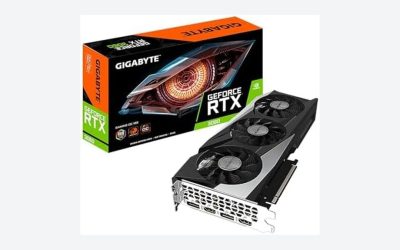
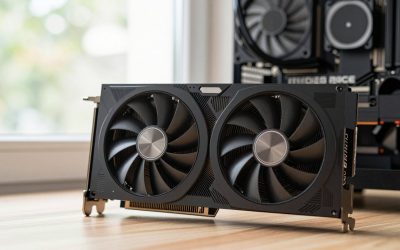
Within the same GPU model, different board partners (ASUS, MSI, Gigabyte, etc.) sell versions that differ mainly in cooler size, clock speed, and price. A bigger cooler usually means quieter operation and better sustained clocks under load, which matters more than the small factory overclock most of these cards ship with. Don’t pay a large premium for an extra 2-3% clock speed; do pay a little more for a card with good thermal reviews if you’re in a smaller case.
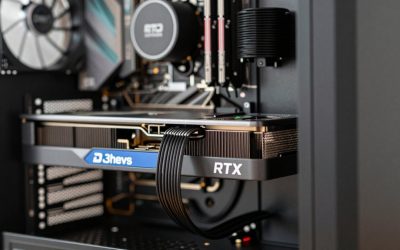
Power delivery is the other practical issue. The higher-end cards pull enough power that you need to actually check your power supply’s wattage and connector type, not just assume it’ll work. If you’re upgrading an older PC, it’s worth browsing a 850W 80+ Gold power supply alongside the card, since a lot of mid-range RTX builds end up needing a PSU upgrade too.
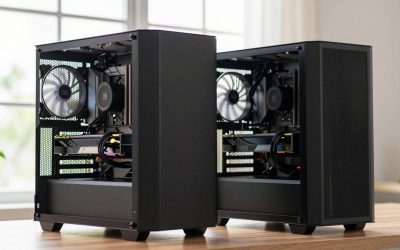
Case airflow matters more than people expect. A high-end card dumping heat into a cramped case with one intake fan will run hotter and louder than the same card in a well-ventilated case, regardless of the cooler on the GPU itself. If your case is older or budget-tier, it’s worth checking whether a set of case fans would help before blaming the GPU for noise or thermal throttling.
Who should skip the upgrade
If you’re already on a card one tier below current flagships and mostly play at 1080p, the realistic frame rate gain from upgrading often isn’t worth the cost. This is especially true if your monitor caps out at 60-75Hz — you’ll hit the display’s limit before you hit the GPU’s limit, and the extra performance goes to waste. In that case, the better spend is usually a higher refresh rate monitor, not a new GPU.
Similarly, if you mostly play older or less demanding games, a current xx60-class card is genuinely enough, and spending up a tier buys you headroom you may never use. The cheaper option is the right one here, not a compromise.
Matching the card to your monitor
This is the part people skip and then regret. A 4K monitor paired with a budget card means turning down settings or relying heavily on upscaling just to get playable frame rates — doable, but not what most people picture when they buy a 4K display. A 1440p 165Hz monitor paired with a flagship card is a better pairing than it sounds, since high refresh rates genuinely benefit from extra GPU headroom. Buy the monitor and GPU as a pair in your head, not as two separate decisions, and you’ll avoid the common mistake of bottlenecking a nice display with a card that can’t drive it, or overspending on a card your monitor can’t take advantage of.
FAQ
Is a used RTX card a safe buy?
It can be, especially one generation back, but ask about usage history. A card run hard for crypto mining 24/7 has had a harder life than one from a gamer who played a few hours a day, even if the age is the same. Check that the seller will accept a return if it fails within a week or two.
Do I need an RTX card if I don’t care about ray tracing?
Yes, in practice, simply because the current lineup is what’s available and competitively priced at most tiers. You’re not paying a meaningful premium just for the ray tracing hardware sitting unused — judge the card on its regular performance for your resolution.
How much power supply do I actually need?
Check the specific card’s recommended PSU wattage, usually listed by the manufacturer, and add some headroom rather than buying exactly to the minimum. A PSU running near its max capacity constantly runs hotter and has a shorter useful life.
Will a new GPU fix stuttering or crashes in my games?
Sometimes, but not always — stuttering is often caused by insufficient RAM, an aging CPU, or background software, not the graphics card. Worth ruling those out first before spending on a GPU upgrade to fix a non-GPU problem.