Let’s set expectations first: a genuine gaming laptop under $100 does not exist new, and used ones at that price are almost always broken, ancient, or both. What you can get for under $100 is a laptop that runs older or very light games acceptably, or a desktop-focused budget build if you’re flexible about form factor. This article is about being honest about what that $100 actually buys you, and when it’s worth spending a bit more instead.
What $100 actually buys you
At this price you’re shopping used or refurbished, full stop. Think Craigslist, Facebook Marketplace, eBay, or clearance refurb listings. Realistic specs in that range: an Intel Core i3 or i5 from roughly 2013-2017 (4th to 7th gen), 4-8GB of RAM, integrated graphics (Intel HD 4000-630 series), and a spinning hard drive instead of an SSD. No dedicated GPU. That’s the ceiling, not a worst case.
With that hardware you can run older titles like Half-Life 2, the original Portal, StarCraft II on low settings, Minecraft (Java edition, modest render distance), and most 2D indie games fine. You cannot run anything released in the last five years at playable framerates. Integrated graphics from that era struggle to hit 20-30fps even at 720p low settings in anything demanding.
Where these laptops fail
Buying in this price bracket comes with specific risks, not vague ones:
Battery health is usually the first casualty. A 7-year-old laptop battery typically holds 40-60% of its rated capacity, so expect 1-2 hours of real runtime, sometimes less. Thermal paste has usually dried out, which means fan noise ramps up fast and thermal throttling kicks in within 10-15 minutes of sustained load, cutting your framerate further. Hard drives in this age range are also past their statistical reliability window, so backup habits matter more than usual, and a drive failure is a “when” not an “if” over a year or two of regular use.
Screens are another weak point. Budget laptops from this era commonly shipped with 1366×768 TN panels with poor viewing angles and washed-out color. That’s not a dealbreaker for gaming, but it’s worth knowing before you’re disappointed by the picture.
What this budget is actually good for
If you reframe the goal from “gaming laptop” to “cheap machine that can also run light games,” $100 makes more sense. It’s a reasonable budget for a kid’s first computer, a couch browser that can also run Minecraft, or a backup machine for LAN parties where you mostly watch and occasionally hop into something undemanding. It is not a reasonable budget for anyone wanting to play current releases, do any kind of competitive shooter at a real framerate, or run anything with ray tracing, open-world draw distances, or modern anti-cheat (some anti-cheat software refuses to run on outdated drivers or unsupported OS versions, which rules out certain games entirely regardless of hardware).
Budget tiers compared
Here’s roughly what changes as you move up from $100, based on typical used/refurb listings:
| Budget | Typical specs | What you can realistically play |
|---|---|---|
| Under $100 | i3/i5 (2013-2017), 4-8GB RAM, integrated graphics, HDD | Old or 2D indie titles, Minecraft at low settings |
| $250-400 | i5 (2017-2019) or Ryzen 3/5, 8GB RAM, often still integrated graphics, SSD common | Esports titles like CS2, Valorant, Rocket League at low-medium settings |
| $500-700 | Entry dedicated GPU (GTX 1650 class or newer entry-level), 8-16GB RAM, SSD | Most current AAA games at 1080p low-medium, 30-60fps depending on title |
The jump from under $100 to the $250-400 range is the one that actually buys you a dedicated gaming experience in current esports titles, which is where most casual competitive players spend their time anyway. The jump to a dedicated GPU is the one that opens up AAA gaming properly.
The desktop alternative
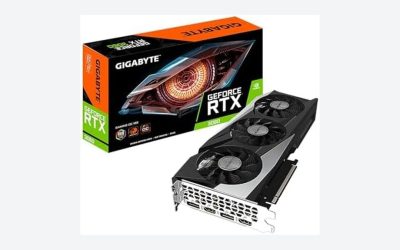
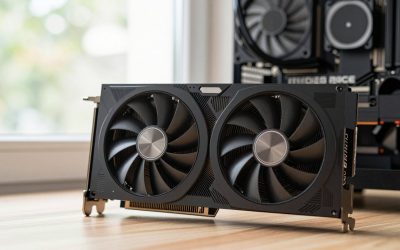
If you’re not tied to portability, a used desktop tower often beats a used laptop at the same price because desktop parts age better and are easier to inspect or upgrade. A $100-150 used office tower with a added low-end graphics card can outperform a $100 laptop by a wide margin, since you’re not constrained by a cramped thermal envelope or a soldered-down GPU. If you go this route, it’s worth browsing used gaming desktop PCs or picking up a budget graphics card separately via a search for budget graphics cards if you already have a tower with a free PCIe slot and decent power supply.
If you’re buying used anyway
A few concrete checks before handing over cash: ask the seller to boot it in front of you and run it for at least 15 minutes to see if it throttles or shuts down from heat. Check the battery health through the OS (Windows battery report, or System Information on a Mac) rather than taking “battery’s fine” at face value. Look at the hinge and charging port for wear, since those are the two most common physical failure points on budget laptops. And confirm the OS is a licensed, activated copy, not a trial or pirated install that’ll nag you or stop working.
If you want a slightly more reliable floor than pure secondhand gambling, refurbished listings from retailers that offer even a 30-90 day warranty are worth the modest price premium over private-seller used units. A refurbished laptop under $150 search is a reasonable next step if your $100 search turns up nothing but risk.
The honest takeaway: treat $100 as a budget for “a laptop that happens to run some games,” not a gaming laptop budget. If gaming is the actual priority, stretching to $300-400 or going the desktop route gets you a machine that doesn’t fight you the whole time.