Buying old PC parts is either the smartest money you’ll spend on a build or a slow-motion mistake, and the difference usually comes down to which parts you’re buying old and from where. A used case or power supply from a reputable brand is often fine. A used GPU that was mining crypto for two years is a different story. This guide covers what’s actually safe to buy secondhand, what to avoid, and how to tell the difference before you hand over cash.
Why buy used at all
The obvious reason is price. A three-year-old GPU can be 30-50% cheaper than the current equivalent tier, and CPUs on a dead or dying socket get dumped for pennies on the dollar once a platform is discontinued. The less obvious reason is that a lot of “old” parts aren’t actually worn out in any meaningful way. A power supply or case has no real wear mechanism if it was just sitting in a desktop under a desk. A GPU that was in a mining rig for 18 months has a very different risk profile even if it looks identical in a listing photo.
The trade-off is warranty and unknowns. New parts come with 2-5 year warranties and a known history. Used parts come with whatever the seller tells you, which may or may not be true. You’re trading money for risk, and the parts below sit at different points on that curve.
Parts that are generally safe to buy used
Cases, fans, and most cooling hardware have almost no wear-out failure mode. A case is sheet metal and plastic. Fans fail from bearing wear after years of continuous spin, but a desktop fan that ran 8 hours a day for three years still has plenty of life left, and a $5 replacement fixes it anyway if it doesn’t. Air coolers are even safer, they’re just a heatsink and a fan.
CPUs are usually safe too, with one caveat: check the socket matches your motherboard, and check it wasn’t run with unstable overvolting for years. CPUs don’t really “wear out” under normal clocks and voltages, so a used CPU from a non-overclocked office PC is close to as good as new. If you’re hunting for a budget CPU to pair with a board you already own, browsing a used desktop CPU listing from a seller with return policies is a reasonable way to go.
Motherboards are a mixed bag. Capacitors age, and a 10+ year old board has a real chance of degraded VRMs or a dead CMOS battery (cheap fix) or worse, bulging capacitors (not worth fixing). Inspect photos closely before buying, or ask the seller for a close-up of the capacitors around the CPU socket.
Parts where used is risky
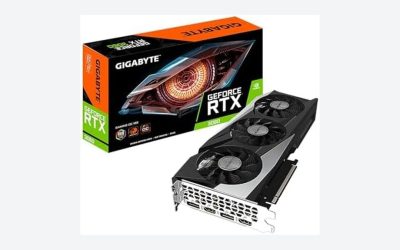
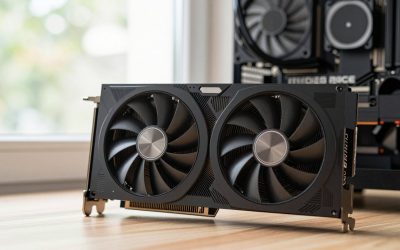
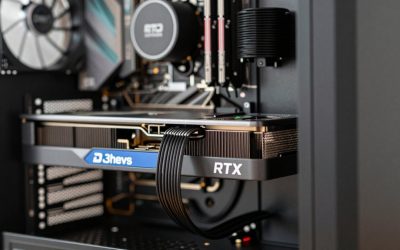
GPUs are the big one. The two failure modes to worry about are thermal degradation from mining or heavy sustained workloads, and physical damage like a sagging PCB that cracked solder joints. Mined cards ran at high temperatures for months or years nonstop, which accelerates thermal paste breakdown and can stress memory modules. That doesn’t mean every used GPU is bad, a card from a gamer who used it a few hours a day for two years is a totally different product than one that mined 24/7 at 80°C. The problem is you often can’t tell which one you’re getting from a listing alone.
Power supplies are the other risky category, and this one I’d be more cautious about than most buying guides suggest. A failing PSU doesn’t always die cleanly, it can send out-of-spec voltage that kills everything connected to it. Capacitors inside a PSU degrade with heat and age, and a PSU that ran hot in a poorly ventilated case for 5 years is a worse bet than its age alone suggests. If you’re buying a used PSU, stick to known-reputable brands and ideally ones still inside their original warranty window, which some manufacturers honor via serial number regardless of owner.
SSDs and hard drives are workload-dependent in a way that’s hard to verify. SSDs have a finite write endurance (TBW rating), and a used drive could be near end-of-life or barely touched, you can only tell by checking SMART data, which most listings don’t provide. Hard drives have moving parts that wear mechanically; a drive with 40,000 power-on hours is a different risk than one with 2,000.
| Part | Used risk level | What to check |
|---|---|---|
| Case / fans | Low | Physical damage, fan noise |
| CPU | Low | Socket match, no overclock history |
| Air cooler | Low | Bent fins, missing mounting hardware |
| Motherboard | Medium | Capacitor condition, BIOS version |
| SSD / HDD | Medium-High | SMART data, power-on hours |
| GPU | High | Mining history, PCB warping, fan wear |
| PSU | High | Brand reputation, age, warranty transfer |
Where to buy and what to ask
Local pickup lets you test before paying, which matters most for GPUs and PSUs. Ask to boot the system and run a quick stress test if it’s a full PC, or at minimum visually inspect for dust, corrosion, and PCB sag. Online marketplaces are convenient but put the burden on return policies, so check the window before buying anything in the “risky” tier above.
If you’re assembling a budget build and want a mix of used and new, a sensible split is new PSU and new SSD, used everything else. Those two parts cause the most downstream damage when they fail, and the price premium for new is small enough that it’s not worth gambling on. For cooling and case parts where failure just means replacing a $10 fan, shopping a PC case fan listing used or new barely matters.
Testing before you commit
For any used GPU, run it under load for at least 20 minutes before considering the sale final, watching for artifacts, thermal throttling past 85°C, or coil whine that’s louder than normal. For CPUs, a few hours of a stress test plus checking temps against stock cooler expectations is enough to catch a damaged or degraded chip. For PSUs, there’s no easy consumer test short of a dedicated tester, which is exactly why I’d rather pay full price for a power supply unit than save $20 on a used one of unknown history.
The honest takeaway is that “used” isn’t one category. Treat it part by part, weigh what actually fails against what you’re saving, and spend your caution where failure is expensive rather than spreading it evenly across every component.