Windows 10 is on borrowed time. Microsoft cut off free security updates in October 2025, so any “Windows 10 desktop” you buy new today either comes with a free upgrade path to Windows 11 or it’s old stock sitting on a shelf. That changes how you should shop. The real question isn’t “what’s the best Windows 10 PC,” it’s “what’s a solid desktop that still happens to be sold with Windows 10, and will it run Windows 11 when I’m ready to move.” Here’s how to actually buy one in late 2025 without getting stuck with dead-end hardware.
Why buying a “Windows 10 desktop” in 2025 is a trap for some buyers
Retailers still clear out Windows 10 machines, and some budget prebuilts and office-surplus desktops are sold specifically because they’re a notch cheaper than the Windows 11 equivalent. The catch is Windows 11 requires TPM 2.0, Secure Boot, and an 8th-gen Intel or 2nd-gen AMD Ryzen CPU or newer. A lot of the cheapest Windows 10 clearance desktops are built on older chips that don’t meet that bar. Buy one of those and you’re locked out of security updates with no clean upgrade path, which is exactly the problem you’re trying to avoid by not staying on Windows 10 forever.
So the practical move is: buy hardware that meets Windows 11 requirements, run it on Windows 10 if you genuinely prefer that interface or need it for compatibility with old software, and upgrade whenever you want. That gives you the best of both without the dead end.
Picks by use case
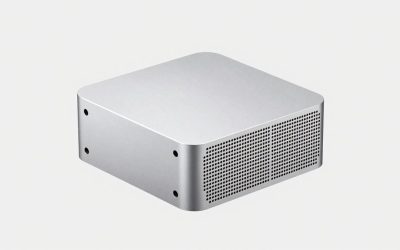
For general home and office use, you don’t need much. A current-gen Intel Core i3/i5 or AMD Ryzen 5 with 16GB of RAM and an SSD will handle browsing, office apps, and streaming without hiccups for years. This is where a lot of people overspend. If your workload is email, spreadsheets, and video calls, a mid-range mini desktop PC is genuinely enough, and it saves desk space and power compared to a full tower.
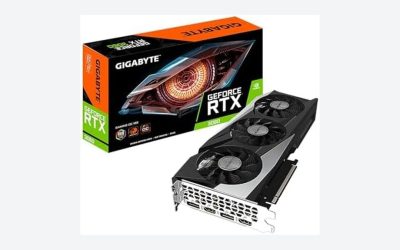
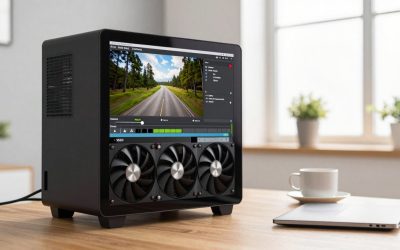
For light gaming or creative work (photo editing, light video editing, CAD for students), you want a discrete GPU even a modest one, 16-32GB RAM, and a fast NVMe SSD so load times and file saves don’t become the bottleneck. A prebuilt gaming desktop with an RTX 4060-class GPU covers this comfortably at 1080p and handles most creative software without choking.
For a workstation doing heavier video editing, 3D rendering, or running VMs, prioritize RAM capacity and a CPU with more cores over raw clock speed, and don’t cheap out on storage, you’ll fill a 512GB drive fast with raw footage and project files. A 1TB or 2TB NVMe SSD as your primary drive is worth the extra cost here.
Quick comparison by budget tier
| Tier | Typical spec | Good for | Where people get burned |
|---|---|---|---|
| Budget ($350-550) | Entry Ryzen 5 / Core i3-i5, 8-16GB RAM, 256-512GB SSD, integrated graphics | Browsing, office work, streaming | 8GB RAM feels fine on day one, then Chrome tabs and Windows updates grind it down within a year |
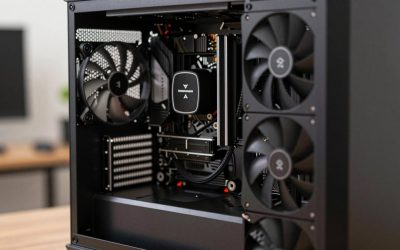
| Mid-range ($600-1000) | Ryzen 5/7 or Core i5, 16GB RAM, 512GB-1TB SSD, RTX 4060-class GPU | Light gaming, photo/video editing, multitasking | Underpowered PSU or cheap case airflow throttling the GPU under sustained load |
| Performance ($1200+) | Ryzen 7/9 or Core i7-i9, 32GB RAM, 1-2TB NVMe, RTX 4070 or better | Serious gaming, rendering, VM-heavy workflows | Overspending on CPU cores you’ll never use while skimping on storage speed |
Should you buy new, refurbished, or build your own
Refurbished business desktops (Dell OptiPlex, HP EliteDesk, Lenovo ThinkCentre) are a legitimately good value if you check the CPU generation against Windows 11’s requirement list before buying. They’re built for longevity, often have better power supplies than consumer towers in the same price range, and you can usually swap in a cheap NVMe SSD upgrade to make an otherwise dated machine feel current. The failure mode here is buying one with a soldered or severely limited RAM ceiling, so check the spec sheet, not just the listing photos.
Building your own makes sense if you want a specific balance of GPU and storage that prebuilts don’t offer, or if you want easy upgrade paths later. It doesn’t usually save money at the budget tier anymore since prebuilt vendors buy parts at volume, but at the performance tier the savings and part-choice flexibility are real.
Don’t skip the storage decision
Whatever tier you land in, avoid any desktop that still ships with a mechanical hard drive as the primary (boot) drive. It’s the single biggest real-world speed difference you’ll feel, more than CPU generation or GPU tier for everyday responsiveness. If a listing doesn’t specify SSD vs HDD, assume HDD and ask or skip it. A 500GB-1TB SSD boot drive is the baseline worth insisting on in 2025.
FAQ
Can I still buy a new desktop with Windows 10 installed?
Some clearance stock exists, but Microsoft ended free security updates for Windows 10 in October 2025. Buying new Windows 10 hardware today only makes sense if it also meets Windows 11’s requirements, so you have a safe upgrade path later.
Will my old software and printers still work if I upgrade to Windows 11?
Most mainstream software and recent printer drivers work fine. Specialized legacy business software or very old peripherals are the main risk, check the manufacturer’s compatibility page before upgrading if you depend on something niche.
Is 8GB of RAM enough in 2025?
It’s enough for very light use, basic browsing and document editing, but it’s not much headroom. 16GB is the more comfortable baseline now since browsers and background apps have gotten heavier.
Should I upgrade an old PC instead of buying new?
If the CPU meets Windows 11’s requirements, adding RAM and swapping to an SSD is usually cheaper than replacing the whole machine and gives a bigger felt improvement than most people expect. If the CPU doesn’t qualify, you’re better off putting that money toward new hardware instead.