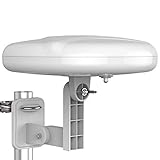
- Top Pick: Winegard Air 360 A3-2000 Omni RV HDTV Antenna for RV – White | Long-Range 360 Degree HDTV Reception for RVs
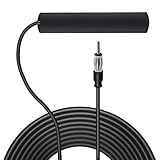
- Best Value: RV Antenna Roof Mounted RV TV Antenna with Signal Amplifier, Long Range Reception for Camper Motorhome Trailer, Compatible with All TVs, Supports 4K 1080P HD, Weatherproof Design, 10m Cable
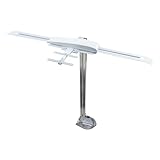
- Premium Choice: Winegard Sensar III RV-3095 Amped Outdoor RV TV Antenna – Crank-Up Batwing | 65 Mile Range, Amplified, Crank-Up, 48in Raised Height, Rotation Aiming, Outdoor RV Use, Swappable, 4K Ultra-HD, NextGen TV
An RV changes the rules of over-the-air TV. At home, one antenna is pointed at one tower and left alone. In a camper, the tower is different every few days, the roof is crowded with vents and solar panels, and the person raising the antenna may be standing in a parking lot in the rain. That is why RV antennas split into two practical camps: omnidirectional models that pick up signals from every direction without aiming, and directional crank-up models that you raise and rotate to find the best channel lineup.
The nine antennas here cover both camps, from Winegard’s Air 360 omni models and Sensar crank-up batwings to several unbranded roof-mount designs. This guide is for weekend campers, full-time travelers and trailer owners who want local channels without a cable hookup. Distance claims such as 65 miles or 100+ miles are manufacturer figures that depend on terrain and trees, so the 2026 buying advice below focuses on mounting style, amplification, cable length and ease of use rather than promises about range.
Quick Picks
As an Amazon Associate we earn from qualifying purchases at no extra cost to you.





| Product | Best for | Key spec from the title |
|---|---|---|
| Winegard Air 360 A3-2000 | Aim-free roof antenna in white | Omni RV HDTV, 360 degree reception |
| Amplified Roof-Mount RV Antenna (10m) | Unbranded amplified option | Signal amplifier, weatherproof, 10m cable |
| Winegard Sensar III RV-3095 | Crank-up with rotation aiming | 65 mile range, amplified, 48in raised height |
| 1byone Outdoor Omni | Longest cable run | 100+ miles claim, VHF/UHF, 39ft RG6 coax |
| Outdoor RV Antenna (Camper Listing) | Simple roof mount for small rigs | 360 degree omni, 16.4ft cable, 4K HD |
| Outdoor RV Antenna (Smart TV Listing) | Similar roof mount for trailers | 360 degree omni, 16.4ft cable, caravan use |
| Winegard Air 360 LP A3-LPB1 | Low-profile roof clearance | Low-profile omni design, black |
| Winegard Sensar IV RVW-395 | Crank-up with newer model number | 65 mile range, amplified, NextGen TV |
| 720-Degree Roof-Mount Antenna | Built-in amplifier with the longest coax | UHF/VHF, built-in amplifier, 32.8ft cable |
How to Choose
Omni versus crank-up
Omnidirectional antennas such as the Air 360 family and the unbranded 360 degree designs receive from all directions, so there is nothing to aim when you park. They suit travelers who move often and want TV working within minutes. Crank-up batwings, like the Sensar models, are raised on a mast to 48 inches and rotated for the strongest signal, which takes a minute more effort but can reach farther in marginal areas. If you stay put for weeks, aiming becomes a minor chore; if you move daily, it is a nuisance. Think about who will do the work too, because a crank-up that needs a ladder or a roof walk is a bigger commitment for some owners than for others, and a mast that is hard to lower before driving invites mistakes.
Amplification and signal bands
An amplifier boosts weak signals, but it also boosts noise and can overload a receiver near a strong tower. Look for amplified designs if you often camp far from cities. Check that the title mentions both VHF and UHF, since local stations use both bands. The 1byone and the 720 degree model mention VHF and UHF explicitly. Skip claims that a model works with “all TVs” unless you also see 4K, HD or digital wording, because older sets without a digital tuner need a converter.
Cable length, mounting and weather
Cable length matters more than most buyers expect. A 16.4ft run can be tight on a larger trailer, while 32.8ft and 39ft give you room to route cable through a roof entry and across to the TV. Roof-mount and weatherproof wording is important because the antenna sits outside through sun and storms. A low-profile body helps with low bridges and trees, and a crank-up needs roof space to rotate. Always plan how the cable enters the rig before you buy.
Where budget models cut corners
Budget antennas often have thin housings, short cables and vague model numbers, so there is no spec to verify. Names like “Outdoor RV TV Antenna for Camper” can describe several near-identical products. Mid-range and premium choices from established brands tend to provide clear model numbers, replacement support and mounting hardware. Ignore marketing like 720 degree reception, since a circle has only 360 degrees, and stick to the practical points above.
The 9 Best Options
Winegard Air 360 A3-2000
For campers who want a recognized brand and no aiming. The title lists an omni RV HDTV antenna in white with long-range 360 degree reception.
- Strength: omnidirectional design means no crank or rotation.
- Strength: a named model number makes support and replacement easier.
- Trade-off: the title gives no cable length, amplifier details or range figure.
Skip it if you want the farthest reach from a raised mast, since a fixed roof dome cannot be lifted or turned toward a distant tower the way a crank-up can.
Amplified Roof-Mount RV Antenna with 10m Cable
An unbranded, budget-tier antenna for campers, motorhomes and trailers. The title lists a signal amplifier, long-range reception, 4K and 1080P support, weatherproofing and a 10m cable.
- Strength: the amplifier and 10m cable are both stated up front.
- Strength: weatherproof design is listed for roof use.
- Trade-off: no brand or model number appears, which limits support options.
Skip it if you want a named manufacturer behind the product.
Winegard Sensar III RV-3095
A crank-up batwing for travelers who park in fringe areas. The title lists a 65 mile range claim, amplification, a crank-up mast, 48in raised height, rotation aiming and NextGen TV support, 4K Ultra-HD.
- Strength: it can be raised to 48 inches and rotated to chase signals.
- Strength: it is amplified and swappable.
- Trade-off: cranking and aiming at each stop takes more effort than an omni.
Skip it if you move camp every day.
1byone Outdoor TV Antenna
For people who also want to use the antenna in an attic or at home. The title lists 360 degree omni-directional reception, a 100+ mile claim, enhanced VHF/UHF reception and 39ft of RG6 coax.
- Strength: 39ft of cable is the longest run listed here.
- Strength: it is marked for outdoor, attic and RV use.
- Trade-off: the 100+ mile claim is a headline number and varies by terrain.
Skip it if you need a strictly roof-mount camper design, because the broad outdoor, attic and RV wording suggests a general-purpose antenna rather than one built around a fixed roof bracket.
Outdoor RV TV Antenna, Camper Listing
A basic roof-mount antenna for small rigs and campervans. The title lists 360 degree omni-directional 4K HD digital reception, a roof-mount design, local channels and a 16.4ft cable.
- Strength: roof-mount design is built for travel trailers and campervans.
- Strength: 16.4ft of cable suits shorter runs.
- Trade-off: no amplifier is mentioned in the title.
Skip it if your rig needs a long cable run, or if you want a stated amplifier to help in weaker signal areas away from major cities.
Outdoor RV TV Antenna, Smart TV Listing
A near twin of the previous listing, worded for smart TVs, trailers and caravans. The title lists a 360 degree omni-directional design, digital 4K HDTV, roof mount and a 16.4ft cable.
- Strength: it explicitly names smart TV compatibility.
- Strength: omni design avoids aiming.
- Trade-off: it is nearly indistinguishable from the other 16.4ft listing, so confirm which one you are getting.
Skip it if you want a named brand.
Winegard Air 360 LP A3-LPB1
The low-profile pick for rigs that pass under trees and garages. The title lists a low-profile omni RV HDTV antenna in black with long-range omnidirectional reception.
- Strength: the low profile reduces clearance concerns.
- Strength: it keeps the no-aiming omni design.
- Trade-off: no cable length or amplifier detail appears in the title.
Skip it if you want a raised mast, or if you need an antenna that states its amplification and cable length in the title so you can plan the install before ordering.
Winegard Sensar IV RVW-395
The newer-numbered crank-up in the Sensar line. The title lists a 65 mile range claim, amplification, crank-up batwing, 48in raised height, rotation aiming and NextGen TV.
- Strength: amplified batwing with rotation suits remote campsites.
- Strength: NextGen TV and 4K Ultra-HD are named in the title.
- Trade-off: the listed specs match the Sensar III, so the title alone does not show what changed.
Skip it if you want a set-and-forget omni, since every new campsite means raising the mast and turning it until the channel list fills in.
720-Degree Roof-Mount RV Antenna
An amplified omni option with generous cable. The title lists a roof-mounted outdoor HDTV antenna for campers and motorhomes, 720 degree omni-directional wording, a built-in amplifier, UHF and VHF reception and 32.8ft of cable.
- Strength: it pairs a built-in amplifier with a long cable.
- Strength: both UHF and VHF are named.
- Trade-off: the 720 degree phrase is marketing, not a measurable spec.
Skip it if you prefer a recognized brand.
Which One Fits Your Situation
You move camp often
Choose an omni, such as the Winegard Air 360 A3-2000. It receives from every direction, so there is nothing to crank when you park. The Air 360 LP is the version for low clearance.
You camp in remote areas
A Sensar crank-up with amplification and rotation is built for the fringe. The Sensar III and IV list the same 65 mile claim, so choose by availability.
You have a large trailer or long cable path
The 1byone with 39ft of RG6 coax and the 720 degree model with 32.8ft handle longer runs. The 16.4ft listings suit smaller rigs.
You want an unbranded budget tier
The amplified 10m antenna is the clearest of the generic listings because it states an amplifier, weatherproofing and cable length. Treat any unbranded model as a lower-support choice, and keep the packaging and a record of the seller in case a mounting part or cable needs to be replaced later. If you are unsure, a branded omni such as the Air 360 is the lower-effort route.
Common Mistakes
- Trusting mile claims as a promise, when terrain and trees decide real reception.
- Buying a short-cable antenna for a long trailer.
- Choosing an amplified antenna close to strong towers, which can overload the signal.
- Skipping the roof entry plan, which determines the cable route.
- Forgetting that older TVs without digital tuners need a converter box.
Related guides
- Battery Operated Smoke And Carbon Monoxide Detectors
- Combination Smoke And Carbon Monoxide Detectors
- Aio Liquid Coolers For High Performance Gaming
Frequently Asked Questions
Do I need an amplifier for an RV antenna?
Only in weak-signal areas. Near strong towers an amplifier can add noise, so many campers prefer the option of switching it off.
Is an omni or a crank-up better?
Omni models are simpler and suit frequent movers. Crank-up batwings take more effort but give you aim control in fringe locations.
What does NextGen TV mean?
It refers to the newer broadcast standard, and the Sensar titles mention it. Receiving it also requires a compatible tuner in your TV or a separate box.
How long should the cable be?
Measure from the roof entry to the TV and add slack. A short 16.4ft cable suits small rigs, while longer trailers benefit from 32.8ft or more.