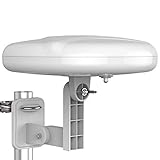
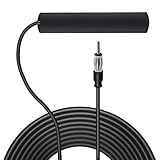
- Top Pick: TV Antenna for Smart TV Indoor, Digital TV Antenna for Local Channels | HD Digital Antenna with Amplifier Signal Booster for Local Channels Supports 4K 1080p-16.5 ft Long Cables
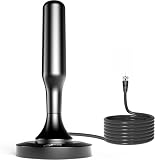
- Best Value: HIDB TV Antenna for Smart TV Indoor, Digital TV Antenna for Local Channels | OTA Digital HD Signal Antenna with Magnetic Base and 10ft Cable for Easy Setup
- Premium Choice: 2026 TV Antenna for Digital TV Indoor/Outdoor, 200% Wider Signal Reach Long Range Smart HDTV Antenna for Local Channels, Support 4k 8k 1080p with Amplifier Signal Booster
New York is an odd place to shop for a TV antenna, because the usual advice about reaching far-off towers mostly does not apply. Many of the major stations transmit from tall towers in Manhattan, so a viewer in Queens, Brooklyn, the Bronx, or the city itself is often close to the source. The trouble comes from the buildings in between: steel and concrete bounce signals around, and a spot that works in one apartment can fail two floors down. Placement and sensible expectations count for more than raw range numbers, and a rescan after every move is part of the routine.
All nine antennas below are indoor-first designs, and most carry an amplifier. Their titles lean heavily on marketing language, including some mileage claims that no flat indoor antenna can honor, so this 2026 guide reads them for the practical facts: cable length, mounting method, amplifier, reception pattern, and which older or newer TVs they claim to support. Nothing here is based on measured reception, so treat the list as a way to match features to your window, not as a promise of channels.
Quick Picks
As an Amazon Associate we earn from qualifying purchases at no extra cost to you.



| Product | Best for | Key spec from the title |
|---|---|---|
| Amplified Indoor Antenna, 16.5 ft Cable | Reaching a window across the room | Amplifier, 4K 1080p support, 16.5 ft cable |
| HIDB Indoor Antenna | Quick, simple setup | Magnetic base, 10 ft cable, OTA digital HD |
| Indoor/Outdoor Amplified Antenna | Balcony or window flexibility | Indoor/outdoor use, amplifier, 4K 8K 1080p |
| 360 Degree Reception Indoor Antenna | Apartments facing mixed directions | 360 degree reception, 4K 1080p support |
| DAANT Long Range Indoor Antenna | Plain, no-amplifier-mentioned option | 16 ft coax cable, 4K 1080p support |
| Portable 360 Antenna with Booster | Moving between rooms | Signal booster, 360 reception, portable |
| Magnetic Base Antenna, 16.4 ft Cable | Older TVs and metal surfaces | Amplifier, magnetic base, supports older TVs |
| 33 ft Coax Amplified Antenna | Window far from the TV | 33 ft coaxial cable, amplifier, older TVs |
| Long Range Antenna, 16 ft Coax | Basic amplified setup | Signal amplifier, 16 ft coax cable |
How to Choose
Ignore the mileage claims
Television signals travel essentially in a straight line, so figures like 800 or 5000 miles are marketing, not engineering. In a dense city the question is not distance but obstruction. Look for concrete features like cable length, an amplifier, and mounting style instead, and treat any listing that boasts thousands of miles with suspicion.
Amplifier or not
An amplifier can help when the signal has to travel through a long cable or when you are far from a tower, but near strong transmitters it can overload the tuner and make reception worse. Many NYC viewers are close to the towers, so a model that works with or without the booster is safest. The titles here mostly mention amplifiers without saying they can be turned off, so check the full listing.
Cable length and placement
The best spot for an antenna is on or near a window, as high as you can reach, facing toward Manhattan if you live in another borough. A 10 ft cable limits you to a TV near the window, while 16 ft or 33 ft cables allow a more distant placement. Avoid coiling excess cable behind the TV, which can pick up interference. Also keep the antenna away from routers and power adapters, which can add noise in a crowded apartment.
Reception pattern and TV compatibility
Some titles advertise 360 degree reception; in a city, where reflections arrive from several directions, that can be helpful, though directional placement still matters. Support for 4K and 1080p only describes picture formats the TV can show, not how well the antenna pulls in a channel. Budget antennas often cut corners on shielding and cable quality.
The 9 Best Options
Amplified Indoor Antenna with 16.5 ft Cable
Aimed at the renter with a TV that sits well away from the window. The title lists an amplifier signal booster, support for 4K and 1080p, and long 16.5 ft cables. It reads as a general-purpose setup for local channels in a smart-TV living room, and the long lead makes sense in the typical New York layout where the one good window is nowhere near the television.
- Strength: 16.5 ft of cable gives placement flexibility.
- Strength: an amplifier is included for weak-signal spots.
- Trade-off: no brand details are given, and the amplifier could overload close to the towers.
Skip it if you want a documented brand and clear specs, or if you are close enough to the towers that a booster is unnecessary.
HIDB Indoor Antenna
A simple option for a TV near a window, with a magnetic base and a 10 ft cable. The title describes it as an OTA digital HD antenna for easy setup, and it mentions smart-TV use, so it appeals to people who want minimal fuss. A magnet can grip a metal window frame or radiator cover, which is common in older prewar apartments.
- Strength: magnetic base simplifies mounting.
- Strength: easy setup is the headline feature.
- Trade-off: the 10 ft cable is shorter than most in this list.
Skip it if the TV sits far from your best window, or if you would like an amplifier on hand for weak channels.
Indoor/Outdoor Amplified Antenna
Marketed for both indoor and outdoor use, with an amplifier and support for 4K, 8K, and 1080p. A balcony or a fire-escape-facing window could suit this flexibility. The title also touts a 200 percent wider reach, a claim that should be read as promotional. This is the one to consider if a fire-escape-facing window or a private balcony gives you a better line toward the towers than the interior of the apartment.
- Strength: described for indoor or outdoor mounting.
- Strength: amplifier included for longer cable runs.
- Trade-off: the reach claim is vague, and outdoor mounting may be limited by building rules.
Skip it if you rent and cannot attach anything outside, because the outdoor flexibility then goes to waste.
360 Degree Reception Indoor Antenna
The title highlights 360 degree signal reception and support for all types of HDTV and digital TVs, along with 4K and 1080p. It suits apartments where windows face away from the towers and reflections are the main source of signal. In a courtyard-facing unit surrounded by taller buildings, an antenna that does not depend on aiming can save a lot of fiddling.
- Strength: 360 degree reception may suit reflective urban spots.
- Strength: broad HDTV compatibility is stated.
- Trade-off: the title mentions no amplifier or cable length.
Skip it if you need to know the cable length before buying, or if you expect an amplifier to be included.
DAANT Long Range Indoor Antenna
A plainly described indoor antenna with a 16 ft coax cable and support for 4K and 1080p smart TVs. There is no amplifier called out, which can be a plus close to the towers where extra gain is unnecessary. It is a reasonable first try for a ground-floor or mid-rise unit in Manhattan, where the signal is usually plentiful and the main challenge is clean reception.
- Strength: 16 ft coax cable allows flexible positioning.
- Strength: no amplifier named, which avoids overload risk near strong signals.
- Trade-off: with no amplifier, long cable runs may weaken weak channels.
Skip it if you live far from Manhattan or in a deep canyon of buildings, where extra gain may be needed to recover weak channels.
Portable 360 Antenna with Signal Booster
A portable, 360 degree reception antenna with a signal booster, support for 8K, 4K, and 1080P, and a very large mileage claim. It suits viewers who want to try several rooms or move it between a bedroom and a living room, which is a handy way to find the strongest spot in a small apartment before committing to a permanent location.
- Strength: portable design for moving between rooms.
- Strength: a booster and 360 degree pattern are named.
- Trade-off: the 800-mile claim is unrealistic, so judge it on features only.
Skip it if you want a documented, fixed installation or a brand with proper specification sheets.
Magnetic Base Antenna with 16.4 ft Cable
This one pairs a magnetic base with a 16.4 ft cable and an amplifier, and the title says it works with older TVs as well as smart TVs. It suits a mixed household with an old bedroom set and a newer main television, since one antenna can be carried from set to set as needed.
- Strength: magnetic base and long cable make placement simple.
- Strength: older-TV compatibility is named.
- Trade-off: the amplifier can overload a tuner close to the towers.
Skip it if you have no metal surface near a window, because the magnetic base then has nothing to hold on to.
33 ft Coax Amplified Antenna
The longest cable here, at 33 ft, with an amplifier and support for older TVs. It suits a layout where the best window is across a room from the TV, such as a long railroad-style apartment common in the city. The title claims 5000-plus miles, which is not a meaningful measure.
- Strength: 33 ft of coaxial cable offers distant placement.
- Strength: amplifier and older-TV support are listed.
- Trade-off: long cable runs add signal loss and clutter.
Skip it if the TV is within a few feet of the window, since you would simply be left with a pile of extra cable.
Long Range Antenna with Amplifier and 16 ft Coax
A basic amplified setup with a signal amplifier and a 16 ft coax cable, plus 4K and 1080p support and compatibility with smart TVs. It reads as the plain-vanilla pick of the nine, suited to someone who wants a standard amplified antenna without extra gimmicks.
- Strength: a sensible 16 ft cable length with an amplifier.
- Strength: straightforward feature list with no exaggerated claims.
- Trade-off: it offers no magnetic base or 360 degree pattern.
Skip it if you want a magnetic mount or a portable design, or if you want the freedom to remove the amplifier.
Which One Fits Your Situation
A rental near the towers
The DAANT antenna keeps things simple with no amplifier named, which matters when signals are already strong.
A TV far from the window
The 33 ft Coax Amplified Antenna or the 16.5 ft model gets the antenna to the glass while the TV stays put.
A balcony with room to mount
The Indoor/Outdoor Amplified Antenna offers a path outside, subject to your building rules.
Several TVs in several rooms
The Portable 360 Antenna with Booster is designed to move, so you can try it in different rooms and settle on the best.
Common Mistakes
- Trusting mileage claims instead of checking features.
- Adding an amplifier close to the towers, then wondering why channels break up.
- Hiding the antenna behind the TV instead of on a window, where buildings and walls block most of the signal.
- Skipping a channel rescan after moving the antenna, then concluding that channels are missing.
- Coiling extra cable into a tight bundle.
Related guides
- Battery Operated Smoke And Carbon Monoxide Detectors
- Combination Smoke And Carbon Monoxide Detectors
- Aio Liquid Coolers For High Performance Gaming
Frequently Asked Questions
Do I need an amplifier in New York City?
Often not, because many viewers are near the transmitters. Try the antenna without it first when possible, and add gain only for weak channels. Too much amplification near a strong signal is a common cause of pixelation.
Does 4K support mean better reception?
No. It only means the TV can show those formats. Reception depends on placement and signal strength.
Where should I put the antenna?
On or near a window, as high as practical, and rotate it while rescanning channels to find the best spot.
Will an antenna replace cable?
It can cover local broadcast channels with no monthly fee, but it will not provide cable-only networks. Many viewers keep an antenna for news and sports and add streaming for the rest.