There’s no single site that’s cheapest on everything, in stock on everything, and has good return policies on everything. That’s the honest answer. What actually matters is matching the retailer to the part, because GPUs, CPUs, and cooling gear fail and get returned in different ways, and some sites handle that better than others.
As an Amazon Associate we earn from qualifying purchases at no extra cost to you.


Where you buy depends on what you’re buying
Micro Center, if you have one within driving distance, wins on CPUs and GPUs almost every time. In-store pricing is often $20-50 below the same part online, there’s no shipping risk for a part that costs more to replace than to insure, and if a card is dead on arrival you walk it back the same day instead of waiting on an RMA. The catch is inventory varies by store and online stock is usually priced higher than in-store, so check before driving across town for a “deal.”
Amazon is the right default when you don’t have a Micro Center or you’re buying something low-risk: fans, thermal paste, case accessories, cable extensions, extra storage. Returns are painless, and for commodity parts where any reputable brand is fine, you don’t need to shop around. If you’re assembling a parts list, something like PC case fans or thermal paste is a reasonable place to start and compare reviews across brands.
Newegg still has the deepest selection for niche motherboards and PSUs, and its combo deals occasionally beat everyone, but their customer service has been inconsistent for years. Read the return window on the specific listing before buying anything over $200 there, because it’s not always the standard 30 days, and restocking fees on opened GPU boxes are real.
Buying direct from the manufacturer (Nvidia’s own store, AMD, MSI, Corsair) makes sense for exactly one scenario: a limited drop of a reference-design GPU at MSRP. Otherwise their sites are usually priced at or above retail and shipping takes longer.
Buying a GPU specifically
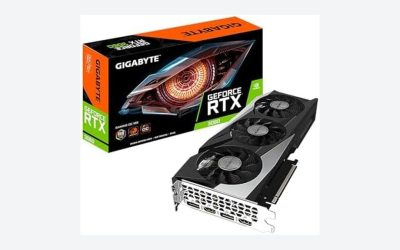
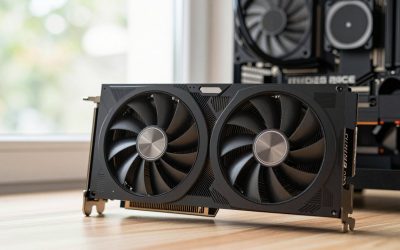
GPUs are the part most worth being careful about. Three things to check before buying from anywhere: the return window length, whether the listing is sold by the retailer or a third-party marketplace seller, and the card’s length versus your case clearance. A huge share of GPU returns aren’t dead cards, they’re cards that didn’t fit or needed a 12-pin adapter the buyer didn’t realize they needed.
Price swings are seasonal and sometimes dramatic. New generation launches push previous-gen cards down 15-25% within a month or two. If you’re not chasing bleeding-edge performance, waiting out a launch cycle is the single best way to save money on a GPU, full stop. If you’re ready now, cross-shop a few listings for the exact same model, since AIB partner pricing on an identical chip can differ by $30-80 for no performance difference. A search like graphics card find alternatives is a fine starting point to see what’s currently in stock and at what price before you commit to a specific SKU.
Quick comparison by retailer
| Retailer | Best for | Return handling | Typical price position |
|---|---|---|---|
| Micro Center | CPUs, GPUs, bundles | In-store, same-day | Often lowest, in-store only |
| Amazon | Fans, cables, storage, low-risk parts | Fast, no-questions returns | Average, very consistent |
| Newegg | Niche motherboards, PSUs | Slower, read terms per listing | Occasionally lowest on combos |
| Manufacturer direct | MSRP drops only | Standard, slower shipping | At or above retail |
Cooling and case parts are where it’s safe to cheap out
This is the category where brand loyalty wastes the most money. A $15 fan from a known brand moves air about as well as a $35 one at the same noise level; the price difference is usually RGB software and marketing, not airflow. Where it’s worth spending more is AIO coolers, because pump failures are the main failure mode and the cheapest no-name AIOs have a noticeably higher dead-on-arrival rate based on returned-item reviews. A mid-range 240mm or 280mm AIO from an established cooling brand, or a well-reviewed air cooler, will outlast a budget AIO in most builds. If you’re not sure which way to go, air cooling is quieter long-term and has nothing to leak. Browsing CPU cooler options side by side will show you the noise and clearance specs that matter more than the brand name on the box.
What this actually means for your order
If you’ve got a Micro Center nearby, buy your CPU and GPU there and use online retailers for everything else. If you don’t, Amazon is the safest default for low-risk parts and anything you might need to return fast, and it’s worth a few extra minutes cross-checking Newegg or a direct manufacturer drop only for the GPU or motherboard, where the price gaps are big enough to matter. Don’t spend extra time optimizing the $20 fan purchase. Spend that time on the $400 GPU purchase instead.