Buying used or refurbished PC parts isn’t a compromise anymore, it’s just a smarter default for most builds. The gap between “recycled” and “new” has narrowed because the supply changed: mining rigs got liquidated, corporate fleets got refreshed, and a lot of perfectly good silicon ended up on the secondary market years before it was actually worn out. Here’s how to buy it without getting burned.
What “recycled” actually covers
The term gets used loosely. In practice you’re choosing between four categories, and they carry different risk:
- Manufacturer refurbished — failed a QC check or was returned, repaired, retested, usually comes with a 90-day to 1-year warranty. Lowest risk.
- Retailer open-box — customer returned it, often untested beyond a visual check. Risk depends entirely on the retailer’s return policy.
- Private resale (eBay, local marketplace) — zero warranty unless the seller offers one. Price reflects that.
- Pulled from decommissioned systems — common for CPUs, RAM, and enterprise SSDs. Often fine mechanically but you’re buying blind on usage history.
None of these are inherently bad. The mistake is treating them as equivalent when pricing and inspecting them.
GPUs: the mining card question
Used GPUs are the biggest dollar savings and the biggest risk, because mining fried a lot of them in slow, specific ways. A card that mined 24/7 for two years ran hot, ran at a fixed clock and voltage, and almost never spun its fans down. That’s actually gentler on a GPU than gaming is in some respects (no thermal cycling from idle-to-load) but it cooks the thermal paste and pad compound, and it puts constant wear on the VRMs.
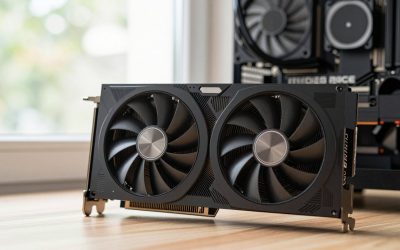
What to check before buying: ask for a screenshot of GPU-Z or HWInfo showing hours of use isn’t always available, but a seller who can show a benchmark run (3DMark, or even just a Furmark screenshot with temps) is telling you something real. Look at the fans — mismatched wear, wobble, or grinding noise means they’ll need replacing within a year. Check the display outputs for bent pins and the PCIe connector for scorch marks, which is the one true dealbreaker.
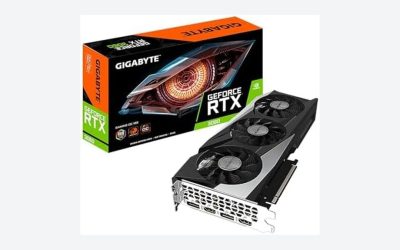
Price-wise, a sane target for a used card is 50-65% of current new MSRP for anything one to two generations old. If it’s priced above 70% of new, you’re usually better off buying new or buying a current-gen budget card instead. For shopping, start with refurbished graphics cards from manufacturer-backed listings rather than loose private sales if you want any recourse.
CPUs: the safest recycled part
CPUs are the one component I’d buy used without much hesitation. There’s no fan, no capacitor, no thermal paste to dry out — it’s a slab of silicon in a socket. The main failure modes are physical: bent pins on AM4/AM5 chips (not an issue on LGA sockets where the pins are on the motherboard), or a chip that was run with unstable overclocks and voltage for years, which does shorten lifespan but rarely shows symptoms until outright failure.
The actual risk with used CPUs is buyer error, not seller fraud: ordering a chip for the wrong socket or chipset generation. Double-check socket and BIOS compatibility before buying, especially on AM4 where a used 5000-series chip might need a BIOS flash on an older board before it’ll even post. Browse used desktop processors and expect to pay 40-60% of original launch price for anything two generations back.
Cooling: buy new, not used
This is the one category where I’d steer people away from recycled parts entirely, with one exception. Air coolers rely on fans with bearings that wear out, and you can’t inspect bearing wear by looking at a listing photo. AIO liquid coolers are worse: pump wear is invisible until it fails, and a used AIO could be two years from pump death or two days from it. There’s no way to tell, and when an AIO pump dies it usually takes the CPU with it via thermal spike before shutdown kicks in.
The exception is case fans — cheap, replaceable, and low-consequence if one dies. Everything else in the cooling chain, buy new. A budget air cooler is $25-35 new; it is not worth gambling that on a used listing. Check CPU air coolers at that price point before considering anything secondhand.
Where recycled makes sense, by component
| Component | Buy used/recycled? | Typical savings | Biggest risk |
|---|---|---|---|
| CPU | Yes | 40-60% | Wrong socket/BIOS compatibility |
| GPU | Carefully | 35-50% | Mining wear, VRM degradation |
| RAM | Yes | 30-50% | Rare, but mismatched kits cause instability |
| Motherboard | Sometimes | 30-40% | Damaged capacitors, bent socket pins |
| PSU | No | N/A | Degraded capacitors are a fire/damage risk |
| Cooling (fans/AIO) | Fans only | N/A | Invisible pump/bearing wear |
| Case | Yes | 40-60% | Cosmetic only, essentially no risk |
Why PSUs are the hard no
A used power supply is the one part I’d actively tell someone not to buy secondhand, full stop. Capacitors degrade with age and heat regardless of how light the load was, and a failing PSU doesn’t always fail safe — it can send an overvoltage spike into every component connected to it on its way out. The $60-80 you’d save isn’t worth the risk to a $1,500 build. New PSUs from reputable brands with 80+ Gold certification run $70-110 for a 650W unit, which is cheap insurance relative to everything downstream of it.
What I’d actually do
If I were building on a budget today, I’d buy a used CPU and used RAM without hesitation, buy a used GPU only from a seller who can show benchmark proof and a return window, buy a used case for the cosmetic savings, and buy new for the PSU and cooling every time. That split gets you most of the savings recycled parts offer while keeping the actual failure-prone, safety-relevant components fresh.