

- Top Pick: AC1200 WiFi Router, Dual Band Wireless Internet Router, Long Range for Home
- Best Value: TwoWin Router Tool, 110V 800W Compact Palm Wood Router Tool for Woodworking
- Premium Choice: Tenda Nova Mesh WiFi System MW12 – Covers up to 6000 sq.ft – Tri-Band AC2100 Whole Home WiFi Mesh System – Gigabit Mesh Router for 100+ Devices – Dual-Band Mesh Network – 3 Gigabit Ports – 3-Pack
A hundred dollars is a genuine sweet spot for home networking. It is enough to step past the bargain-bin basics and into proper WiFi 6 single routers and even whole-home mesh systems, but it stops short of the premium tier where prices climb fast for diminishing returns. The key question at this ceiling is what tier and WiFi standard your money actually buys — and under $100 you can land a current-generation WiFi 6 router, or trade the latest standard for the whole-house coverage of a multi-unit mesh system. This guide rounds up the best routers under $100 in 2026, focused on getting you the most capable, best-suited networking for that budget, whether you live in an apartment or are trying to cover a larger home.
- Best Routers Under $100 at a Glance
- 1. TP-Link AX1800 WiFi 6 Router (Archer AX21 V5), Dual Band Gigabit
- 2. TP-Link Deco X55 AX3000 WiFi 6 Mesh System, ~2,500 Sq.Ft.
- 3. Amazon eero 6 Mesh WiFi Router, Plans up to 900 Mbps
- 4. TP-Link Deco S4 Mesh AC1900 WiFi System, ~5,500 Sq.Ft.
- 5. NETGEAR Nighthawk Smart Wi-Fi Router R6700 (AC1750)
- 6. TP-Link AC1200 Gigabit WiFi Router (Archer A6), Dual Band MU-MIMO
- How to Choose a Router Under $100
- Frequently Asked Questions
- Related Guides
- Related Articles
Our picks were chosen on what matters most under $100: the WiFi standard and tier you get for the money, real-world coverage (single-router versus mesh), the speed your home internet plan can actually use, and value. We have avoided quoting invented benchmark numbers — instead we explain where each router fits and who it is for, with prices from around $40 up to around $96. The list spans current WiFi 6 single routers, AC1900 and AX3000 mesh systems for whole-home coverage, and dependable AC-class budget routers. Crucially, at this price you are choosing between newer standards and broader coverage — you usually cannot max out both — and we make that trade-off clear. Below is an at-a-glance comparison of all six, then a closer look at each and a buyer’s guide built around WiFi standards, coverage and matching your plan.
As an Amazon Associate we earn from qualifying purchases at no extra cost to you.


🛒 Best Price Today on Amazon
Prime members get fast, free shipping on everything above, plus member-only deals. New members get a 30-day free trial — cancel anytime.
Best Routers Under $100 at a Glance
| Router | Best For | Standout Spec | Approx Price |
|---|---|---|---|
| TP-Link Archer AX21 (AX1800 WiFi 6) | Best WiFi 6 under $100 | WiFi 6 AX1800, dual band | around $52 |
| TP-Link Deco X55 (AX3000 WiFi 6 Mesh) | WiFi 6 whole-home mesh | WiFi 6 mesh, ~2,500 sq ft | around $70 |
| Amazon eero 6 Mesh WiFi | Easiest WiFi 6 mesh setup | WiFi 6 mesh, plans up to 900 Mbps | around $90 |
| TP-Link Deco S4 (AC1900 Mesh) | Largest budget coverage | AC1900 mesh, ~5,500 sq ft | around $96 |
| NETGEAR Nighthawk R6700 (AC1750) | Reliable single-router AC | AC1750, up to 1750 Mbps | around $40 |
| TP-Link Archer A6 (AC1200) | Cheapest dependable pick | AC1200, dual band MU-MIMO | around $40 |
1. TP-Link AX1800 WiFi 6 Router (Archer AX21 V5), Dual Band Gigabit
The TP-Link Archer AX21 is our top pick for the best WiFi 6 router under $100, and we lead with it because it answers the central question of this budget so cleanly: at around $52 it gets you the current WiFi 6 standard rather than the older WiFi 5. It is a dual-band AX1800 router with gigabit ports, delivering the efficiency and capacity gains of WiFi 6 well within the ceiling.
This is the router to choose when you want the newest mainstream standard without spending much. WiFi 6 (802.11ax) handles many connected devices more efficiently than WiFi 5, which matters in a modern home full of phones, laptops, consoles and smart-home gadgets, and the AX1800 tier and gigabit ports comfortably support common home internet plans. As a single router it suits apartments and small-to-mid homes well. For the best blend of a modern standard and low price under $100, the Archer AX21 is the standout single-unit pick and a deserved best-seller.
Pros: Current WiFi 6 standard, dual-band AX1800, gigabit ports, excellent value.
Cons: Single router; very large homes may want a mesh instead.
2. TP-Link Deco X55 AX3000 WiFi 6 Mesh System, ~2,500 Sq.Ft.

TP-Link Deco X55 AX3000 WiFi 6 Mesh System, Deco X55(1-Pack) | Covers up to 2500 Sq.Ft., Replaces Wireless Router and Extender, 3 Gigabit Ports, Supports Ethernet Backhaul




As an Amazon Associate we earn from qualifying purchases. Product prices and availability are accurate as of the date/time indicated.
The TP-Link Deco X55 is the WiFi 6 whole-home mesh pick, and it shows what a hundred-dollar budget can stretch to: a current-standard mesh rather than just a single router. It is an AX3000 WiFi 6 mesh system rated to cover around 2,500 square feet, replacing both your router and any dead-zone-prone extenders with a unified network. At around $70 it brings modern WiFi 6 to a multi-unit mesh at a genuinely affordable price.
This is the system for someone who wants both the newer standard and whole-home coverage, and refuses to choose between them at this budget. The WiFi 6 mesh nodes blanket a typical home in a single seamless network, so your devices roam between rooms without dropping, the AX3000 tier provides solid speed for everyday use, and setup through the Deco app is straightforward. For a house where a single router leaves dead spots but you still want WiFi 6, the Deco X55 is the smartest under-$100 mesh choice here.
Pros: WiFi 6 mesh coverage to ~2,500 sq ft, seamless roaming, easy app setup, great price.
Cons: Coverage rating is per kit; very large homes may need extra nodes.
3. Amazon eero 6 Mesh WiFi Router, Plans up to 900 Mbps

Amazon eero 6 mesh wifi router - Supports internet plans up to 900 Mbps, Coverage up to 1,500 sq. ft., Connect 75+ devices, 1-pack


As an Amazon Associate we earn from qualifying purchases. Product prices and availability are accurate as of the date/time indicated.
The Amazon eero 6 is the easiest WiFi 6 mesh pick. It is a WiFi 6 mesh router that supports internet plans up to 900 Mbps and is known above all for its simple, app-guided setup and tidy, unobtrusive hardware. At around $90 it sits near the top of the budget, and what you pay for is the polish and simplicity of the eero ecosystem.
This is the router for the user who wants modern WiFi 6 mesh networking without any networking know-how. The eero app walks you through setup in minutes, the system automatically manages your network and pushes updates, and it supports plans up to 900 Mbps, which covers most home connections. It also expands easily if you add eero units later. If a frustration-free, set-and-forget WiFi 6 mesh matters more to you than squeezing out every advanced setting, the eero 6 is the most approachable pick under $100.
Pros: Simple app-guided WiFi 6 mesh, supports plans up to 900 Mbps, easy to expand.
Cons: Fewer advanced manual settings; near the top of the budget.
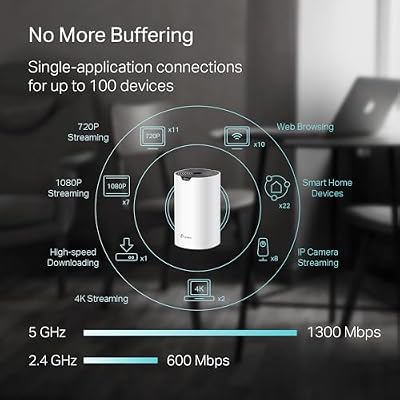
4. TP-Link Deco S4 Mesh AC1900 WiFi System, ~5,500 Sq.Ft.

TP-Link Deco S4 Mesh AC1900 WiFi System, Deco S4(3-Pack) | Up to 5,500 Sq.ft. Coverage, Replaces WiFi Router and Extender, Gigabit Ports, Works with Alexa



As an Amazon Associate we earn from qualifying purchases. Product prices and availability are accurate as of the date/time indicated.
The TP-Link Deco S4 is the largest-coverage pick under $100, and the trade-off it represents is the heart of shopping at this ceiling. It is an AC1900 mesh system rated to cover an enormous ~5,500 square feet — the widest reach here — but it uses the older WiFi 5 (AC) standard rather than WiFi 6. At around $96 it spends your budget on maximum coverage rather than the latest standard.
This is the system for someone with a large home or stubborn dead zones whose priority is blanketing the whole space, and who is happy with WiFi 5 to get there. The AC1900 mesh nodes work together to cover a very large area in one network, eliminating the dead spots a single router leaves, and the Deco app keeps setup simple. The honest caveat is the standard: you trade WiFi 6’s device-handling efficiency for sheer reach. If coverage is your number-one problem and the latest standard is not essential, the Deco S4 delivers the most square footage per dollar on this list.
Pros: Massive ~5,500 sq ft mesh coverage, seamless single network, easy setup, strong value.
Cons: Uses older WiFi 5 (AC) rather than WiFi 6; tops the budget.
5. NETGEAR Nighthawk Smart Wi-Fi Router R6700 (AC1750)
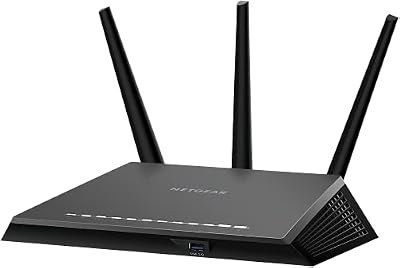
NETGEAR Nighthawk Smart Wi-Fi Router (R7000) - AC1900 Wireless Speed (Up to 1900 Mbps) | Up to 1800 Sq Ft Coverage & 30 Devices | 4 x 1G Ethernet and 2 USB Ports | Armor Security


As an Amazon Associate we earn from qualifying purchases. Product prices and availability are accurate as of the date/time indicated.
The NETGEAR Nighthawk R6700 is the reliable single-router AC pick. It is a well-established AC1750 router offering wireless speeds up to 1750 Mbps across dual bands, with the Nighthawk line’s long track record for stable, dependable home networking. At around $40 it is one of the most affordable ways to get a capable, name-brand single router.
This is the router for someone who wants a proven, no-drama single unit and does not need WiFi 6 or mesh. The AC1750 tier handles typical home internet plans and a normal device load comfortably, the dual bands let you separate older and newer devices, and the Nighthawk reputation means a stable connection for everyday browsing, streaming and gaming in an apartment or small home. It uses WiFi 5 rather than WiFi 6, so it is best where coverage needs are modest and budget is the priority. As a dependable, affordable single AC router, the R6700 is a long-standing favourite.
Pros: Proven Nighthawk reliability, AC1750 dual band, capable single router, low price.
Cons: WiFi 5 not WiFi 6; single-router reach suits smaller spaces.
6. TP-Link AC1200 Gigabit WiFi Router (Archer A6), Dual Band MU-MIMO

TP-Link AC1200 Gigabit Dual Band WiFi Router (Archer A6) | MU-MIMO Wireless Internet Router, 4 x Antennas, OneMesh and AP Mode, Long Range Coverage


As an Amazon Associate we earn from qualifying purchases. Product prices and availability are accurate as of the date/time indicated.
Rounding out the list is the TP-Link Archer A6, the cheapest dependable pick. It is an AC1200 dual-band router with gigabit ports and MU-MIMO, and at around $40 it is a rock-bottom-priced way to get a reliable, current-feature WiFi 5 router from a major brand. It is the entry point of this guide — modest in tier, but solid where it counts.
This is the router for the tightest budgets, a smaller apartment, or a straightforward home setup that does not demand WiFi 6 or a huge coverage area. The AC1200 tier is adequate for everyday browsing, streaming and light gaming, MU-MIMO helps it serve a few devices at once more efficiently, and the gigabit ports support wired connections for a desktop or console. It will not match the WiFi 6 picks for efficiency or the mesh systems for reach, but as an affordable, dependable basic router, the Archer A6 is an easy, sensible recommendation to round out the list.
Pros: Lowest-cost dependable router, AC1200 dual band, gigabit ports, MU-MIMO.
Cons: Entry-level AC1200 tier; WiFi 5 and best for smaller homes.
How to Choose a Router Under $100
At this budget the first decision is the one that defines the category: WiFi 6 versus broader coverage, because under $100 you usually cannot maximise both. WiFi 6 (802.11ax) — found here in the Archer AX21, Deco X55 and eero 6 — handles lots of connected devices more efficiently than the older WiFi 5 (AC) standard, which is the better long-term choice in a busy modern home. But spending your budget on WiFi 6 in a single router can mean less reach than an AC mesh. Decide which problem you have — too many devices and an outdated standard, or simply not enough coverage — and let that steer your money.
Coverage is the second big call: a single router or a mesh system. A single router like the Archer AX21, Nighthawk R6700 or Archer A6 broadcasts from one spot and is ideal for apartments and small-to-mid homes. A mesh system like the Deco X55, eero 6 or Deco S4 uses multiple units that hand your devices off seamlessly as you move, blanketing a larger home and killing dead zones. Under $100 the standout fact is that you can now get mesh — even WiFi 6 mesh — at this price, so if dead spots are your issue, a budget mesh is very much on the table.
Match the router to your internet plan so you neither overpay nor bottleneck. Check the speed your provider delivers and pick a router that comfortably supports it: the eero 6, for instance, handles plans up to 900 Mbps, and gigabit-port routers like the Archer AX21 and Archer A6 support fast wired and wireless connections. There is no benefit paying for a tier far beyond what your plan provides, but you do want enough headroom that the router is not the limiting factor on a fast connection. Confirm the numbers before you buy.
Finally, weigh features, brand and your own comfort with setup. App-guided systems like the eero 6 and TP-Link Deco range make installation painless for non-technical users, while established names like NETGEAR Nighthawk and TP-Link bring proven reliability and ongoing firmware support. Think about whether you want simple set-and-forget management or more manual control, how many devices you connect, and whether wired gigabit ports matter for a desktop or console. Decide between standard and coverage, pick single-router or mesh, match your plan, and choose the router on this list that solves your specific problem best.
Frequently Asked Questions
What is the best WiFi 6 router I can get under $100?
The TP-Link Archer AX21 (AX1800) is our top single-router WiFi 6 pick at around $52 — it gets you the current 802.11ax standard with gigabit ports well within budget. If you want WiFi 6 across a whole home, the TP-Link Deco X55 mesh at around $70 and the Amazon eero 6 at around $90 both bring WiFi 6 to a multi-unit system. All three keep you on the newer standard for under $100.
Can I get a whole-home mesh system for under $100?
Yes, and that is one of the best things about this budget. The TP-Link Deco S4 (AC1900) covers an enormous ~5,500 sq ft for around $96, the TP-Link Deco X55 brings WiFi 6 mesh to ~2,500 sq ft for around $70, and the Amazon eero 6 offers easy WiFi 6 mesh for around $90. The trade-off is usually standard versus reach — the widest-coverage Deco S4 uses WiFi 5, while the WiFi 6 kits cover smaller areas per kit.
Is WiFi 5 (AC) still worth buying in 2026?
It can be, depending on your priority. WiFi 6 is more efficient with many devices and the better long-term choice, but at this budget a WiFi 5 system like the Deco S4 mesh or Nighthawk R6700 can deliver more coverage or a lower price than an equivalent WiFi 6 option. If your home is large and your main problem is dead zones rather than device count, a capable AC system is still a reasonable, value-driven buy under $100.
Do I need gigabit ports on a router under $100?
If you have a fast internet plan or want to hard-wire a desktop, console or game server, yes — gigabit Ethernet ports, found on the Archer AX21 and Archer A6 here, give you full-speed wired connections and avoid bottlenecking a fast line. For purely wireless use on a slower plan they matter less, but gigabit ports add useful flexibility and are common even at this price, so they are worth having.
Related Guides
- Best Routers Under $150
- Best WiFi 6 Routers
- Best Mesh WiFi Systems
- Best Gaming Routers
- Best WiFi Extenders
- Best Budget Gaming Setup
Affiliate Disclosure: As an Amazon Associate, we earn from qualifying purchases. If you click a link and make a purchase, we may earn a small commission at no extra cost to you. Prices and availability are accurate as of publication and may change.
Ready to decide? Our #1 pick for 2026 is the TP-Link Archer AX21 (AX1800 WiFi 6).
Live price & availability on Amazon.


