Yes — RPCS3 is the only serious PS3 emulator, and it works well. Roughly half of the PS3 library is rated Playable. But PS3 emulation is far more CPU-bound than PS2: you want at least 6 cores and 12 threads, and AVX-512 support gives a large, measurable speedup.
- Can You Emulate a PS3 on PC? Yes, But Only With RPCS3
- Why PS3 Emulation Is Far Harder Than PS2
- RPCS3 Hardware Requirements: What Actually Matters
- The RPCS3 Settings That Actually Move the Needle
- Compatibility Tiers: Reading the Labels Honestly
- Which Genres Run Well — and Which Don’t
- Doing This Legally: Firmware and Game Files
- Beware Fake “PS3 Emulator” Downloads
- Troubleshooting the Common Failures
- Frequently Asked Questions
PS3 emulation is the generation where your CPU decides almost everything, where “my GPU is fine” is usually the wrong answer, and where much of what search results offer is not the emulator at all. Here is what RPCS3 needs, which settings matter, and where people get burned.
Can You Emulate a PS3 on PC? Yes, But Only With RPCS3
There is exactly one PS3 emulator worth your time: RPCS3 — open source, developed in the open, and in continuous development for over a decade. Everything else marketed as a “PS3 emulator” is abandoned, a front-end for nothing, or outright malware. There is no second option to compare against, which is why this is a guide rather than a shootout.
RPCS3 is also genuinely good now. Games that were slideshows five years ago run at full speed on current hardware — Demon’s Souls, Metal Gear Solid 4, the Ratchet & Clank Future games, Persona 5, the Yakuza titles and God of War III are all in the “just works” bracket on a decent machine.
Why PS3 Emulation Is Far Harder Than PS2
The PS3’s Cell processor is the reason. Instead of one conventional CPU, the Cell pairs a PowerPC core (the PPE) with eight Synergistic Processing Elements — small, fast vector units with their own local memory. Games offloaded physics, audio, animation, decompression and post-processing onto six or seven of those SPEs running simultaneously.
To emulate that, RPCS3 recompiles PowerPC and SPU code into x86 on the fly and runs several of those threads in parallel, in sync, every frame — a far heavier job than PS2 emulation’s two modest cores and a vector unit. If you have run PS2 games on a modest PC and assumed PS3 is a small step up, recalibrate.
RPCS3 Hardware Requirements: What Actually Matters
Build or buy for the CPU. Everything else is secondary.


CPU: thread count first, then AVX-512
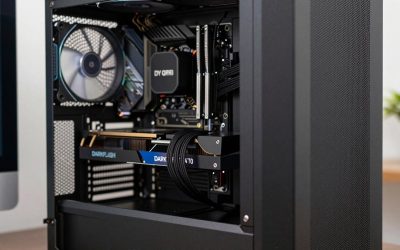
RPCS3 spawns a PPU thread, an RSX (graphics) thread, and multiple SPU threads. In a demanding title it will happily saturate six to eight hardware threads. A modern 6-core/12-thread chip is the realistic floor; 8 cores and 16 threads removes most of the remaining headroom problems. Single-thread performance still matters a great deal — the PPU thread is often the limiter — so a fast 8-core beats a slow 16-core almost every time. This is the classic case where the CPU is the bottleneck, not the graphics card.
Then there is AVX-512. The SPUs are 128-bit vector units, and AVX-512’s wide registers and masking instructions map onto SPU emulation unusually well. RPCS3 has dedicated AVX-512 code paths, and on SPU-heavy games the uplift is real — often a double-digit percentage, sometimes the difference between 45 fps and a locked 60. In practice that means AMD’s Zen 4 (Ryzen 7000) and Zen 5 (Ryzen 9000) desktop parts, with Zen 5 running it on a full-width datapath. Intel offered AVX-512 on 11th-gen Rocket Lake then disabled it on consumer chips from 12th gen onward, so current Intel desktop CPUs lack it. It is a bonus, not a requirement — plenty of Intel builds run RPCS3 beautifully — but when choosing a CPU specifically for emulation, it is a genuine tiebreaker.
GPU: less important than you think
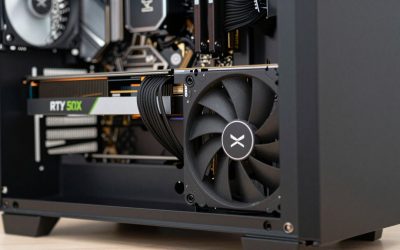
PS3 games target 720p and the console’s RSX chip was weak even in 2006. At native resolution, almost any Vulkan-capable discrete GPU from the last several years is enough. The GPU only matters once you raise the internal resolution scale to 2x or 4x, which is a luxury. Buying a flagship card to speed up RPCS3 is money in the wrong place — put it into the processor and memory instead.
RAM and storage
16 GB of RAM is comfortable; 8 GB works but leaves nothing spare. Storage is the quiet upgrade nobody mentions: PS3 game folders are 4–25 GB each, and RPCS3 writes large shader and PPU caches. Running the emulator and your game library from an NVMe SSD cuts loading and shader-cache access noticeably.
| Tier | Example CPU class | Realistic expectation |
|---|---|---|
| Below the floor | 4-core/4-thread, older laptop chips, low-power APUs | Menus and 2D titles only. Most 3D games run at half speed or worse. Not worth the setup time. |
| Entry | Modern 6-core/12-thread desktop CPU | Lighter and mid-weight games at full speed. Heavier titles need settings compromises and will still dip. |
| Strong | Fast 8-core/16-thread desktop CPU | The large majority of Playable-rated games at a locked frame rate, native resolution, few compromises. |
| Ideal | 8–12 fast cores with AVX-512 (Zen 4/Zen 5) | Heavy SPU titles hold frame rate, plus headroom for 2x resolution scaling on a decent GPU. |
The RPCS3 Settings That Actually Move the Needle
Most of RPCS3’s configuration menu is for debugging. These are the handful that change how a game runs. Set them globally, then override per game only when a title misbehaves.
| Setting | Use this | Why |
|---|---|---|
| SPU Decoder | Recompiler (LLVM) | The fastest option by a wide margin. The interpreters exist for debugging and will crush performance. ASMJIT compiles faster but runs slower — LLVM is the right default. |
| PPU Decoder | Recompiler (LLVM) | Same reasoning. Interpreters are a troubleshooting tool, not a setting to ship with. |
| SPU Block Size | Safe (try Mega if a game is slow) | Larger blocks let the recompiler optimise across more code, which can help — at the cost of stability in some titles. Safe first, escalate only if needed. |
| Renderer | Vulkan | Better performance and compatibility than OpenGL on virtually all modern GPUs. |
| Shader Mode | Async with Shader Interpreter | Turns hard freezes during shader compilation into brief visual artefacts instead. The single biggest quality-of-life setting. |
| Preferred SPU Threads | Auto | Lets RPCS3 match SPU threads to your core count. Manual values are for chasing a specific game bug. |
| Resolution Scale | 100% until the game is stable | Upscaling is a GPU cost you should only add once the CPU side is holding frame rate. Some games also break visually above native. |
Shader stutter is normal — at first
The first hour in any PS3 game will stutter. RPCS3 compiles shaders the moment a game asks for them, and every new area or effect triggers more. This is not a broken install — the cache is persistent, so the same content runs smoothly on the second pass. Async shader modes hide most of it; patience handles the rest.
Compatibility Tiers: Reading the Labels Honestly
RPCS3 maintains a public compatibility list with five ratings. The gap between the top two is where expectations go wrong.
| Rating | What it means in practice |
|---|---|
| Playable | Completable start to finish with no game-breaking issues. Still assumes adequate hardware — “Playable” is a correctness rating, not a speed promise. |
| Ingame | Boots and you can play, but expect crashes, missing effects, broken audio or a wall you cannot get past. Fine for a look, risky for a playthrough. |
| Intro | Reaches menus or cutscenes and stops. Not playable. |
| Loadable | Launches to a black screen or error. Nothing to do here. |
| Nothing | Does not start at all. |
Check the list for your specific games before buying hardware. It is the only prediction that matters.
Which Genres Run Well — and Which Don’t
Turn-based and stylised games are the sweet spot: JRPGs, 2D and 2.5D platformers, fighting games and linear third-person action games generally run at full speed on modest hardware. They lean less on the SPUs and have predictable frame pacing.
The problem cases are large open-world games and late-generation technical showpieces — the titles that squeezed every SPE for streaming, physics and deferred lighting. These are the ones that punish a mid-tier CPU. Online-dependent games are a separate dead end: PSN services are gone from the emulator’s perspective, so multiplayer-first titles have little left to offer. If you are mostly after the single-player back catalogue, a solid mid-range gaming PC build and a decent controller covers the great majority of what people actually want to replay.
Doing This Legally: Firmware and Game Files
RPCS3 needs the PS3 firmware to run anything, and this part is refreshingly clean: Sony publishes the system update file (PS3UPDAT.PUP) on its own official PlayStation support pages as a free public download. You download it from Sony, point RPCS3 at it, and the emulator installs it. That is the sanctioned route, and it is the only firmware source you should use — repackaged “BIOS” files floating around elsewhere are both unnecessary and a common malware vector.
Games are the other half. RPCS3 is designed to run your own dumps: discs you own, read with a compatible Blu-ray drive, or digital titles you purchased and exported from your own console. That is the legal boundary and it is not a grey area — downloading game files you did not buy is copyright infringement regardless of what the emulator can technically load. This guide will not point you anywhere for that, and any site that does is also the sort of site that bundles something extra.
Beware Fake “PS3 Emulator” Downloads
Search “PS3 emulator” and a large share of top results are not RPCS3. The pattern is consistent: a polished page offering an all-in-one installer, often advertised as “BIOS included” or “no setup”, sometimes behind a survey or a password-protected archive. These are adware droppers, miners and information stealers. The Android variants are pure ad fraud — there is no functional PS3 emulator for phones.
Protect yourself with one rule: RPCS3 is open source and free, and the real builds come from the project’s own site and its GitHub releases. There is no paid version, no premium tier, no installer that needs a survey, and no legitimate download that comes bundled with games. If a page is offering more convenience than the official project does, that convenience is the product being sold to you.
Troubleshooting the Common Failures
A black screen on boot is usually firmware — reinstall it from Sony’s file and confirm RPCS3 lists it as installed. Stutter that never improves means the shader cache is on slow storage or being cleared between sessions. Audio crackle that tracks frame drops is a symptom, not a cause: fix the frame rate and the audio follows. Half speed with low CPU usage across all cores usually means you are stuck on an interpreter — check both decoders are set to the LLVM recompiler. If one title misbehaves while everything else is fine, check the compatibility list for per-game patches before changing global settings.
Frequently Asked Questions
Is RPCS3 legal to use?
The emulator itself is legal — it is clean-room open source software and emulators have repeatedly been upheld as lawful. The firmware is also legal because Sony distributes the update file publicly and for free from its own support site. What is not legal is downloading game files you do not own. Dump your own discs or export your own purchased digital titles, and you are on solid ground.
Can a laptop run RPCS3?
A gaming laptop with a modern 8-core CPU can do well, but thermals are the catch. RPCS3 loads several cores continuously, which is exactly the workload that pushes laptops into sustained thermal throttling after twenty minutes. Expect lower real-world performance than a desktop with the same nominal chip, plug in the power adapter, and prefer performance power profiles. Thin-and-light ultrabooks are not suitable.
Will a better graphics card make RPCS3 faster?
Usually not. PS3 games render at 720p against a weak original GPU, so at native resolution the graphics card is rarely the limiter — the CPU is. Upgrading from a mid-range card to a flagship typically changes nothing in RPCS3 unless you are also raising the internal resolution scale to 2x or 4x. Spend the budget on the processor instead.
Why does RPCS3 stutter every time I enter a new area?
That is shader compilation. The emulator has to translate each PS3 shader into something your GPU understands the first time a game requests it, and new areas request a lot of new shaders at once. Set Shader Mode to an async option so compilation happens in the background, keep the cache on fast storage, and let it build. Repeat visits will be smooth.
Do I need an AVX-512 CPU for RPCS3?
No, it is not required, and many excellent RPCS3 builds do not have it. It is a performance bonus that helps specifically because the PS3’s SPU units map well onto wide vector instructions, and it can be worth a double-digit percentage in SPU-heavy games. If you are choosing between two otherwise similar processors, it is a reasonable tiebreaker. It should not override raw core count and clock speed.