Where to actually buy PC hardware
There’s no single best retailer, there’s a best retailer for a given part, your location, and how much hassle you can tolerate. Micro Center is the obvious answer if you live near one, because you get to inspect boxes for seal damage, return a dead stick of RAM in person, and skip shipping entirely. Everyone else is choosing between Amazon, Newegg, and manufacturer direct stores, each with different failure modes.
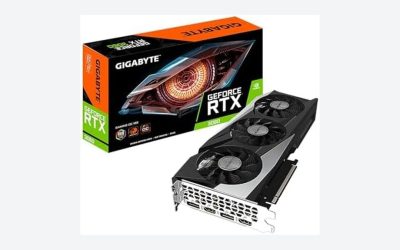
Amazon’s advantage is logistics and returns. If a GPU arrives with a bent bracket or a dead fan, you print a label and it’s gone in two days, no RMA number, no arguing with a vendor’s support queue. The downside is third-party sellers mixed into listings, occasional repackaged returns sold as new, and counterfeit risk on small items like SD cards or cables. For big-ticket parts like a graphics card find alternatives, stick to listings fulfilled and sold by Amazon itself, not a marketplace seller with 40 reviews.
Newegg built its reputation on PC parts specifically, and its filtering (socket type, wattage, form factor) is still better for component shopping than Amazon’s generic search. Newegg’s weak point historically has been “Egg saver” shipping delays and a return policy that’s less forgiving on open-box items. If you catch a legitimate sale, it’s usually here first.
Manufacturer direct stores (AMD, Nvidia’s Founders Edition queue, ASUS, Corsair) are worth checking for specific SKUs but terrible for comparison shopping since you’re only seeing one brand’s lineup. Nvidia FE cards sell out in seconds during launches and restocks are unpredictable, so don’t build a timeline around catching one.
New, used, and open-box: when cheaper is actually fine
Open-box and refurbished listings on Amazon and Newegg typically run 10-20% below retail. For a power supply or case, this is usually a non-issue, those parts either work or don’t, and you’ll know in the first week. For a GPU or CPU, open-box is riskier because thermal degradation and silent artifacting from a previous owner’s overclocking attempt don’t always show up immediately. If you buy open-box silicon, run it under load (Furmark or a long Cinebench loop) within the return window, not six months later when the warranty clock has already run out.
Used marketplaces (eBay, r/hardwareswap, local classifieds) make the most sense for CPUs and motherboards, since those parts rarely have moving components to fail. They make the least sense for power supplies, since a dying PSU can take other components with it, and you have no way to verify its internal capacitors from a listing photo. A $40 used PSU that kills a $600 GPU is not a discount.
Comparing the main channels
| Retailer | Best for | Return friction | Watch out for |
|---|---|---|---|
| Amazon | GPUs, cases, cooling, peripherals | Low | Marketplace sellers, repackaged returns |
| Newegg | CPUs, motherboards, PSUs, sales | Medium | Open-box return restrictions |
| Micro Center (in-store) | CPU bundles, anything you want to inspect first | Very low | Limited to physical locations |
| Manufacturer direct | Launch-day specific SKUs | Varies | Stock drops, no price comparison |
| Used marketplaces | CPUs, motherboards, cases | None (buyer beware) | No warranty, PSUs and GPUs are higher risk |
Cooling and cases: don’t overthink the sourcing
This is the category where brand loyalty costs you money for no reason. A case is sheet metal, standoffs, and fan mounts, and the $70 options from reputable brands perform within a few degrees of the $150 ones for airflow, assuming both have mesh front panels. Where it’s worth spending is fan count and quality, since three decent 120mm fans beat two cheap 140mm ones on static pressure through a radiator or heatsink. Shopping for case and cooling fans on Amazon is fine because return friction barely matters here, a fan either spins quietly or it doesn’t, and you’ll know in ten minutes.
AIO liquid coolers are the one cooling product where I’d avoid used entirely. Pump bearings wear down over 3-5 years and you can’t inspect that from outside, and a failed pump on a running system means a CPU hitting thermal shutdown within minutes. Buy these new, and buy from a channel with easy returns, because pump whine (a known failure mode on several popular models over the years) is something you want to catch and swap in week one, not month six.
Timing it
CPUs and GPUs follow release cycles: prices on the previous generation drop 15-30% in the month after a new generation launches, which is consistently the best time to buy if you don’t need bleeding-edge performance. Memory and storage prices move with semiconductor market cycles that have nothing to do with PC demand specifically, so there’s no reliable “wait for it” window, if the price looks fair relative to the last six months, buy it. Cases, PSUs, and fans barely fluctuate outside of Black Friday and Prime Day, so there’s little reason to wait on those unless you’re already buying everything else at once anyway. If you’re assembling a full parts list, pricing out a complete PC build parts kit across two retailers and buying each category wherever it’s cheapest that week usually beats loyalty to one storefront by enough to matter.
The real cost of getting this wrong isn’t usually the money, it’s the week lost to RMA shipping on a part you needed for a build that’s now half-finished on your desk. Buy the parts most likely to fail (PSUs, AIOs, GPUs) from whichever retailer gets you a replacement fastest, and save the bargain-hunting for parts that either work or don’t the moment you plug them in.