

- Top Pick: LiPo Battery Charger Dual 10A RC Fast Balance Battery Charger Discharger | RC Car Drone Chargers for 1S-6S LiPo Li-ion Life LiHV 1S-15S NiCd NiMH 2-20V PB Smart Batteries
- Best Value: LiPo Battery Charger, 80W 6A Balance Fast Battery Charger for RC Toy Model | Battery Charger Discharger for 1S-6S LiPo/Li-Fe/Li-ion 1S-15S NiMH/NiCD Packs RC Car Boat Drone Battery
- Premium Choice: 6A Lipo Battery Charger, 1S-6S Balanced Charger Discharger, 1-6S Lipo Li-ion NiMH NiCD Li-Fe Battery with Tamiya XT60 Deans Futaba Connector
A LiPo charger decision comes down to how many cells you charge, how fast you want to charge them, and whether you will plug into a wall outlet or a battery in the field. A pilot who flies two 4S packs on a weekend has different needs than a racer cycling six 6S packs between heats. Buy too little power and a big pack takes forever; buy a dual-channel brute for a pair of 2S toy-car batteries and you pay for headroom you never touch.
This guide sorts nine chargers by those real constraints for RC cars, boats, drones and hobby models in 2026. The notes come from the product titles and their listed specs, such as cell counts, wattage, amperage and connector types, so confirm the full listing for plugs and input requirements before you order. Whatever you pick, balance-charge in a fire-resistant bag and never leave a pack charging unattended.
Quick Picks
As an Amazon Associate we earn from qualifying purchases at no extra cost to you.


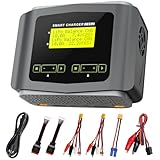

| Product | Best for | Key spec from the title |
|---|---|---|
| Aorika Dual 10A | Two packs at once, wide chemistry range | Dual 10A, 1S-6S LiPo, 1S-15S NiMH |
| HTRC 80W 6A | Single-pack hobby use | 80W, 6A, 1S-6S LiPo |
| Hiyiton 6A | Mixed connector collections | 6A, Tamiya, XT60, Deans, Futaba |
| Gens Ace IMARS D300 | Heavy packs and fast field turnaround | 16A, AC 300W, DC 700W |
| SSUPCHG | Small 2S and 3S packs with XHR plugs | 2S 3S balance, XHR plug |
| HTRC 150W 10A | Higher output from a single charger | 150W, 10A, 1S-6S LiPo |
| Hilldow B6 80W | Compact bench charger with supply | 80W mini, power supply, XT60/JST/T |
| HTRC Dual 10A | Large-screen dual-channel use | Dual 10A, large screen, 1-6S |
| OVONIC X1 Pro | Sync charging of paired packs | AC 300W/DC 700W, 16A, sync mode |
How to Choose
Cell count and chemistry
Match the charger to the biggest pack you own. Most chargers here handle 1S to 6S LiPo, which covers cars, planes and most drones. Check that the listing also names LiHV, Li-ion or LiFe if you own those chemistries, because setting the wrong type is the usual cause of charging accidents. The NiMH and NiCd ranges listed up to 15S are a bonus for older packs.
Output power and current
Current is what decides charging speed. A 6A charger fills a mid-size pack at a measured pace, 10A is quicker, and 16A with 300W AC input is for big packs and fast turnarounds. Wattage caps the real output, so a high-amp number paired with a low wattage cap will not deliver both at once. Read both figures together.
Channels, input and connectors
Dual-channel units charge two packs at the same time and cut waiting at the field. Some run from AC mains only, while others list a DC input of 700W for a field battery. Confirm the connectors: XT60, Deans, Tamiya and JST are the common ones, and a missing plug means buying adapter leads before first use.
Safety and what to ignore
Look for balance charging, a discharge or storage function and a screen that shows individual cell voltage. Ignore bold marketing words with no spec behind them. Budget units can cut corners on cooling and screen clarity, so prefer a listing that names the balance function and the cell range clearly.
The 9 Best Options
Aorika Dual 10A
This dual 10A charger is aimed at hobbyists with a mixed battery shelf. The title lists support for 1S-6S LiPo, Li-ion, Life and LiHV, 1S-15S NiCd and NiMH, and 2-20V lead-acid smart batteries, with a charge and discharge function for RC cars and drones. Think of it as the catch-all bench unit for a hobbyist who owns a drawer of older packs in several chemistries and wants one charger to handle them all.
- Strength: two channels let you work through packs in pairs.
- Strength: the chemistry list is among the widest on this page.
- Trade-off: the title does not state a wattage, so check the listing for input limits.
Skip it if you only own a single small pack.
HTRC 80W 6A
This is a straightforward single-channel option for toy-grade and model use. The title lists 80W, 6A balance fast charging, charge and discharge modes, and support for 1S-6S LiPo, Li-Fe and Li-ion, plus 1S-15S NiMH and NiCD, for cars, boats and drones. It fits a buyer who owns a couple of mid-size packs and wants a dependable, no-fuss unit for the workbench rather than a feature-heavy field charger.
- Strength: 80W is enough for typical hobby packs.
- Strength: charge and discharge modes help with storage.
- Trade-off: 6A will feel slow with large packs.
Skip it if you charge big packs often or need two channels.
Hiyiton 6A
This 6A balanced charger and discharger stands out for its connector line-up. The title lists 1S-6S support for LiPo, Li-ion, NiMH, NiCD and Li-Fe, and names Tamiya, XT60, Deans and Futaba connectors. Collectors with vintage RC cars or older radio gear are the natural audience, since the connector list suggests fewer adapter leads to track down.
- Strength: the named connector list suits owners of older Tamiya or Futaba gear.
- Strength: it covers several chemistries from one unit.
- Trade-off: no wattage or screen details appear in the title.
Skip it if you want a stated wattage before buying.
Gens Ace IMARS D300
This is the branded heavy-duty pick. The title describes a smart dual-channel charger with 16A, AC 300W and DC 700W capability, in a white upgraded version. It is built for pilots and racers who need fast turnarounds with large packs. Competitive drivers who cannot afford long waits between heats, and pilots who carry a field battery to the flying site, are the buyers this wattage range is written for. A second listing of the same model exists under another seller name, so compare bundle contents rather than assuming they differ.
- Strength: 16A with a 700W DC figure supports demanding packs.
- Strength: dual channels double the throughput at the field.
- Trade-off: this is premium-tier hardware, more than a casual hobbyist needs.
Skip it if you only charge small 2S or 3S packs.
SSUPCHG
This one is narrowly focused. The title says it is a balance charger for 2S and 3S LiPo batteries with an XHR plug, with a smart chip for safe balanced charging and a target of RC toys and models. It suits a parent or beginner whose small cars and models all use the same plug, and who would rather buy one matching charger than juggle adapters.
- Strength: it fits a specific plug type without adapters.
- Strength: the smart chip is described as handling balanced charging.
- Trade-off: it only covers 2S and 3S, so larger packs are out.
Skip it if you own anything above 3S or use a different plug.
HTRC 150W 10A
Think of this as the step up from the 80W model. The title lists 150W, 10A balance fast charging, charge and discharge modes, and support for 1S-6S LiPo, Li-ion, Life and LiHV, plus 1-15S NiMH and NiCD and 2-20V lead-acid packs. It makes sense for a pilot who has outgrown an 80W unit and wants faster turnaround without moving to a dual-channel box.
- Strength: 150W and 10A speed up larger packs.
- Strength: LiHV support is listed.
- Trade-off: it is a single channel, so packs charge one at a time.
Skip it if you want to charge two packs together.
Hilldow B6 80W
This mini B6-style charger comes with a power supply, which makes it a complete desk setup. The title lists 80W, balance charging and discharging, LiPo, Li-ion and Life from 1-6S, NiMH and NiCd up to 15S, and XT60, JST and T connectors. It appeals to someone building a first charging station at home who wants the supply and charger sorted in one purchase.
- Strength: the included power supply removes a separate purchase.
- Strength: three connector types are named in the title.
- Trade-off: 80W will limit charging speed on larger packs.
Skip it if you want a field-ready dual-channel charger.
HTRC Dual 10A
This is the dual-channel HTRC with a display emphasis. The title lists dual 10A fast balance charging and discharging, a large screen, 1-6S support for LiPo, LiHV, Li-ion and LiFe, and uses for RC cars, aircraft and drones. Pilots who keep several packs on rotation will like being able to watch two channels at a glance on the display.
- Strength: the large screen helps you read cell voltages.
- Strength: dual channels fit racers and fliers with several packs.
- Trade-off: the title lists no wattage figure.
Skip it if you want a stated wattage before committing.
OVONIC X1 Pro
The X1 Pro is a dual-channel charger built around a power-rich spec sheet. The title lists support for 1S-6S LiPo, Life, NiCd, NiMH and LiHV, AC 300W and DC 700W at 16A, and a sync charging mode. Racers who run matched pairs of packs, such as two 2S or 3S sticks wired as a set, are the buyers this feature is aimed at.
- Strength: sync charging suits paired packs in a racing setup.
- Strength: both AC and DC power figures are stated.
- Trade-off: it lists no Li-ion support in the title.
Skip it if you own Li-ion packs or only a single small battery.
Which One Fits Your Situation
You race with several 4S or 6S packs
The OVONIC X1 Pro and the Gens Ace IMARS D300 both list 16A with 300W AC and 700W DC. Choose the OVONIC if sync charging of paired packs matters.
You fly a few packs on weekends
The HTRC 150W 10A strikes a balance between speed and simplicity. Move to the HTRC Dual 10A if you want two channels and a bigger screen.
You charge small toy-car packs
The SSUPCHG fits 2S and 3S packs that use XHR plugs. The HTRC 80W 6A is the fallback when your plugs differ.
You own older connectors and mixed chemistries
The Hiyiton 6A names Tamiya, Deans and Futaba plugs, while the Aorika Dual 10A lists the widest chemistry range.
Common Mistakes
- Picking the wrong battery type on the charger, which is the most dangerous setup error.
- Reading amps without checking the wattage cap, then wondering why charging is slow.
- Ordering before checking that your pack plug matches the charger connectors.
- Skipping the balance lead and charging cells unevenly.
- Leaving packs charging unattended or outside a fire-resistant bag.
Related guides
- Combination Smoke And Carbon Monoxide Detectors
- Aio Liquid Coolers For High Performance Gaming
- Graphics Cards For Low Wattage Power Supplies
Frequently Asked Questions
What does 1S-6S mean?
It is the cell count range the charger supports. Each cell in a LiPo pack is one S, so a 4S pack has four cells in series.
Do I need a dual-channel charger?
Only if you often charge two packs in one session. A single channel is fine for a casual pilot with a few packs.
Is balance charging necessary?
Yes for multi-cell packs. It keeps every cell at the same voltage, which protects pack life and safety.
What is storage mode?
It brings a pack to a mid-level voltage for long periods of disuse. Chargers with a discharge function can usually do this.







