

A diesel truck asks more of its starting battery than a gasoline pickup does. High compression means the starter turns the engine over against real resistance, and in a cold garage that resistance only grows. That is why the search for the best batteries for diesel trucks usually starts with cold cranking amps, group size, and whether the truck expects one battery or two. This guide sorts nine AGM options by the specs printed in their listings, so you can match terminal style, footprint, and cranking numbers to your own tray before you order anything.
It is written for owners who are replacing a weak battery, rebuilding a dual-battery setup, or upgrading in advance of winter in 2026. Every pick below is a sealed AGM design, so the real decision is not chemistry but fit: which group number your hold-down expects, which terminals your cables need, and how much cranking headroom your engine wants. Keep the owner’s manual open while you read.
Quick Picks
As an Amazon Associate we earn from qualifying purchases at no extra cost to you.





| Product | Best for | Key spec from the title |
|---|---|---|
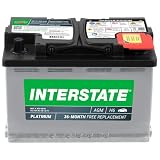
| Interstate Group 65 AGM | Trucks calling for group 65 | 12V, 68Ah, 750CCA |
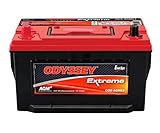
| Odyssey ODX-AGM65 | Owners shopping the Extreme Series line | Extreme Series AGM |
| Mighty Max MM-H7 | Group 94R trays with start-stop needs | 80Ah, 140RC, 850CCA |
| Optima 75/25 RedTop | Starting-only duty with dual terminals | 720CCA, SAE and GM terminals |
| Optima D34 YellowTop | Dual-purpose truck use | 750CCA, D34 size |
| Optima D34/78 YellowTop | Trucks that need side and top posts | 750CCA, dual terminal |
| Interstate Group H6/48 AGM | Group 48 replacements | 70Ah, 760CCA |
| Optima DH6 YellowTop | Highest cranking number in the group | 800CCA, BCI Group 48 |
| Renogy 12V 70Ah H6 | Group 48 with start-stop labeling | 720CCA, 120RC |
How to Choose
Match the group size before anything else
The group number sets the physical footprint, height, and post location. The listings here cover group 65, 94R, 48 (sold as H6), and Optima’s D34 family. A battery that is a quarter inch too tall can touch the hood or a hold-down bar, and a battery with reversed post positions can leave your cables a few inches short. Read the group number off the battery you are replacing, confirm it in the owner’s manual, and treat that number as a hard filter rather than a preference.
Read cranking amps as a floor, not a trophy
Cold cranking amps describe how much current a battery can deliver at low temperature. The options here run from 720 up to 850 CCA. Diesel owners should meet or exceed the factory number, particularly where winters bite, but a very high figure inside the wrong group size does you no good. Many diesel pickups also use two batteries wired together, so one more thing to confirm is whether you are replacing one battery or a matched pair.
Know your terminals and mounting
Some listings spell out terminal style. The Optima 75/25 RedTop names dual SAE and GM terminals, and the D34/78 is described as dual terminal, meaning it accepts both top posts and side-style connections. Others do not state it, so verify on the product page before ordering. Also look for mounting language: Optima’s titles mention versatile mounting, which matters if your tray orientation is not standard.
Starting duty versus dual-purpose duty
A starting battery is built to deliver a burst and recover. Dual-purpose designs, like the YellowTop family, are described as handling both starting and ongoing accessory draw. If your truck runs a winch, extra lighting, or a plow controller, the dual-purpose label deserves a close look. For a stock truck that only needs to start, the starting-focused designs are the straightforward match. Skip anything whose listing leaves group size or CCA unstated. Finally, think about the charging side: a truck that sits for weeks between drives will drain any battery, so a maintenance charger is a sensible companion whichever model you pick, and the sealed construction here means there is no water to top up either way.
The 9 Best Options
Interstate Group 65 AGM
This is a 12V, 68Ah, 750CCA AGM battery in group 65, which makes it a direct swap for trucks specified for that size. The listing is simple and the numbers are clear, which helps when you are cross-checking against a manual.
- Strength: 750CCA gives respectable cold-start headroom for a single-battery truck.
- Strength: group 65 is stated plainly, so fitment is easy to confirm.
- Trade-off: the title gives no reserve capacity figure, so you cannot compare accessory endurance.
Skip it if your tray takes a different group or you need a documented reserve figure.
Odyssey ODX-AGM65 Extreme Series
Odyssey’s listing is thin on numbers: the title names the Extreme Series AGM battery and the model code only. The AGM65 in the model name points toward group 65 sizing, but the product page should confirm that before purchase.
- Strength: it belongs to a named Extreme Series line, a clear product tier to research.
- Strength: AGM construction suits the sealed, maintenance-free preference of most truck owners.
- Trade-off: no CCA, amp-hour, or reserve figures appear in the title, so comparison takes extra legwork.
Skip it if you want every spec visible at a glance.
Mighty Max MM-H7
The MM-H7 is a group size 94R, 12V, 80Ah AGM with 140RC and 850CCA, and the listing adds start-and-stop labeling. It carries the highest cranking figure and the largest amp-hour number in this lineup.
- Strength: 850CCA is the top cranking figure listed in this group.
- Strength: 140RC and 80Ah are both documented, so endurance is easy to compare.
- Trade-off: group 94R is a specific footprint that many trucks do not use.
Skip it unless your manual calls for 94R or an equivalent H7 size. A strong spec sheet cannot make up for a tray that was built for another footprint, and the listing leaves no room for guessing about that.
Optima 75/25 RedTop
The RedTop is described as a sealed AGM starting battery for cars, trucks, and SUVs at 720CCA, with dual SAE and GM terminals and maintenance-free design. It is aimed squarely at starting rather than mixed duty.
- Strength: dual terminals give flexibility when cable ends differ.
- Strength: the starting focus fits a stock truck with few electrical add-ons.
- Trade-off: 720CCA is the lowest cranking figure among the Optima options here.
Skip it if your diesel calls for more cranking than that or runs heavy accessories.
Optima D34 YellowTop
This YellowTop is a dual-purpose AGM for cars, trucks, and SUVs at 750CCA in the D34 size, with maintenance-free construction and versatile mounting called out in the title.
- Strength: dual-purpose design suits trucks that mix starting with accessory loads.
- Strength: versatile mounting helps in awkward trays.
- Trade-off: the D34 listing does not mention dual terminals, so confirm post style.
Skip it if your truck requires side-terminal connections.
Optima D34/78 YellowTop
Closely related to the D34, this version adds a dual terminal setup to the same 750CCA, dual-purpose AGM formula. That makes it the more adaptable of the two D34 listings.
- Strength: dual terminals offer choice between connection styles.
- Strength: 750CCA with maintenance-free sealed construction.
- Trade-off: it overlaps heavily with the plain D34, so check which footprint your tray truly needs.
Skip it if your cables only use one post style and you would rather not sort out which of the two D34 variants matches your tray.
Interstate Group H6/48 AGM
A 12V, 70Ah, 760CCA AGM in group H6 (also called 48), this listing sits in the middle of the cranking range and states its group designation twice, which reduces the chance of a mix-up.
- Strength: 760CCA with 70Ah is a balanced pairing of cranking and capacity.
- Strength: clear group naming.
- Trade-off: no reserve capacity or terminal details are listed.
Skip it if your tray is group 65 or if you need terminal specifics up front.
Optima DH6 YellowTop
The DH6 is a dual-purpose sealed AGM for cars, trucks, and SUVs at 800CCA, matched to BCI Group Size 48. That makes it the strongest cranking choice among group 48 listings here.
- Strength: 800CCA is the highest in the group 48 options.
- Strength: BCI group size is stated explicitly.
- Trade-off: the title does not list amp-hours or reserve capacity.
Skip it if your truck takes a different group size.
Renogy 12V 70Ah H6
Renogy’s group 48 (H6) AGM lists 720CCA and 120RC, with start-and-stop labeling and mention of use in cars, SUVs, trucks, and marine starting.
- Strength: both CCA and reserve capacity are documented.
- Strength: the multi-use description suits owners who also own a boat.
- Trade-off: 720CCA trails the other group 48 listings here.
Skip it if your engine needs the higher cranking figures from the Interstate or Optima group 48 options.
Which One Fits Your Situation
You live where winters are long
Start with the highest cranking numbers that fit your tray. If your truck uses group 48, the Optima DH6 at 800CCA leads. If your manual calls for 94R, the Mighty Max at 850CCA is the strongest on paper.
Your truck carries a winch, plow, or extra lights
The dual-purpose Optima D34/78 YellowTop is described for mixed duty and offers dual terminals, which helps when accessory cables are involved.
You want a clean, documented swap
The Interstate Group H6/48 AGM states its amp-hours, CCA, and group in the title, so you can compare against a manual quickly. The Interstate Group 65 does the same for group 65 trucks.
You want a stock replacement with minimal fuss
The Optima 75/25 RedTop is a starting-focused AGM with dual terminals, a plain fit for a truck that does little more than start and run.
Your truck also tows a boat or camper
The Renogy 12V 70Ah H6 lists use across cars, SUVs, trucks, and marine starting, along with 120RC. That broader description makes it a sensible candidate if the same battery size shows up in your boat as well, provided your truck’s tray is group 48.
Common Mistakes
- Ordering by CCA alone and ignoring the group size that sets whether the battery even fits.
- Replacing only one battery in a dual-battery truck and leaving a weak partner to drag the new one down.
- Assuming every listing includes terminal details when several leave them out.
- Treating a dual-purpose label as a promise of deep-cycle behavior beyond what the listing states.
- Forgetting to check the hold-down and cable length against a new post layout.
Related guides
- Combination Smoke And Carbon Monoxide Detectors
- Aio Liquid Coolers For High Performance Gaming
- How To Lower Input Delay In Competitive Shooters
Frequently Asked Questions
Do diesel trucks need two batteries?
Many full-size diesel pickups are built with two, though not all. Your owner’s manual or the existing tray tells you how many. If you have two, replace them as a pair so they age together.
How many cold cranking amps should a buyer look for?
Meet the number in your manual at minimum. The listings here span 720 to 850 CCA, and the higher figures give extra margin in cold climates, as long as the group size is correct.
Is AGM necessary?
All nine options here are AGM, which is sealed and maintenance-free. If your truck has start-stop or heavy accessory loads, AGM is commonly the specified type, so check the manual.
What does reserve capacity tell me?
Reserve capacity, shown as RC, describes how long a battery can supply a set load if charging stops. Only the Mighty Max and Renogy listings state it, at 140 and 120 respectively.







