What Cricut Actually Needs From a Laptop
Cricut Design Space is not a demanding program in the way video editing or CAD software is. It’s a 2D vector-based app that leans on your CPU and RAM more than your GPU, and it talks to your cutting machine over Bluetooth or USB. The real bottlenecks people hit are low RAM causing the app to freeze on complex projects, weak Wi-Fi/Bluetooth chips dropping the connection mid-cut, and tiny amounts of storage filling up fast once you start downloading fonts and images. You don’t need a gaming laptop’s GPU horsepower here, but a lot of budget machines under $500 cut corners in ways that do matter: 4GB of RAM, slow eMMC storage instead of an SSD, or Bluetooth 4.0 that stutters.
If you already own or are considering a gaming laptop for other reasons, it will run Design Space fine without even trying. The GPU sits idle, but the extra RAM and fast NVMe storage that gaming laptops carry as standard are a genuine upgrade over typical budget craft-and-browsing laptops.
Minimum Specs That Actually Matter
Design Space itself rarely uses more than 1-2GB of RAM, but Windows plus a browser tab plus the app adds up fast. Here’s what to look for and why each one fails you if it’s too low.
| Spec | Minimum | Comfortable | What happens if you skip it |
|---|---|---|---|
| RAM | 8GB | 16GB | App lags or freezes when loading detailed SVGs or multi-layer projects |
| Storage | 256GB SSD | 512GB SSD | eMMC storage makes the app launch slowly and fonts/images fill it within months |
| CPU | Intel i3 / Ryzen 3 (recent gen) | Intel i5 / Ryzen 5 | Slow rendering when previewing complex cuts, laggy UI scrolling |
| Bluetooth | 5.0 | 5.0+ | Connection drops mid-cut on wireless machines like the Maker or Explore Air 2 |
| Ports | 1 USB-A | USB-A + USB-C | Need a dongle for wired connection if Bluetooth is unreliable |
That Bluetooth row matters more than people expect. A surprising number of support threads about Cricut machines “randomly disconnecting” trace back to the laptop’s Bluetooth chip, not the Cricut itself. If you’re buying new, confirm Bluetooth 5.0 in the spec sheet before anything else.
Where Your $500 Should Go
Under $500, you’re choosing between two paths: a basic Windows laptop built for everyday browsing and office work, or a last-generation or entry-level gaming laptop that happens to be on sale. Both work. The gaming option usually wins on RAM and storage for the same price, because gaming laptops are built around the assumption that you need fast storage and enough memory to not bottleneck a GPU, even an entry one. The downside is battery life and weight, since gaming laptops run hotter and the batteries are tuned for performance, not longevity. If you’re using this laptop at a craft table near an outlet, that trade-off costs you nothing. If you want to carry it to classes or craft fairs, it’s a real downside.
A plain budget laptop, meanwhile, gets you better portability and battery life but you’ll often find 8GB RAM and a 256GB SSD as the ceiling at this price, with many models still shipping with only 4GB RAM, which you should avoid outright. If you’re shopping that category, look specifically for listings that call out 8GB RAM and SSD storage in the title, since manufacturers are not shy about hiding 4GB/eMMC configs in low-price listings. You can browse current options through a search for budget laptops with 8GB RAM and SSD storage.
If you lean toward the gaming route instead, entry-level and older-generation models frequently drop under $500 during sales, and they come standard with 16GB RAM and NVMe storage that will outlast your craft hobby’s software needs by years. Worth checking a search for budget gaming laptops with 16GB RAM if you don’t mind the extra bulk.
What You Can Skip Paying For
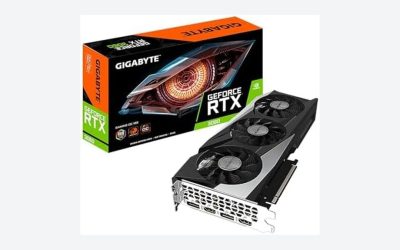
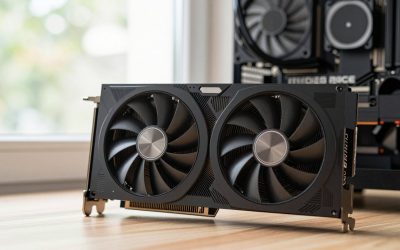
You don’t need a dedicated GPU. Design Space doesn’t render in 3D and doesn’t benefit from one at all; it’s wasted money if a laptop markets itself on graphics power alone. You also don’t need a high refresh rate display, a mechanical keyboard, or RGB lighting, all common gaming-laptop upsells that add cost without touching your actual workflow. The one gaming-adjacent feature worth having, almost by accident, is a solid cooling system, since gaming laptops rarely throttle under sustained light use the way thin ultrabooks sometimes do when running all day.
Touchscreens are the one feature people ask about that’s genuinely situational. Design Space supports touch input and some people like dragging and resizing shapes directly, but it’s not required and adds cost. If budget is tight, skip it and use a mouse.
When the Cheapest Option Is Actually Fine
If your projects are simple vinyl decals, single-layer cuts, basic text, a $300 Chromebook or entry Windows laptop with 8GB RAM handles it without complaint. The failure mode you’re avoiding by spending more isn’t “it won’t work,” it’s “it’ll frustrate you during longer sessions with layered SVGs or when your project folder grows past a few hundred files.” If you’re a casual, occasional crafter, don’t overspend chasing specs you won’t notice. If you’re running a small Etsy shop or cutting daily, the extra RAM and faster storage pay for themselves in fewer freezes and faster file loads within the first few weeks.
For most buyers under $500, the deciding factor isn’t gaming versus non-gaming branding, it’s simply RAM and storage type. Confirm both before anything else on the spec sheet.