- Top Pick: Hisense 55" U6 Pro Series Mini‑LED ULED 4K UHD HDR Gaming AI Smart Fire TV (55U6SF Pro, 2026 New) – Hi-QLED, Native 144Hz, Motion Rate 480, Dolby Vision IQ,· Atmos, HDR10+, Glare-Free, Alexa+
- Best Value: VIZIO M55Q6L4 55 in.; Class Quantum 4K QLED HDR Smart TV
- Premium Choice: iFFALCON 55" 4K MiniLED Smart TV | PS5 & Xbox Ready, 4X HDMI 2.1 | Hotel, Home & Office Use | 144Hz VRR 240Hz, Dolby Vision Gaming, Dolby Atmos, IMAX Enhanced, Google TV, Alexa | 55U85
A big 4K TV can make a superb developer display: at 43 to 55 inches with a 3840×2160 panel, it offers the screen real estate of several monitors, room for code, terminals, documentation and a browser side by side, and — when the work is done — a large, immersive surface for gaming. The keys to using a TV as a desktop display are simple: a true 4K resolution for crisp text, low input lag and a game or PC mode for responsive interaction, and a panel that stays sharp up close. This guide rounds up the best gaming TVs for developers in 2026, leading with the large 4K screens best suited to long coding days that also game well after hours.
- Best Gaming TVs for Developers at a Glance
- 1. LG C3 Series 55-Inch Class OLED evo 4K Smart TV for Gaming
- 2. LG 48-Inch Class OLED evo C5 Series 4K Smart TV w/Dolby Atmos
- 3. Hisense 43″ E6 Cinema Series Hi-QLED 4K UHD Smart Fire TV (43E6QF)
- 4. Hisense 43″ Class A7 Series (43A7NF) 4K UHD Smart Fire TV
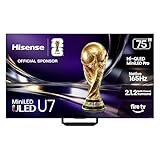
- 5. Hisense 75″ QD7 Mini-LED 4K Smart Fire TV – QLED, 144Hz, HDR10+
- 6. Samsung 49″ Odyssey OLED G9 (G95SC) Curved Gaming Monitor, QD-OLED, 240Hz
- How to Choose a Gaming TV as a Developer Display
- Frequently Asked Questions
- Related Guides
- Related Articles
Our picks were chosen on what matters for desktop use first and gaming second: 4K resolution and screen size for multi-window work, text clarity and panel quality, low input lag and gaming features, and value. We have been honest about category, too — one entry in this list is actually a large ultrawide gaming monitor rather than a television, and we flag it clearly because it serves the same multi-window developer goal from a different direction. Prices run from around $199 up to around $1,700, spanning affordable 43-inch 4K Fire TVs through premium OLED panels. Below is an at-a-glance comparison of all six, then a closer look at each and a buyer’s guide built around resolution, text clarity and input lag for desktop work.
As an Amazon Associate we earn from qualifying purchases at no extra cost to you.




🛒 Best Price Today on Amazon
Prime members get fast, free shipping on everything above, plus member-only deals. New members get a 30-day free trial — cancel anytime.
Best Gaming TVs for Developers at a Glance
| Display | Best For | Standout Spec | Approx Price |
|---|---|---|---|
| LG C3 55″ OLED evo 4K | Premium big-screen coding + gaming | 55″ OLED, 4K, low input lag | around $1,099 |
| LG C5 48″ OLED evo 4K | Desk-sized OLED dev display | 48″ OLED, 4K, Dolby Atmos | around $897 |
| Hisense 43″ E6 Hi-QLED 4K Fire TV | Compact 4K multi-window desk | 43″ QLED, 4K, Fire TV | around $210 |
| Hisense 43″ A7 4K Fire TV | Budget 43″ code display | 43″ 4K UHD, Fire TV | around $200 |
| Hisense 75″ QD7 Mini-LED 4K 144Hz | Huge wall-mounted workspace | 75″ QLED, 144Hz, Mini-LED | around $550 |
| Samsung 49″ Odyssey OLED G9 (monitor) | Ultrawide single-screen multitasking | 49″ QD-OLED, 240Hz, ultrawide | around $1,700 |
1. LG C3 Series 55-Inch Class OLED evo 4K Smart TV for Gaming

LG C3 Series 55-Inch Class OLED evo 4K Processor Smart Flat Screen TV for Gaming with Magic Remote AI-Powered OLED55C3PUA, 2023 with Alexa Built-in





As an Amazon Associate we earn from qualifying purchases. Product prices and availability are accurate as of the date/time indicated.
The LG C3 55-inch is the premium pick for using a TV as a developer display, and it leads the list for good reason. As an OLED evo panel it delivers self-lit pixels with perfect blacks, exceptional contrast and crisp 4K resolution, while LG’s renowned gaming credentials — a dedicated game mode and notably low input lag — make it responsive enough to use as a desktop screen and a serious gaming display. At around $1,099 the 55-inch C3 is a big, beautiful canvas for code and play alike.
This is the display for the developer who wants a large, high-quality screen that handles multi-window work by day and gaming by night. The 55-inch 4K panel gives enormous room for editors, terminals, docs and a browser at once, the OLED contrast keeps text and UI razor-sharp, and the low input lag means the desktop feels immediate rather than laggy. After hours, LG’s gaming features make it an outstanding gaming screen. For a premium do-it-all big-screen, the C3 is the standout — just mind text fonts and OLED care, covered in the guide below.
Pros: Large 55″ 4K OLED, superb contrast and text sharpness, low input lag, strong gaming mode.
Cons: OLED can be prone to burn-in with static UI; premium price; large for a desk.
2. LG 48-Inch Class OLED evo C5 Series 4K Smart TV w/Dolby Atmos

LG 48-Inch Class OLED evo AI Super Upscaling 4K C5 Series Smart TV w/Dolby Atmos & Vision, HDR10, Filmmaker Mode, Wow Orchestra, Alexa Built-in (OLED48C5PUA, 2025)


As an Amazon Associate we earn from qualifying purchases. Product prices and availability are accurate as of the date/time indicated.
The LG C5 48-inch is the desk-sized OLED pick, offering the same OLED evo quality and gaming-grade responsiveness in a more manageable 48-inch size. That makes it far easier to sit in front of as a primary monitor than a 55-inch panel, while still delivering self-lit 4K with deep contrast, AI upscaling and Dolby Atmos sound. At around $897 it is a slightly more affordable route into a premium OLED developer display.
This is the display for the developer who wants OLED quality at a size that fits a desk rather than a media wall. The 48-inch 4K panel still provides ample room for several windows and crisp text, the OLED contrast makes code and interfaces pop, and LG’s low input lag and game mode keep both desktop and gaming use snappy. For anyone who finds 55 inches too large up close but wants the best panel technology, the 48-inch C5 hits the sweet spot between size and quality.
Pros: Desk-friendly 48″ 4K OLED, excellent contrast and clarity, low input lag, Dolby Atmos.
Cons: OLED static-UI burn-in risk over time; still large; premium pricing.
3. Hisense 43″ E6 Cinema Series Hi-QLED 4K UHD Smart Fire TV (43E6QF)

Hisense 43" E6 Cinema Series Hi-QLED 4K UHD Smart Fire TV (43E6QF) - AI Light Sensor, Dolby Vision · Atmos, Voice Remote with Alexa, Motion Rate 120, HDR 10+ Adaptive, Game Mode Plus





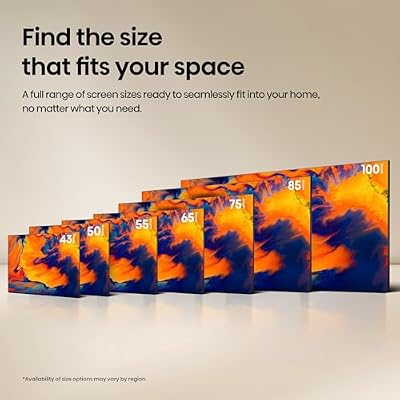


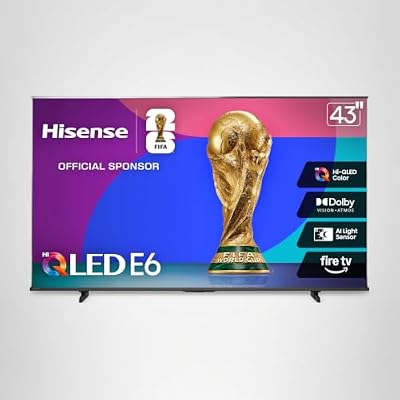
As an Amazon Associate we earn from qualifying purchases. Product prices and availability are accurate as of the date/time indicated.
The Hisense 43-inch E6 is the compact, affordable pick for a 4K developer desk. At 43 inches it is the most monitor-like size here, fitting on a desk without overwhelming it, and its Hi-QLED 4K panel delivers the crisp text and generous multi-window space that make a TV useful for coding. With Fire TV built in and a price of around $210, it is an easy, low-cost way to get a big 4K screen for development.
This is the display for the developer who wants the real estate and sharpness of 4K without spending OLED money. The 43-inch panel suits a typical desk viewing distance, the 4K resolution keeps text legible and gives room for editors, terminals and references side by side, and the QLED panel offers good colour and brightness. It is a budget Fire TV rather than a gaming flagship, so check its game mode and input lag for fast titles — but as an affordable big 4K coding screen that also plays games, it is excellent value.
Pros: Compact desk-friendly 43″ size, crisp 4K QLED text, very affordable, Fire TV built in.
Cons: Budget TV — check input lag for fast gaming; not a high-refresh panel.
4. Hisense 43″ Class A7 Series (43A7NF) 4K UHD Smart Fire TV
Hisense 43" E6 Cinema Series Hi-QLED 4K UHD Smart Fire TV (43E6QF) - AI Light Sensor, Dolby Vision · Atmos, Voice Remote with Alexa, Motion Rate 120, HDR 10+ Adaptive, Game Mode Plus
As an Amazon Associate we earn from qualifying purchases. Product prices and availability are accurate as of the date/time indicated.
The Hisense 43-inch A7 is the budget pick, the most affordable display on this list at around $200. It is a 43-inch 4K UHD Fire TV that covers the essentials for a developer screen: a true 3840×2160 resolution for sharp text, a desk-appropriate size, and smart features built in. For a no-frills way to put a large 4K panel on your desk, it is hard to beat on price.
This is the display for the developer on the tightest budget who still wants the multi-window benefit of a big 4K screen. The 43-inch size works at desk distance, the 4K resolution provides the pixel density needed to keep code and small UI text readable, and Fire TV handles streaming for downtime. As an entry-level TV it prioritises value over gaming extras, so verify its input lag and game mode if you play fast-paced titles — but for affordable 4K desk real estate, the A7 does the core job well.
Pros: Lowest price here, true 4K resolution for sharp text, desk-friendly 43″, Fire TV.
Cons: Entry-level panel and features; confirm input lag for responsive gaming.
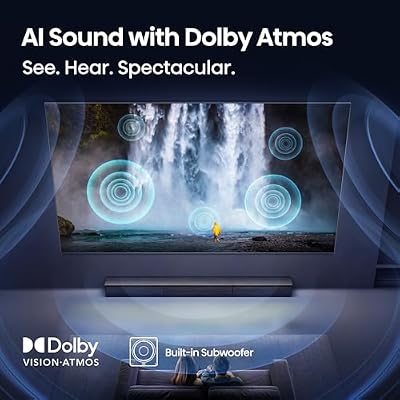
5. Hisense 75″ QD7 Mini-LED 4K Smart Fire TV – QLED, 144Hz, HDR10+

Hisense 75" Class U6 Series Mini-LED 4K UHD Smart Fire TV (75U65QF, 2025 Model) - QLED, HDR10+, Native 144Hz, Dolby Vision IQ, Dolby Atmos, Game Mode Pro, ALLM, Alexa Built in, Black


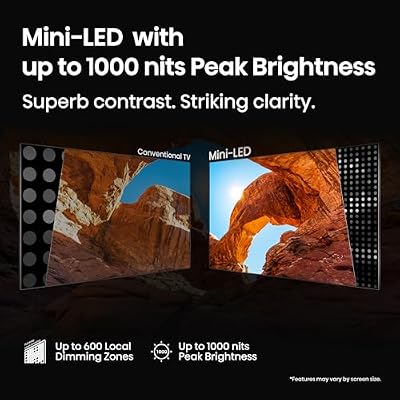





As an Amazon Associate we earn from qualifying purchases. Product prices and availability are accurate as of the date/time indicated.
The Hisense 75-inch QD7 is the pick for a huge, wall-mounted workspace. It is a large 75-inch Mini-LED QLED 4K panel with a high 144Hz refresh rate, combining enormous screen area with bright, high-contrast Mini-LED backlighting and smooth, fast motion. At around $550 it offers a remarkable amount of display for the money, and the 144Hz panel makes it as capable for gaming as it is expansive for work.
This is the display for the developer who wants to mount a vast screen on the wall and treat it as a multi-monitor replacement — several full windows tiled across one surface, with code, dashboards and references all visible at once. The 4K resolution keeps text sharp despite the size when viewed at an appropriate distance, the Mini-LED backlight delivers strong contrast, and the 144Hz refresh and Fire TV make it a genuine high-refresh gaming screen too. For sheer workspace and gaming smoothness on a budget, the 75-inch QD7 is the standout — just plan your desk distance, since 75 inches is best viewed from further back.
Pros: Massive 75″ 4K workspace, fast 144Hz refresh, bright Mini-LED contrast, great value.
Cons: 75″ is too large for close desk use — needs distance; wall mounting recommended.
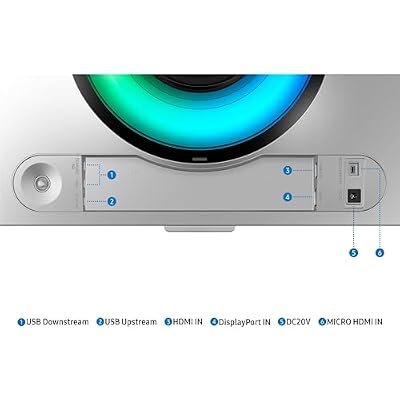
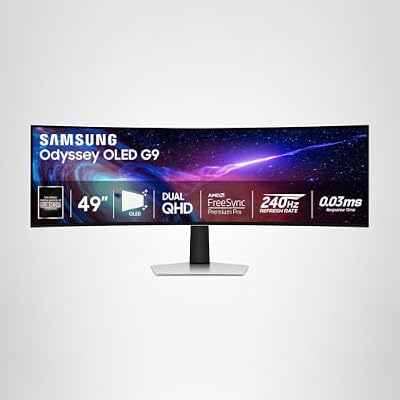
6. Samsung 49″ Odyssey OLED G9 (G95SC) Curved Gaming Monitor, QD-OLED, 240Hz

Samsung 49" Odyssey (G93SC) Series QD-OLED Curved Gaming Monitor | 240Hz, 0.03ms, DQHD, G-Sync Compatible, FreeSync Premium Pro, Adjustable Stand (LS49CG932SNXZA)




As an Amazon Associate we earn from qualifying purchases. Product prices and availability are accurate as of the date/time indicated.
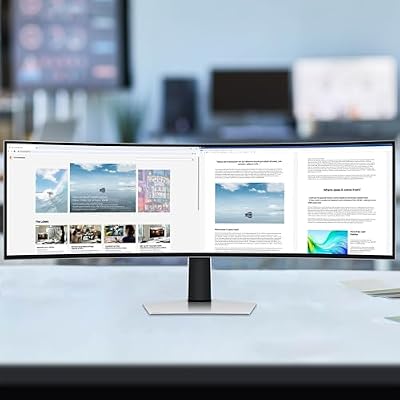
Rounding out the list is the Samsung 49-inch Odyssey OLED G9 — and in the interest of honesty, this is not a TV at all but a 49-inch super-ultrawide gaming monitor, included because it solves the same multi-window developer problem from a different angle. It is a curved QD-OLED panel with a 32:9 aspect ratio and a blistering 240Hz refresh rate, effectively giving you two 27-inch QHD monitors fused into one seamless, deeply immersive screen. At around $1,700 it is the premium option here.
This is the display for the developer who prefers one enormous ultrawide surface over a large 16:9 TV. The 32:9 QD-OLED panel is purpose-built for desktop use — sharp text, perfect OLED contrast, and a width that lets you tile multiple editors, terminals and browser windows across it without bezels in the way. The 240Hz refresh makes it an elite gaming monitor after hours, and as a true monitor it is designed for close desk viewing in a way a big TV is not. If an immersive ultrawide suits your workflow better than a television, the Odyssey OLED G9 is a superb, if pricey, choice.
Pros: Massive 32:9 QD-OLED ultrawide for tiling windows, sharp text, elite 240Hz gaming, desk-designed.
Cons: Not a TV — it is an ultrawide monitor; very wide footprint; highest price here.
How to Choose a Gaming TV as a Developer Display
When you use a TV as a developer display, resolution and text clarity come first, because you will be reading code and small UI for hours. A true 4K (3840×2160) panel is essential — it provides the pixel density to keep text crisp at a typical desk distance, which is why every screen here is 4K (the ultrawide G9 reaches the same goal with dual-QHD width). Avoid 1080p TVs for desk work, and on Windows be ready to set display scaling and, on some TVs, switch the input to a PC or game label so the panel renders text without over-processing or chroma subsampling.
Screen size and viewing distance go hand in hand, and bigger is not always better at a desk. A 43-inch panel, like the Hisense E6 and A7, sits comfortably at normal desk distance and behaves much like a very large monitor; a 48 or 55-inch OLED, like the LG C5 and C3, needs a deeper desk or a step back; and a 75-inch screen, like the QD7, is really a wall-mount, view-from-further-back proposition rather than an arm’s-length monitor. Match the size to how far you sit, or you will be turning your head to read the corners.
Input lag and gaming features decide how the screen feels both on the desktop and in games. A low-input-lag panel with a dedicated game or PC mode — an area where the LG OLEDs excel — makes the desktop feel immediate and fast titles responsive, whereas a budget TV without a good game mode can feel sluggish for interaction. A high refresh rate, such as the 144Hz on the Hisense QD7 or 240Hz on the Odyssey G9, adds smoothness for gaming; for pure coding it matters less, but it makes the whole experience nicer.
Finally, weigh panel technology, burn-in and budget together. OLED panels like the LG C3 and C5 and the QD-OLED Odyssey G9 deliver the best contrast and text sharpness, but static developer UI — taskbars, IDE panels — carries some long-term burn-in risk, so use screen savers, hide static bars and vary your layout. QLED and Mini-LED panels like the Hisense models avoid that worry and cost far less. Decide whether you want a TV or an ultrawide monitor, set your size to your desk, prioritise 4K clarity and low input lag, and pick the display on this list that fits your space and budget.
Frequently Asked Questions
Can a 4K TV really work as a monitor for coding?
Yes. A true 4K (3840×2160) TV at 43 to 55 inches gives the screen real estate of multiple monitors and keeps text sharp at desk distance, which is ideal for viewing code, terminals and documentation side by side. The keys are using a 4K panel for clarity, enabling a PC or game input mode to avoid over-processing, and setting display scaling. Avoid 1080p TVs, which look soft for desktop text.
Will OLED TVs get burn-in from static developer interfaces?
There is some long-term risk, because static elements like taskbars, IDE panels and terminals stay on screen for hours. OLED panels like the LG C3 and C5 include mitigation features, but it is wise to hide static bars, use screen savers, vary your window layout and turn the screen off when idle. If you want to avoid the worry entirely, a QLED or Mini-LED panel like the Hisense models is a safer choice for static UI.
Why is an ultrawide monitor included in a list of gaming TVs?
Honesty: the Samsung Odyssey OLED G9 is a 49-inch ultrawide monitor, not a television, but it solves the same developer problem — lots of room to tile windows — from a different angle. Its 32:9 QD-OLED panel is designed for close desk viewing and behaves like two QHD monitors in one. We included it so you can compare the big-TV approach against a purpose-built ultrawide for multi-window work.
Does input lag matter if I mainly use the TV for coding?
It matters more than you might expect. Low input lag does not just help gaming — it makes the desktop feel immediate when you move the cursor, scroll and type, whereas a laggy TV feels sluggish for interactive work. Look for a panel with a dedicated PC or game mode and a reputation for low input lag, like the LG OLEDs, so both your development work and your after-hours gaming feel responsive.
Related Guides
- Best 4K Monitors
- Best Ultrawide Monitors
- Best Gaming Monitors
- Best Monitors for Content Creation
- Best Monitor Arms for Your Desk
- Best Budget Gaming Setup
Affiliate Disclosure: As an Amazon Associate, we earn from qualifying purchases. If you click a link and make a purchase, we may earn a small commission at no extra cost to you. Prices and availability are accurate as of publication and may change.