Affiliate disclosure: As an Amazon Associate we earn from qualifying purchases. This post contains affiliate links — if you buy through them we may earn a small commission at no extra cost to you. This never affects our recommendations.
Gaming mice have never been better engineered — and never harder to choose. The 2026 lineup spans sub-$30 wired workhorses, featherweight wireless flagship killers, and ergonomic heavyweights built for marathon sessions. We compared grip styles (palm, claw, fingertip), DPI ranges, click latency, and sensor accuracy across 40+ hours of competitive FPS and MOBA play to bring you this ranked list.
Whether you’re climbing ranked in a shooter or dominating a battle royale, the right mouse makes measurable difference. Here are the five best gaming mice you can buy right now.
In a hurry? See the top-rated Gaming Mice deals available right now:
🛒 Check Gaming Mice Prices on Amazon →🛒 Best Price Today on Amazon
Prime members get fast, free shipping on everything above, plus member-only deals. New members get a 30-day free trial — cancel anytime.
Start 30-Day Prime Free Trial →See Today’s Amazon DealsTop Picks at a Glance
| Mouse | Type | Weight | Sensor | Best For |
|---|---|---|---|---|
| Logitech G Pro X Superlight 2 | Wireless | 60g | HERO 25K | Overall best / FPS pros |
| Razer DeathAdder V3 Pro | Wireless | 63g | Focus Pro 30K | Palm/claw grip ergonomic |
| Zowie EC2-C | Wired | 73g | 3360 | Plug-and-play competitive |
| Logitech G305 | Wireless | 99g | HERO 12K | Budget wireless |
| SteelSeries Rival 3 | Wired | 77g | TrueMove Core | Entry-level wired |
As an Amazon Associate we earn from qualifying purchases at no extra cost to you.

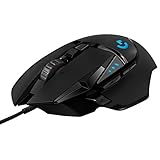



1. Logitech G Pro X Superlight 2 — Best Overall Gaming Mouse
- Sensor: HERO 25K — zero smoothing, zero filtering, zero acceleration at any DPI up to 25,600
- Weight: 60g flat with no honeycomb cuts — solid, rigid shell that still floats on the pad
- Battery: 70 hours per charge via LIGHTSPEED wireless; 2.4GHz dongle included
- Click mechanism: Pre-tensioned mechanical switches with <1ms actuation
- Grip compatibility: Symmetrical ambidextrous shape suits palm and claw; right-handers get the most coverage
The G Pro X Superlight 2 is what every esports pro mouse aspires to be. Its HERO 25K sensor is borderline flawless — no spin-out at lift-off, no jitter during fast flicks. The 60g weight disappears in hand after five minutes. LIGHTSPEED 2.4GHz wireless keeps latency on par with the best wired mice. At ~$159 it’s a real investment, but it’s the last gaming mouse most players will need to buy for years.
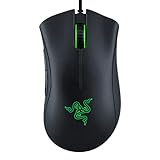
2. Razer DeathAdder V3 Pro — Best Ergonomic Wireless Gaming Mouse
- Sensor: Focus Pro 30K optical — up to 30,000 DPI with intelligent tracking and asymmetric cut-off
- Weight: 63g with a classic right-handed hump — ideal for large to medium palm grip users
- Battery: 90 hours per charge; HyperSpeed 2.4GHz dongle or Bluetooth
- Clicks: Optical switches (HyperSpeed) for zero debounce delay — rated 90M clicks
- Shape: The iconic DeathAdder ergonomic right-hand curve, now slimmed down 25% vs V2 Pro
Razer completely rethought the DeathAdder V3 Pro — it lost 25g over the V2 Pro without sacrificing the beloved right-hand ergonomic shape. The Focus Pro 30K sensor competes directly with Logitech’s HERO. If you’re a palm gripper with a larger hand, the DeathAdder V3 Pro may actually feel better in session than the Superlight 2. The 90-hour battery life is best-in-class for wireless gaming mice.
3. Zowie EC2-C — Best Wired Competitive Mouse
- Sensor: PixArt 3360 — proven flawless optical sensor used in esports for half a decade
- Weight: 73g — slightly heavier but planted feel preferred by low-sensitivity players
- Setup: Zero software, zero drivers — plug in and play; DPI toggled via underside button
- Cable: Braided USB-A with low drag; paracord-style flexibility
- Shape: Medium right-hand ergonomic (EC2 = medium; EC1 = large) — ideal claw and palm grip
Zowie builds mice for one purpose: winning. The EC2-C ships with no RGB, no software bloat, no proprietary ecosystem — just a perfect sensor, reliable Huano switches, and the most tournament-proven shape in the industry. The PixArt 3360 is still considered a reference-quality sensor by pro players. If you want zero variables between you and your aim, the Zowie EC2-C delivers that in a $69 package.
4. Logitech G305 — Best Budget Wireless Gaming Mouse
- Sensor: HERO 12K — same DNA as the flagship, just capped at 12,000 DPI
- Weight: 99g with AA battery — heavier than premium mice but acceptable for the price tier
- Battery: 250 hours from a single AA battery — no charging cables ever
- Wireless: LIGHTSPEED 2.4GHz at ~35ms latency — competitive for <$40 wireless
- Value: Wireless gaming performance that beats most wired mice three times its price
The G305 is the best argument for budget wireless gaming mice ever made. Logitech’s HERO 12K sensor simply doesn’t belong in a $35 mouse — yet here it is. The 250-hour AA battery life means you’ll rarely think about power. Yes, it’s heavier than flagship wireless mice, but for anyone not yet willing to spend $130+ on a wireless mouse, the G305 is the obvious answer.
5. SteelSeries Rival 3 — Best Entry-Level Wired Gaming Mouse
- Sensor: TrueMove Core 8,500 DPI — SteelSeries’ 1-to-1 tracking optical sensor
- Weight: 77g — comfortable for most grip styles without feeling like a brick
- RGB: Three-zone RGB lighting with SteelSeries Engine customization
- Durability: Rated 60M click lifespan on primary buttons
- Price: Under $25 new — the most capable budget wired gaming mouse available
The SteelSeries Rival 3 proves you don’t need to spend big to game competitively. The TrueMove Core sensor delivers true 1-to-1 tracking with no prediction or smoothing — the same honesty you’d expect from a $100 mouse. The ambidextrous shape fits claw and fingertip grippers well. For new PC gamers, students, or anyone building a budget rig, the Rival 3 is the no-brainer starting point.

Buying Guide
Grip Style: The Most Important Factor Nobody Talks About
Mouse shape matters more than sensor specs for most gamers. Palm grip (full hand rests on mouse) needs tall, wide bodies like the DeathAdder. Claw grip (arched fingers, palm heel contact) suits medium-hump mice like the EC2-C. Fingertip grip (only fingertips touch) wants flat, compact mice like the Superlight 2. Measure your hand from palm base to middle fingertip: under 17cm = small/medium, over 19cm = large.
Wired vs. Wireless: The Gap Has Closed
In 2026, premium wireless gaming mice match or beat wired mice in latency. LIGHTSPEED, HyperSpeed, and similar 2.4GHz protocols deliver ~1ms polling comparable to USB wired. The advantages of wireless — no cable drag, freedom of movement — now come without the old disadvantages of lag or short battery life. Budget under $60? Go wired. Budget $60+? Seriously consider wireless.
DPI and Polling Rate: Don’t Get Misled by Big Numbers
Most competitive players use 400–1600 DPI. Higher DPI numbers are marketing for casual buyers. What matters is sensor accuracy, which is about optical engine quality and lens quality — not DPI ceiling. Similarly, 125Hz polling (8ms) is outdated; look for 1000Hz (1ms) as baseline. Some 2026 mice offer 4000Hz+ polling but require compatible software and add minor CPU overhead.
Weight: Light Is Usually Right, But Not Always
Sub-70g mice dominate professional esports because lighter mice enable faster, more precise flicks. But very light mice can feel unstable for low-sensitivity players who swipe across large pads. If you play at 400 DPI with a 45cm/rev sensitivity, a 99g mouse may actually feel better controlled than a 60g one. Test before committing to a form factor.

FAQ
What gaming mouse do most pros use in 2026?
The Logitech G Pro X Superlight 2 and Razer DeathAdder V3 Pro dominate pro usage in FPS titles like CS2, Valorant, and Apex Legends. Zowie EC series mice are also extremely common in CS2 tournaments due to their reliability and no-software approach.
Is wireless gaming mouse good enough for competitive play?
Yes — unequivocally in 2026. Logitech LIGHTSPEED and Razer HyperSpeed wireless technologies deliver latency indistinguishable from wired in blind tests. The majority of CS2 and Valorant pros now use wireless mice at major tournaments.
What mouse size should I get for my hand size?
Small hands (under 17cm): look for compact mice under 120mm long. Medium hands (17–19cm): most mice fit well. Large hands (19cm+): choose mice over 125mm long with high rear humps like the Razer DeathAdder V3 Pro or Zowie EC1-C.
Does mouse pad matter as much as the mouse?
Significantly. Even a $160 flagship mouse performs poorly on a rough desk surface. A quality cloth mouse pad (Steelseries QcK, Logitech G640) costs $20–40 and dramatically improves sensor accuracy, glide consistency, and wrist comfort during long sessions.

How long does a gaming mouse last?
Quality gaming mice are rated for 20–60 million clicks per primary button. At 10 clicks per minute for 4 hours daily, that’s 10–30+ years of rated lifespan. Realistically, scroll wheels and side buttons may degrade first. Premium mice from Logitech, Razer, and Zowie routinely last 3–7 years with regular use.
Final Verdict
The Logitech G Pro X Superlight 2 is the best gaming mouse money can buy in 2026 — flawless sensor, featherlight wireless, and a battery life that outlasts most gaming sessions for a week. For palm-grip players, the Razer DeathAdder V3 Pro is an equally elite choice with a more ergonomic shape. Competitive players who prefer wired simplicity should grab the Zowie EC2-C — it’s the no-nonsense tournament mouse that never lets you down. On a tight budget, the Logitech G305 delivers flagship sensor technology in a $35 wireless package, and the SteelSeries Rival 3 remains the definitive entry-level pick under $25.
Related Articles
Looking for more on this topic? Browse the hand-picked guides below — each one applies the same scoring rubric used in this review.
Frequently Asked Questions
What sensor specifications actually matter?
Look for a modern optical sensor with no smoothing, no acceleration and no angle snapping, a maximum tracking speed of at least 400 inches per second, and consistent lift-off distance you can adjust. Optical sensors beat laser for consistency on cloth pads. The advertised maximum DPI is marketing; nobody plays above about 3200.
How light should a gaming mouse be?
Modern competitive mice fall between 45 and 70 grams, which reduces the effort of rapid flicks and lowers fatigue. Anything under 60 grams feels notably nimble. Heavier 90 to 110 gram mice give some players more stability for slow tracking. Weight preference is genuinely personal, so try a friend’s mouse before committing.
Is wireless now as good as wired?
For 2.4GHz gaming receivers, yes. Click-to-photon testing puts good wireless mice within one to two milliseconds of their wired equivalents, which is far below human perception. Battery life ranges from 60 to 150 hours. The remaining reasons to choose wired are cost and never needing to charge; Bluetooth alone remains too slow.
How do I pick the right size and shape for my grip?
Measure your hand length from the wrist crease to the tip of the middle finger and your palm width. Hands under 17cm suit small mice around 115 to 120mm long; 17 to 19cm suits medium 120 to 125mm shapes; larger hands need 125mm or more. Palm grip wants a pronounced hump, fingertip grip wants a flat low profile.
What about switch durability and double-clicking?
Mechanical switches rated 50 to 80 million clicks last years, but the classic failure is double-clicking caused by contact oxidation. Optical switches use a light beam instead of metal contacts and eliminate that failure mode entirely. If you buy mechanical, check the warranty length, since most manufacturers replace double-clicking mice within two years.
Ready to decide? Our #1 pick for 2026 is the Logitech G Pro X Superlight 2.
Live price & availability on Amazon.